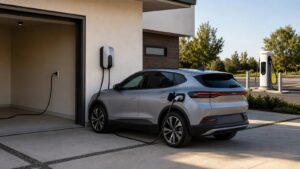
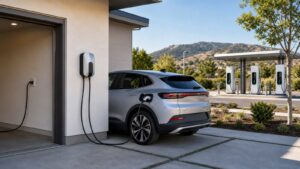
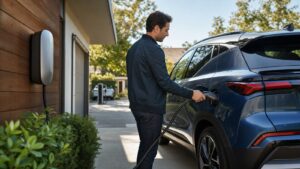
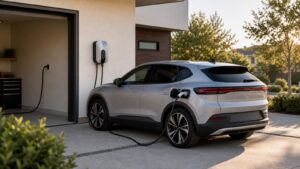
Charging Levels & Standards is where EV ownership stops feeling mysterious and starts feeling effortless. This hub is your roadmap to the plugs, ports, power speeds, and rules that keep the electric world running smoothly—at home, at work, and on the open road. You’ll learn how Level 1, Level 2, and DC fast charging differ in real life, what “kW” actually means when you’re watching miles roll in, and why some sessions fly while others taper. We’ll also break down the standards and connectors that determine where you can plug in, how charging networks communicate with your vehicle, and what safety layers protect you every time you click in. Expect clear explanations of AC vs DC, charging curves, preconditioning, and the planning tricks that turn road trips into simple pit stops. Whether you’re installing a home charger, comparing EVs, or just trying to decode the alphabet soup of charging, this category brings the whole system into focus—so you can plug in with confidence and power forward.
A: Level 2 is AC (car converts it); DC fast is DC delivered straight to the battery.
A: The car reduces power to protect the battery as it fills.
A: Only if your EV can accept it—your car’s limits and the battery’s condition matter.
A: Yes for low daily miles, but Level 2 is far more convenient.
A: Battery temperature and state of charge.
A: Usually no—charge for your needs unless a full range day is coming.
A: The EV warms/cools the battery to charge more efficiently.
A: Yes—connectors and systems are designed with safety interlocks.
A: Hardware or communication issues—try another stall or network.
A: Charge at home most of the time, fast-charge only when travel demands it.