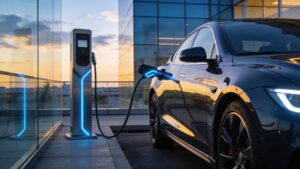
EV performance isn’t just “0–60.” It’s a full scoreboard—how fast the car launches, how long it stays strong, how efficiently it turns battery energy into speed, and how quickly it recovers on the charger. In 2026, the most interesting EVs aren’t only quick in a single burst; they’re quick repeatedly, in heat, on hills, at highway speeds, and after a fast-charge stop. That’s where performance metrics come in: quarter-mile traps that reveal real power, 5–60 times that expose traction and throttle tuning, rolling acceleration that matters for passing, and thermal performance that separates “one-hit wonders” from true athletes. Then there’s the hidden math: efficiency in miles per kWh, energy use at 70–80 mph, charging curves that determine road-trip pace, and regen behavior that changes how a car slows and feels. This category turns confusing specs into useful answers, with plain-language breakdowns, real-world comparisons, and the benchmarks that actually predict daily fun. If you love EVs, metrics are your secret weapon—because what you measure, you can understand.
A: There isn’t one—pair 0–60 with repeatability and a charging-curve view.
A: It reduces launch tricks and shows real-world acceleration.
A: Trap speed for sustained power; ET for launch/traction and overall execution.
A: Efficiency plus average charge rate in your typical SOC window.
A: Thermal limits reduce power to protect the battery and electronics.
A: Yes—grip and rolling resistance affect acceleration, braking, and range.
A: Absolutely—energy efficiency is part of performance in an EV.
A: Temperature, SOC, and the car’s charging curve dominate the result.
A: Same route, similar temps, same SOC window, and multiple runs.
A: 30–70 mph, miles per kWh, and 10–80% charge time—with temperature notes.