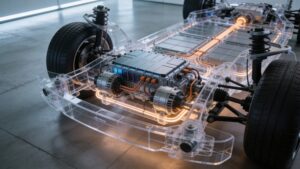
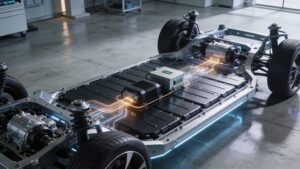
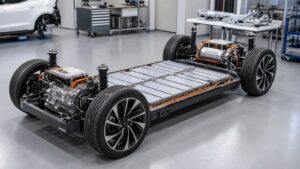
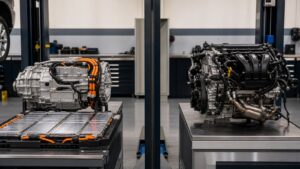
EV Powertrain Architecture is the blueprint behind that smooth, instant pull you feel the moment an electric vehicle moves. This section is your behind-the-panels tour of how energy leaves the battery, travels through power electronics, and becomes real-world traction at the wheels—quietly, efficiently, and with astonishing precision. Here you’ll explore the key building blocks: motors, inverters, gear reduction, battery packs, high-voltage wiring, and the thermal systems that keep everything operating in its sweet spot. We’ll decode why some EVs use a single motor while others run dual-motor all-wheel drive, how torque vectoring reshapes handling, and what changes when a platform is designed “electric-first.” You’ll also see how charging hardware connects to the drivetrain, how regenerative braking feeds energy back into the pack, and why software is just as important as metal in a modern EV. Whether you’re shopping, geeking out, or simply trying to understand what makes EVs feel different, this hub turns complex engineering into clear, street-ready insight.
A: The system that turns battery energy into wheel torque: inverter, motor, and gears.
A: Motors deliver torque instantly and inverters control it with precision.
A: Most use a single-speed reduction gear instead of multi-gear shifting.
A: The “translator” that makes battery power usable for the motor.
A: Better for traction and performance; single-motor can be simpler and very efficient.
A: Using the motor to slow the car while sending energy back into the battery.
A: The car reduces power to protect the battery as it fills.
A: Heat—systems may reduce power to keep the battery and electronics safe.
A: Software blends torque between motors, often faster than mechanical systems.
A: Manage speed on highways and keep tires properly inflated.