EV Crash Safety Depends on Structure, Battery Protection, and High-Voltage Shutdown
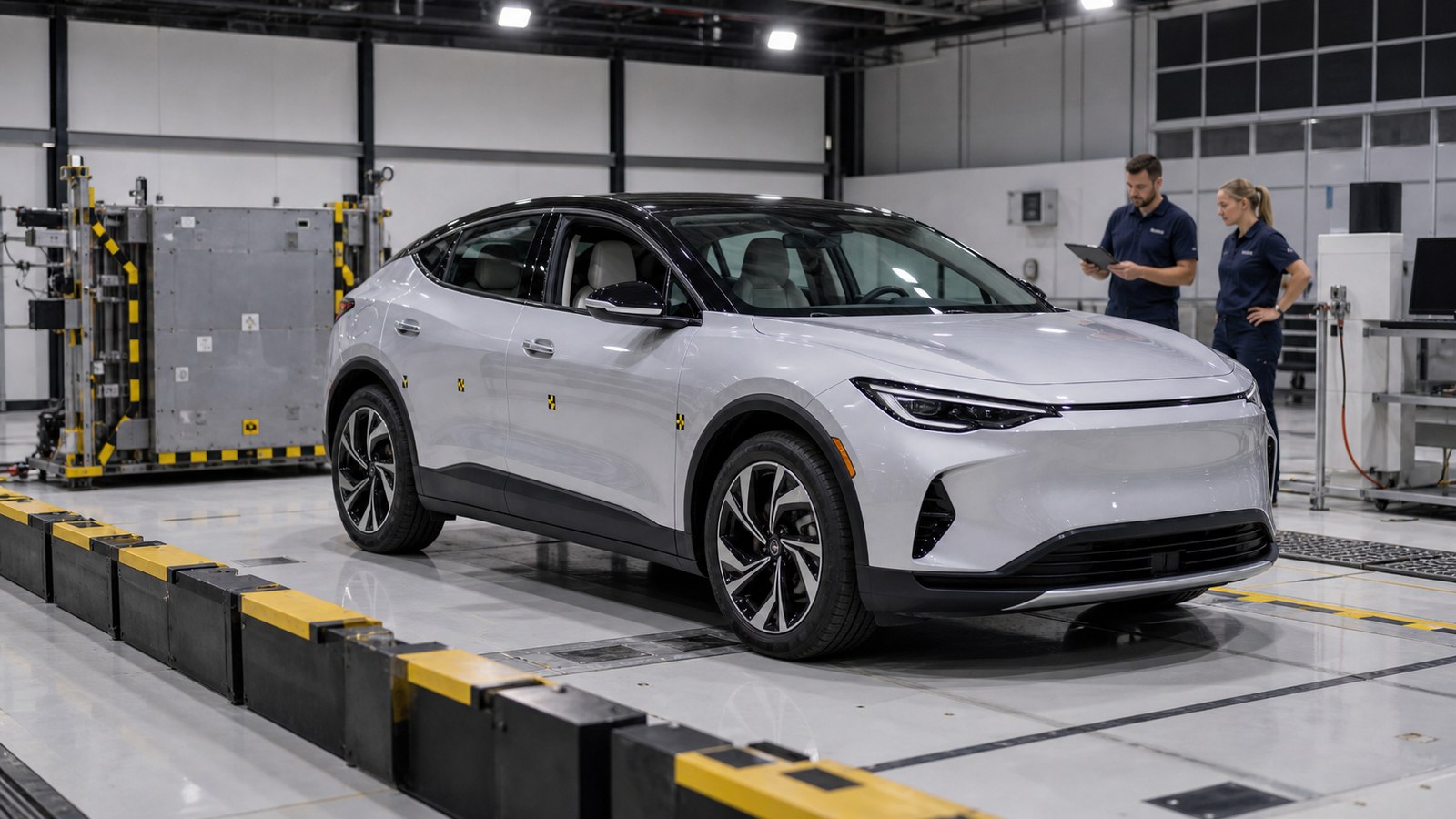
Electric cars can score well in crash testing because their battery packs, structures, sensors, and safety systems are engineered together. EV crash safety is not only about airbags and crumple zones. It also includes battery enclosure protection, high-voltage isolation, automatic disconnects, and emergency-response information.
Why EVs Can Perform Well
EVs often place the heavy battery low in the floor, which can lower the center of gravity and reduce rollover tendency. Their platforms can also create strong crash structures around the pack.
That does not make every EV automatically safe, but it gives engineers useful tools for occupant protection and stability.
For EV Crash Safety, the why evs can perform well point works best when it is tied to a real driver routine. Daily mileage, charging access, weather, passengers, cargo, and budget often matter more than the single most impressive number in a spec sheet.
The practical check for this why evs can perform well discussion is simple: decide what would change the ownership experience after the first month. If the answer affects charging time, range confidence, comfort, service, cost, or resale value, it belongs in the buying decision.
That is why the why evs can perform well angle should be read as an ownership filter, not just background information. A useful EV article helps the reader connect technology claims to the way the vehicle will actually be charged, driven, maintained, and paid for.
Battery Pack Protection
The battery pack is housed in a protected enclosure designed to resist impact, water intrusion, vibration, and road debris. Structural rails and underbody shielding help manage crash forces.
Battery protection is especially important because damaged cells can create electrical, chemical, or thermal hazards after a severe crash.
For EV Crash Safety, the battery pack protection point works best when it is tied to a real driver routine. Daily mileage, charging access, weather, passengers, cargo, and budget often matter more than the single most impressive number in a spec sheet.
The practical check for this battery pack protection discussion is simple: decide what would change the ownership experience after the first month. If the answer affects charging time, range confidence, comfort, service, cost, or resale value, it belongs in the buying decision.
That is why the battery pack protection angle should be read as an ownership filter, not just background information. A useful EV article helps the reader connect technology claims to the way the vehicle will actually be charged, driven, maintained, and paid for.
High-Voltage Isolation
EVs use high-voltage systems for propulsion, but those systems are monitored and isolated from the body structure. Contactors can disconnect the pack when a serious fault or crash event is detected.
Orange high-voltage cables, warning labels, service disconnects, and model-specific emergency information help trained responders identify hazards.
For EV Crash Safety, the high-voltage isolation point works best when it is tied to a real driver routine. Daily mileage, charging access, weather, passengers, cargo, and budget often matter more than the single most impressive number in a spec sheet.
The practical check for this high-voltage isolation discussion is simple: decide what would change the ownership experience after the first month. If the answer affects charging time, range confidence, comfort, service, cost, or resale value, it belongs in the buying decision.
That is why the high-voltage isolation angle should be read as an ownership filter, not just background information. A useful EV article helps the reader connect technology claims to the way the vehicle will actually be charged, driven, maintained, and paid for.
Crash Sensors and Shutdown Logic
In a serious crash, an EV can trigger safety logic that disables high-voltage output, deploys airbags, unlocks doors, activates hazard lights, and communicates fault status.
The exact behavior varies by vehicle. That is why emergency response guides and rescue sheets exist for specific makes and models.
For EV Crash Safety, the crash sensors and shutdown logic point works best when it is tied to a real driver routine. Daily mileage, charging access, weather, passengers, cargo, and budget often matter more than the single most impressive number in a spec sheet.
The practical check for this crash sensors and shutdown logic discussion is simple: decide what would change the ownership experience after the first month. If the answer affects charging time, range confidence, comfort, service, cost, or resale value, it belongs in the buying decision.
That is why the crash sensors and shutdown logic angle should be read as an ownership filter, not just background information. A useful EV article helps the reader connect technology claims to the way the vehicle will actually be charged, driven, maintained, and paid for.
Fire Risk and Thermal Runaway
EV battery fires are uncommon, but damaged lithium-ion cells can burn intensely and may require special response tactics. Thermal runaway is the chain reaction responders watch for after battery damage.
Drivers should not treat smoke, hissing, sparks, battery impact damage, or post-crash warning messages casually. Move away and let trained responders handle the vehicle.
For EV Crash Safety, the fire risk and thermal runaway point works best when it is tied to a real driver routine. Daily mileage, charging access, weather, passengers, cargo, and budget often matter more than the single most impressive number in a spec sheet.
The practical check for this fire risk and thermal runaway discussion is simple: decide what would change the ownership experience after the first month. If the answer affects charging time, range confidence, comfort, service, cost, or resale value, it belongs in the buying decision.
That is why the fire risk and thermal runaway angle should be read as an ownership filter, not just background information. A useful EV article helps the reader connect technology claims to the way the vehicle will actually be charged, driven, maintained, and paid for.
Flooding and Post-Crash Handling
Flood-damaged EVs need professional inspection because water intrusion and corrosion can create delayed electrical or battery risks.
A vehicle that appears calm after a crash or flood may still require towing, isolation, monitoring, and model-specific procedures before repair or dismantling.
For EV Crash Safety, the flooding and post-crash handling point works best when it is tied to a real driver routine. Daily mileage, charging access, weather, passengers, cargo, and budget often matter more than the single most impressive number in a spec sheet.
The practical check for this flooding and post-crash handling discussion is simple: decide what would change the ownership experience after the first month. If the answer affects charging time, range confidence, comfort, service, cost, or resale value, it belongs in the buying decision.
That is why the flooding and post-crash handling angle should be read as an ownership filter, not just background information. A useful EV article helps the reader connect technology claims to the way the vehicle will actually be charged, driven, maintained, and paid for.
Emergency Response Guides
NHTSA and other safety organizations maintain resources that help responders find emergency response guides and rescue sheets for electric and hybrid vehicles.
Those guides identify battery locations, cut points, cable paths, disabling steps, and hazards. For owners, the lesson is simple: do not improvise around damaged high-voltage parts.
For EV Crash Safety, the emergency response guides point works best when it is tied to a real driver routine. Daily mileage, charging access, weather, passengers, cargo, and budget often matter more than the single most impressive number in a spec sheet.
The practical check for this emergency response guides discussion is simple: decide what would change the ownership experience after the first month. If the answer affects charging time, range confidence, comfort, service, cost, or resale value, it belongs in the buying decision.
That is why the emergency response guides angle should be read as an ownership filter, not just background information. A useful EV article helps the reader connect technology claims to the way the vehicle will actually be charged, driven, maintained, and paid for.
The Practical Bottom Line
EV crash safety is a layered system. Structure, battery protection, software, high-voltage disconnects, airbags, and emergency guidance all matter.
A safe EV is one that protects occupants during the crash and gives responders clear information afterward. Buyers should consider crash ratings, brand safety engineering, and post-crash support together.
For EV Crash Safety, the the practical bottom line point works best when it is tied to a real driver routine. Daily mileage, charging access, weather, passengers, cargo, and budget often matter more than the single most impressive number in a spec sheet.
The practical check for this the practical bottom line discussion is simple: decide what would change the ownership experience after the first month. If the answer affects charging time, range confidence, comfort, service, cost, or resale value, it belongs in the buying decision.
That is why the the practical bottom line angle should be read as an ownership filter, not just background information. A useful EV article helps the reader connect technology claims to the way the vehicle will actually be charged, driven, maintained, and paid for.
EV Crash Safety Ownership Check
The practical value of EV Crash Safety appears when the topic changes a real EV decision. A buyer should connect the information to charging access, driving range, service support, climate, safety expectations, and the way the vehicle will actually be used.
Exact configuration matters. Battery chemistry, pack size, voltage architecture, charge port, adapter support, wheel choice, tire type, software version, and trim equipment can all change the ownership result.
Charging should be checked as a real routine rather than a hopeful idea. The owner needs to know where the vehicle will charge most days, which public stations work on longer trips, and whether any adapter or network access is required.
Service and safety also belong in the decision. High-voltage systems are normal parts of EV ownership, but damaged components, battery work, charging faults, or post-crash handling should be left to trained people with model-specific information.
The strongest EV choice is specific. It does not rely on one exciting number. It explains how the vehicle behaves on ordinary routes, in bad weather, during charging stops, and after several years of use.
How to Read the Claims
EV claims should be read as conditional. Charging speed depends on charger output, battery temperature, state of charge, and software. Range depends on speed, weather, tires, payload, elevation, and climate use.
That does not make the numbers meaningless. It means they are starting points. A careful owner compares the numbers under similar conditions and then checks whether the vehicle still fits when real life is less tidy.
Good EV writing keeps the technology grounded. It explains the benefit, names the limits, and gives the reader a way to make a better decision without turning every feature into hype.
Long-Term Fit
Long-term EV satisfaction usually comes from a clear match between expectations and habits. The owner should know how much range is normally needed, how charging will happen, where service is available, and which tradeoffs are acceptable.
Software support, charging-network changes, adapter availability, resale confidence, and battery reputation can all become more important over time. The best article gives those issues enough room without making the topic feel alarmist.
When the practical fit is clear, the technology becomes easier to trust. The driver understands not only what the EV can do, but how to make it work well every week.
Questions Worth Asking Next
Before acting on EV Crash Safety, ask what evidence would change the decision. That may mean a charging-route test, a dealer service answer, a battery-warranty detail, a trim comparison, or a cold-weather range check.
It also helps to separate current capability from future promises. Features that require later software, adapter programs, network agreements, or infrastructure upgrades should be treated as possible improvements rather than guaranteed benefits today.
A careful EV decision leaves room for change while still being useful now. The owner should know the immediate strengths, the likely limits, and the details to verify before money changes hands.