Why EV Performance Metrics Matter More Than Ever
Electric vehicles have changed the way drivers think about performance. In the past, car shoppers often focused on horsepower, engine size, fuel economy, and top speed. Those numbers still matter in some ways, but EVs introduce a new performance language built around battery capacity, charging speed, efficiency, torque delivery, software control, and real-world range. For beginners, the result can feel exciting but confusing. One EV may advertise lightning-fast acceleration, another may promote long range, while another may focus on efficiency or ultra-fast charging. In 2026, understanding EV performance metrics is one of the smartest ways to shop, compare, and appreciate electric vehicles. The best EV is not always the one with the biggest battery, fastest 0–60 time, or highest horsepower number. The best EV is the one that balances performance with your actual driving needs. That means looking at how far it goes, how efficiently it uses energy, how quickly it charges, how well it handles, and how consistently it performs in real-world conditions.
A: For most drivers, real-world range, efficiency, and charging speed matter most.
A: Not always. Bigger batteries add range but also weight, cost, and charging time.
A: Kilowatt-hours measure how much energy the battery can store.
A: MPGe compares EV energy use to the energy in a gallon of gasoline.
A: Electric motors deliver torque immediately, creating strong launch response.
A: The vehicle reduces charging speed to manage heat and protect the battery.
A: Yes. Cold temperatures can reduce range and slow charging.
A: Yes, many drivers cover daily needs with overnight Level 2 charging.
A: Usually yes, because they have fewer moving drivetrain parts than gas vehicles.
A: Compare range, miles per kWh, charging time, battery size, and daily driving fit.
Range: The Number Everyone Notices First
Range is usually the first EV performance metric people look at. It tells you how far an electric vehicle is expected to travel on a full charge. In the United States, EV range is commonly listed using EPA estimates, which create a standardized way to compare vehicles. This makes range useful as a shopping tool, but it should not be treated as an exact promise for every drive.
Real-world range changes based on speed, weather, elevation, tire choice, passenger load, and driving style. Highway driving usually consumes energy faster than slow city driving because EVs do not recover as much energy through regenerative braking at steady high speeds. Cold temperatures can also reduce range because the battery and cabin heating systems require extra energy. For beginners, the key lesson is simple: range is important, but real-world driving conditions decide how much of that range you actually experience.
Battery Capacity: The Size of the Energy Tank
Battery capacity is measured in kilowatt-hours, often written as kWh. You can think of it like the size of a fuel tank, except instead of gallons, it measures stored electrical energy. A larger battery can often support longer range, stronger performance, or both. However, bigger is not automatically better. Large battery packs add weight, increase cost, and may take longer to charge. A smaller, highly efficient EV can sometimes feel more practical than a larger, less efficient one because it uses energy more intelligently. This is why battery capacity should always be viewed alongside efficiency. A vehicle with a big battery and poor efficiency may not travel as far as expected, while a streamlined EV with a smaller battery may deliver excellent range because it wastes less energy.
Efficiency: The Quiet Metric That Changes Everything
Efficiency is one of the most important EV performance metrics, even though it does not always get the spotlight. EV efficiency is commonly shown as miles per kWh, kWh per 100 miles, or MPGe. MPGe compares electric energy use to the energy content of a gallon of gasoline, which helps shoppers compare electric and gas vehicles in familiar terms. The EPA explains that MPGe represents how far a vehicle can travel using energy equivalent to one gallon of gasoline.
For everyday drivers, miles per kWh is often the easiest efficiency metric to understand. If one EV travels 4 miles per kWh and another travels 3 miles per kWh, the first vehicle uses less energy to go the same distance. Better efficiency can mean lower charging costs, fewer charging stops, and better real-world range. It also shows how well the vehicle’s design, motors, tires, weight, and aerodynamics work together.
MPGe: Helpful, But Not the Whole Story
MPGe is useful because it gives shoppers a quick comparison between EVs and traditional gas cars. A high MPGe rating generally means the vehicle uses energy efficiently. However, MPGe can feel abstract because most drivers do not buy electricity by “gallon equivalent.” They pay by kilowatt-hour, either at home or at a public charger. That is why beginners should use MPGe as a comparison tool, not the only decision-making metric. If two EVs have similar range but one has much better MPGe, the more efficient vehicle may cost less to operate over time. Still, comfort, charging speed, battery size, and driving needs matter too. The smartest approach is to consider MPGe alongside real-world range, charging behavior, and total ownership experience.
Charging Speed: Performance When You Are Parked
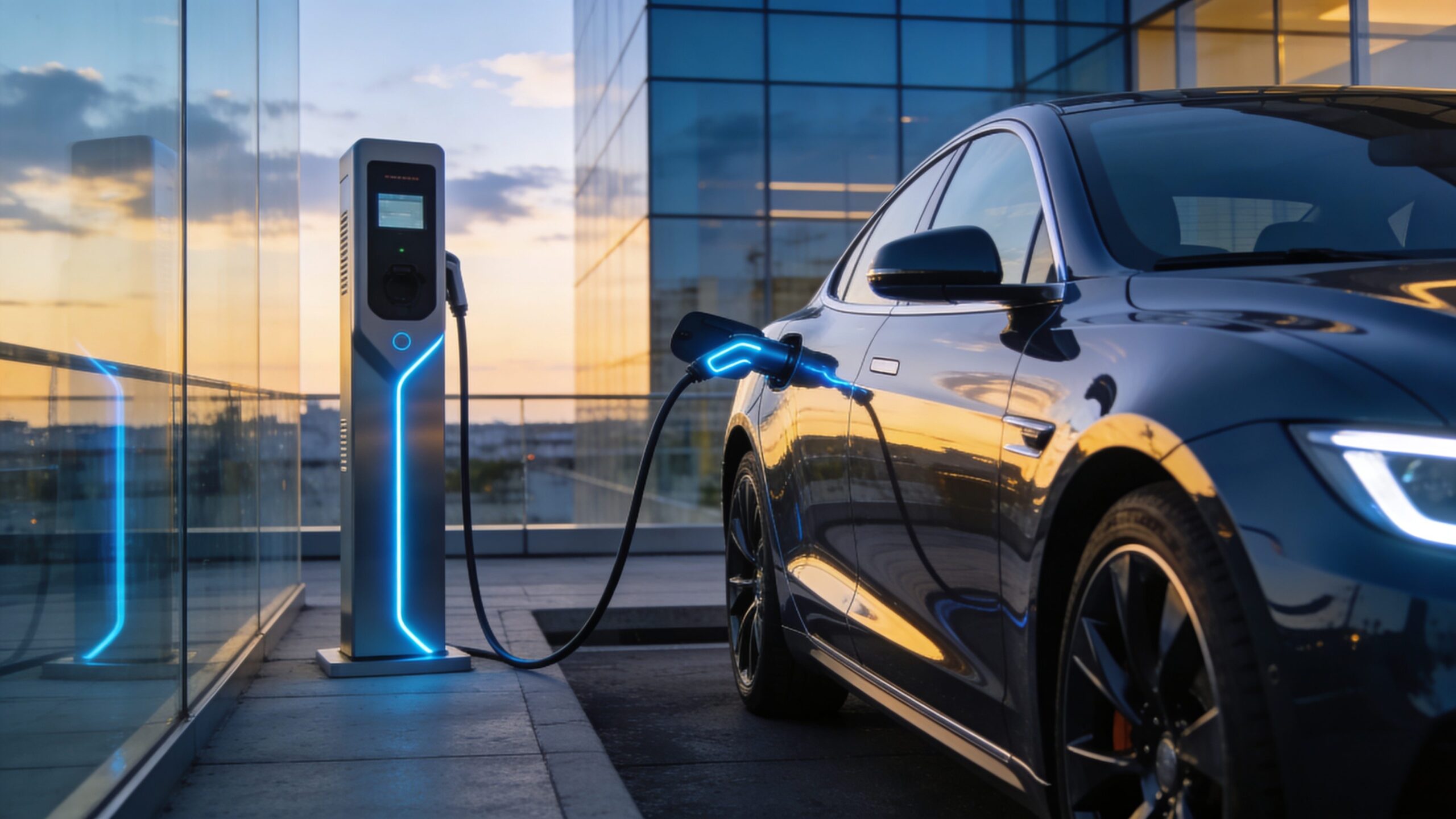
Charging speed is one of the most practical EV performance metrics because it affects how convenient the vehicle feels. Charging power is measured in kilowatts, or kW. Level 1 charging is slow and usually uses a standard household outlet. Level 2 charging is much faster and is common for home chargers and many public stations. DC fast charging is designed for quick stops during road trips.
The important thing to know is that peak charging speed does not tell the full story. An EV may advertise a very high maximum charging rate, but it may only hold that speed briefly. The full charging curve matters more. The EPA notes that DC fast charging is generally faster when the battery is closer to empty and slows as it gets closer to full; charging beyond about 80% can take significantly longer.
10% to 80% Charging: The Road Trip Metric
When comparing EV charging performance, pay close attention to the 10% to 80% charging time. This range is commonly used because it reflects how drivers typically fast charge on longer trips. Charging from very low to around 80% is usually the fastest part of the session. Charging from 80% to 100% often slows dramatically to protect battery health and manage heat. This makes the 10% to 80% figure more useful than simply asking, “How long does it take to fully charge?” In real life, many EV drivers rarely wait for a full 100% charge at a fast charger. They stop, add enough energy to reach the next destination or charger, and continue driving. A vehicle with a strong charging curve can feel much more convenient than one with a higher peak number but slower average charging.
Acceleration: Why EVs Feel So Fast
EV acceleration is one of the most exciting parts of electric driving. Electric motors can deliver strong torque immediately, which gives EVs their signature quick launch from a stop. This is why many electric cars feel responsive even if they are not marketed as performance vehicles.
The most common acceleration metric is 0–60 mph time. It is fun, easy to understand, and useful for comparing quickness. However, it is not the only measure of usable performance. Passing power, throttle response, traction control, and power delivery at higher speeds also matter. A great EV should feel confident not only from a standstill, but also when merging, climbing hills, or passing on the highway.
Torque: The Instant Pull Behind EV Performance
Torque is the twisting force that helps move a vehicle. In EVs, torque arrives almost instantly, which creates a smooth and powerful feeling as soon as the driver presses the accelerator. This is one major reason EVs can feel quicker than many gas vehicles in everyday driving. However, more torque is not always better if the vehicle cannot manage it properly. Tires, traction control, suspension tuning, and weight distribution all influence how torque reaches the road. A well-engineered EV uses software and hardware to deliver torque smoothly, predictably, and safely. That balance matters more than a huge torque number on a spec sheet.
Horsepower: Still Important, But Different in EVs
Horsepower still matters because it represents how much work the powertrain can do over time. In simple terms, torque helps launch the vehicle, while horsepower helps sustain speed and performance. High-horsepower EVs can deliver incredible acceleration and strong highway passing power.
That said, EV horsepower can be complicated because output may depend on battery charge level, temperature, drive mode, and software limits. Some EVs deliver peak power only under ideal conditions. Others are tuned for consistent daily performance instead of headline-grabbing maximum output. Beginners should treat horsepower as one part of the full performance picture, not the final answer.
Regenerative Braking: Turning Slowdowns Into Energy
Regenerative braking is one of the most distinctive EV performance features. When the driver slows down, the electric motor can act like a generator, sending energy back into the battery. This improves efficiency, reduces wear on traditional brakes, and can create a smoother driving experience. Many EVs offer adjustable regenerative braking levels. Some allow one-pedal driving, where lifting off the accelerator slows the vehicle strongly enough that the brake pedal is needed less often. This can make city driving feel more controlled and efficient. Regenerative braking is not just a clever feature; it is a major part of why EVs can perform so well in stop-and-go traffic.
Thermal Management: The Hidden Performance Protector
Thermal management refers to how an EV controls the temperature of its battery, motors, and power electronics. This matters because batteries perform best within a certain temperature range. If the battery is too cold, charging and power delivery can slow down. If it gets too hot, the vehicle may reduce performance to protect itself.
Good thermal management helps an EV charge faster, accelerate consistently, preserve battery health, and perform better in extreme weather. It is especially important for high-performance EVs, road trips, towing, and repeated fast charging. Beginners may not see thermal management in the headline specs, but it can make a major difference in real-world satisfaction.
Weight and Power-to-Weight Ratio
EVs are often heavier than comparable gas vehicles because battery packs add significant mass. The EPA has noted that increased weight can reduce EV efficiency when measured in kWh per 100 miles or MPGe. This makes weight an important performance metric, even when it is not the most exciting number. A heavy EV can still feel fast because electric motors deliver instant torque, but weight affects braking, cornering, tire wear, and efficiency. Power-to-weight ratio helps show how much performance the vehicle has relative to its mass. A lighter EV with moderate power can feel lively and efficient, while a heavier EV may need more power just to deliver similar responsiveness.
Aerodynamics: The Shape of Efficiency
Aerodynamics measure how easily a vehicle moves through the air. This becomes especially important at highway speeds, where air resistance has a major effect on energy use. A sleek EV with low drag can travel farther using the same battery capacity than a boxier vehicle with more wind resistance.
This is why many EVs have smooth front ends, flush door handles, carefully shaped rooflines, and optimized wheels. These design choices are not only about futuristic styling. They help reduce drag and improve range. For beginners, aerodynamics are a reminder that performance is not just about motors and batteries. The vehicle’s shape can be a major part of its efficiency.
Handling and Low Center of Gravity
One of the hidden advantages of EV design is battery placement. Many EVs place the battery pack low in the floor, which lowers the center of gravity. This can improve stability, cornering confidence, and overall balance. Even larger EVs can feel surprisingly planted because their weight sits low. Handling also depends on suspension tuning, steering feel, tire quality, and weight distribution. Some EVs are tuned for comfort, while others are built for sharp response and performance driving. A beginner should not assume that every EV handles the same way. Two vehicles with similar range and acceleration numbers can feel completely different from behind the wheel.
Software: The Performance Brain
Software is one of the biggest differences between EVs and traditional vehicles. In an EV, software controls power delivery, regenerative braking, battery management, traction control, charging behavior, drive modes, and sometimes even future performance updates.
This means EV performance can evolve over time. A software update may improve charging, adjust efficiency, refine throttle response, or enhance driver-assistance features. It also means the driving experience depends heavily on how well the manufacturer integrates hardware and software. In 2026, the best EVs are not just mechanically impressive. They are intelligently managed.
Real-World Testing vs Spec Sheets
Spec sheets are useful, but they do not tell the entire story. Official range, charging, and efficiency numbers are created through standardized tests, which help buyers compare vehicles. However, real-world performance depends on actual driving conditions. Independent tests, owner experiences, and long-term reviews can reveal how an EV behaves beyond the brochure. The smartest way to evaluate an EV is to combine official metrics with practical expectations. Look at range, efficiency, charging speed, battery size, and acceleration, but also consider your commute, climate, home charging access, road trip habits, and budget. EV performance is personal. The right numbers are the ones that fit your life.
The Metrics That Matter Most for Beginners
For most new EV shoppers, five metrics deserve the most attention: range, efficiency, charging speed, battery capacity, and real-world usability. Acceleration and horsepower are exciting, but they should not distract from how the vehicle performs every day. A fast EV that charges slowly or loses efficiency quickly may not be the best choice for your lifestyle.
A beginner-friendly EV should feel easy to understand and easy to live with. It should have enough range for normal use, efficient energy consumption, practical charging options, comfortable handling, and clear software controls. Once those basics are covered, performance upgrades like dual motors, sport modes, and faster acceleration become exciting bonuses rather than necessities.
Final Thoughts: EV Performance Is a Complete Experience
EV performance is not one number. It is a complete system made of energy storage, motor output, charging ability, software intelligence, efficiency, design, and real-world behavior. The fastest EV is not always the smartest choice. The longest-range EV is not always the most efficient. The biggest battery is not always the best value. In 2026, the most informed EV buyers are the ones who understand how the numbers work together. Range tells you how far you can go. Efficiency tells you how wisely the vehicle uses energy. Charging speed tells you how quickly you can get moving again. Torque and acceleration tell you how responsive the vehicle feels. Thermal management and software tell you how consistently it performs over time. When you understand these metrics, electric vehicles become far less confusing and far more exciting.