Introduction to EV Powertrain Architecture
Electric vehicles are no longer a glimpse into the future—they are the present. At the core of every electric car lies a system that defines how it moves, performs, and delivers energy: the EV powertrain. While traditional vehicles rely on complex internal combustion engines, electric vehicles simplify the concept of motion into something more efficient, elegant, and surprisingly powerful. Understanding the EV powertrain is the key to understanding why electric vehicles feel different to drive, cost less to maintain, and continue to reshape the automotive world. This guide breaks everything down into simple, engaging terms so anyone can grasp how modern electric vehicles actually work.
A: A battery and electric motor.
A: Usually single-speed systems.
A: Yes, due to instant torque.
A: Much higher than gas vehicles.
A: Energy recovery during deceleration.
A: Yes, fewer moving parts help.
A: Typically many years with proper care.
A: No.
A: Yes, range continues improving.
A: Absolutely.
What Is an EV Powertrain?
An EV powertrain is the complete system responsible for converting electrical energy into motion. It replaces the engine, fuel system, and transmission found in gasoline vehicles with a streamlined combination of electric components designed for efficiency and performance.
At its core, the EV powertrain takes stored energy from a battery and transforms it into mechanical motion that turns the wheels. This process happens almost instantly, which is why electric vehicles feel so responsive compared to traditional cars. Instead of combustion, explosions, and mechanical complexity, the EV relies on clean energy flow and precise electronic control.
The Main Components of an EV Powertrain
The beauty of EV powertrain architecture lies in its simplicity. While traditional vehicles may contain hundreds of moving engine parts, electric vehicles rely on far fewer components to achieve the same goal.
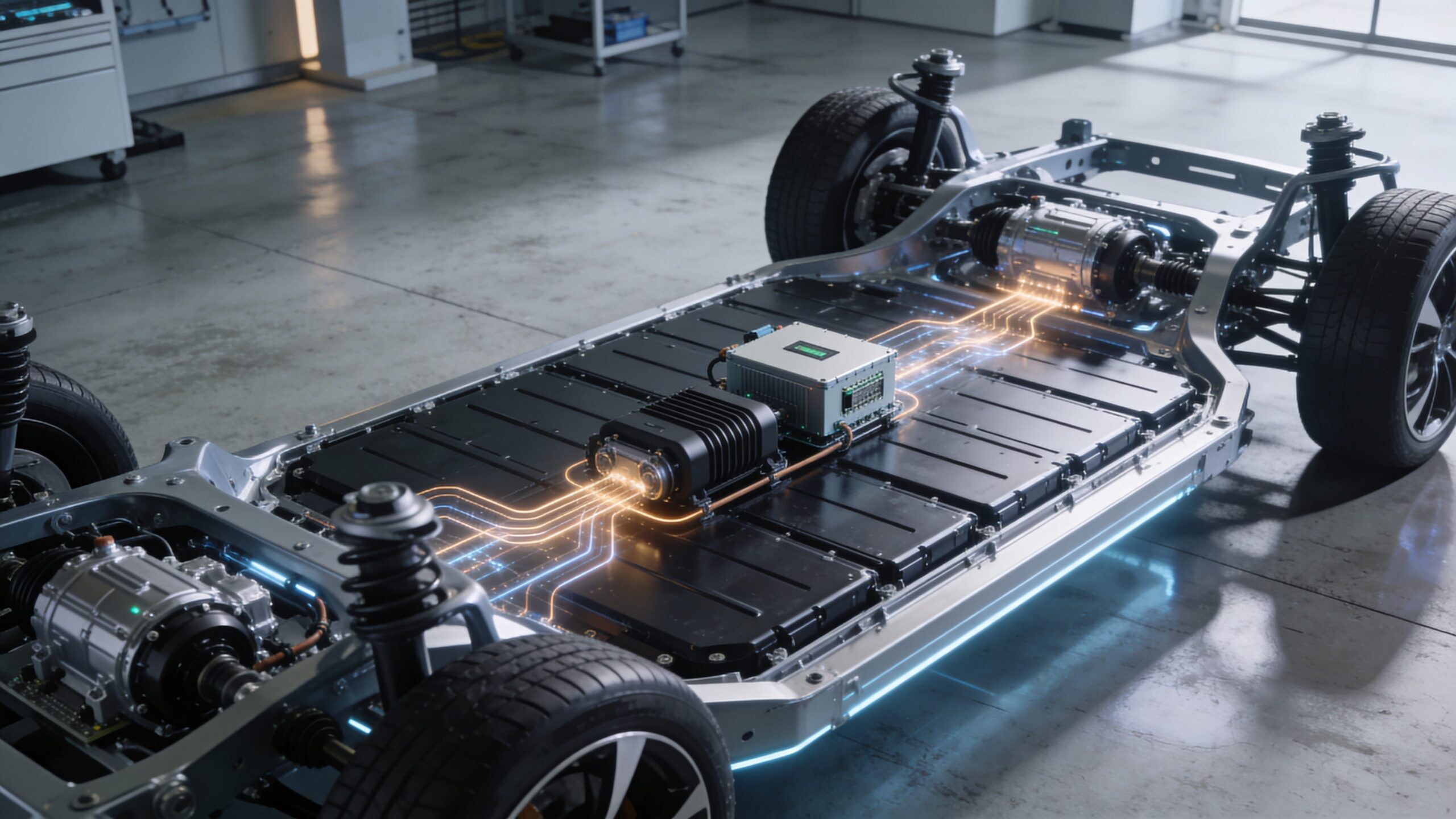
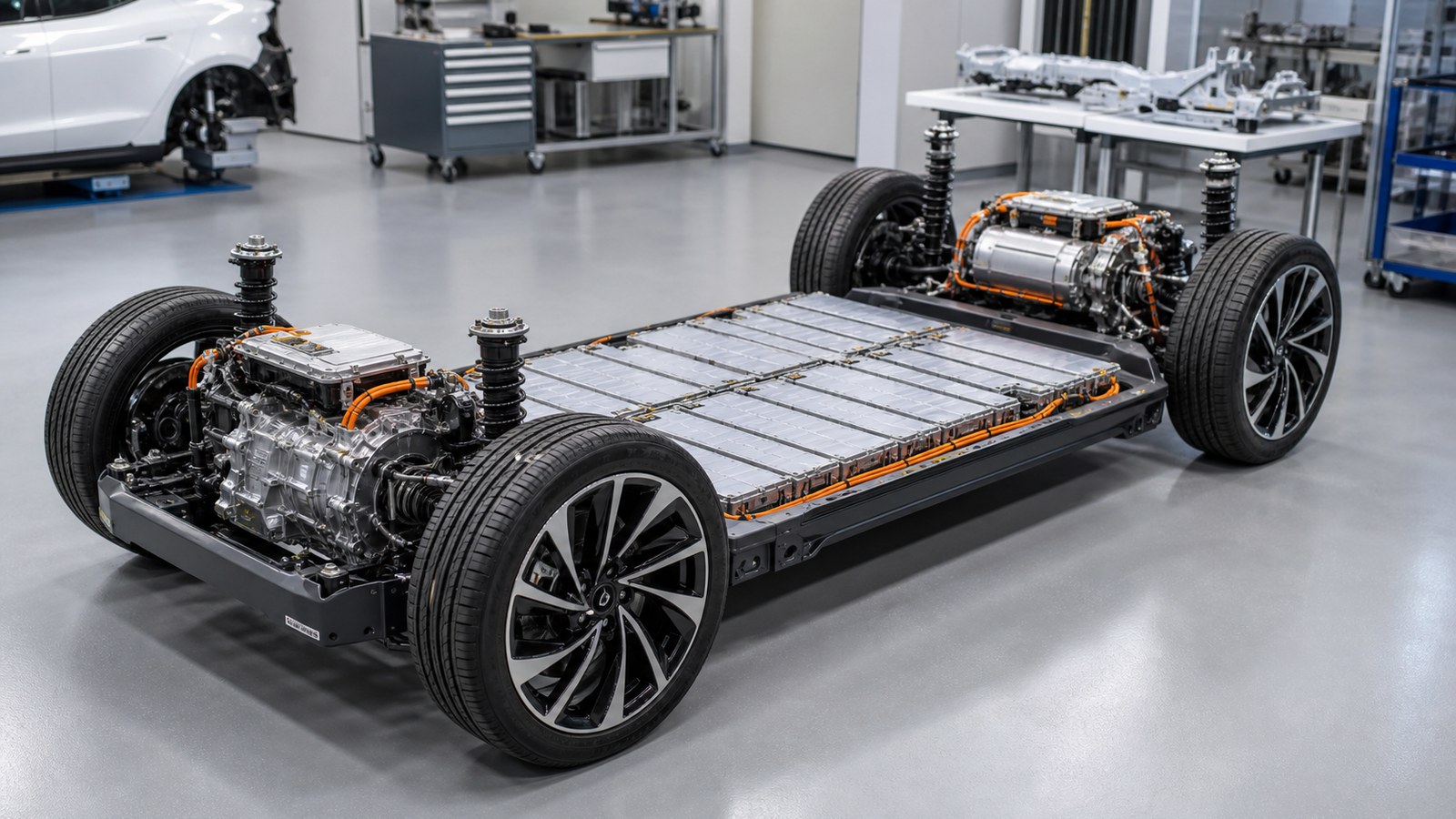
The battery pack serves as the energy source, storing electricity that powers the vehicle. This is typically mounted low in the chassis, creating better balance and stability. The electric motor converts electrical energy into rotational force, turning the wheels with remarkable efficiency.
Between these two sits the inverter, a critical component that converts direct current from the battery into alternating current that the motor can use. Power electronics and controllers manage the flow of energy, ensuring smooth acceleration and optimal performance at all times. Together, these components form a seamless system that delivers power quietly, efficiently, and instantly.
How an EV Powertrain Works Step by Step
The process begins when the driver presses the accelerator. Instead of opening a throttle or injecting fuel, the vehicle’s control system signals the inverter to draw power from the battery. This electricity is converted into the appropriate form and sent to the motor.
The motor immediately begins spinning, generating torque that is transferred directly to the wheels. Because electric motors produce maximum torque from a standstill, the response is immediate. There is no delay, no gear shifting, and no gradual buildup of power. As the vehicle moves, the system continuously adjusts energy flow to match driving conditions. When slowing down, the process can even reverse through regenerative braking, allowing the motor to act as a generator and send energy back into the battery.
EV Powertrain vs Traditional Engine Systems
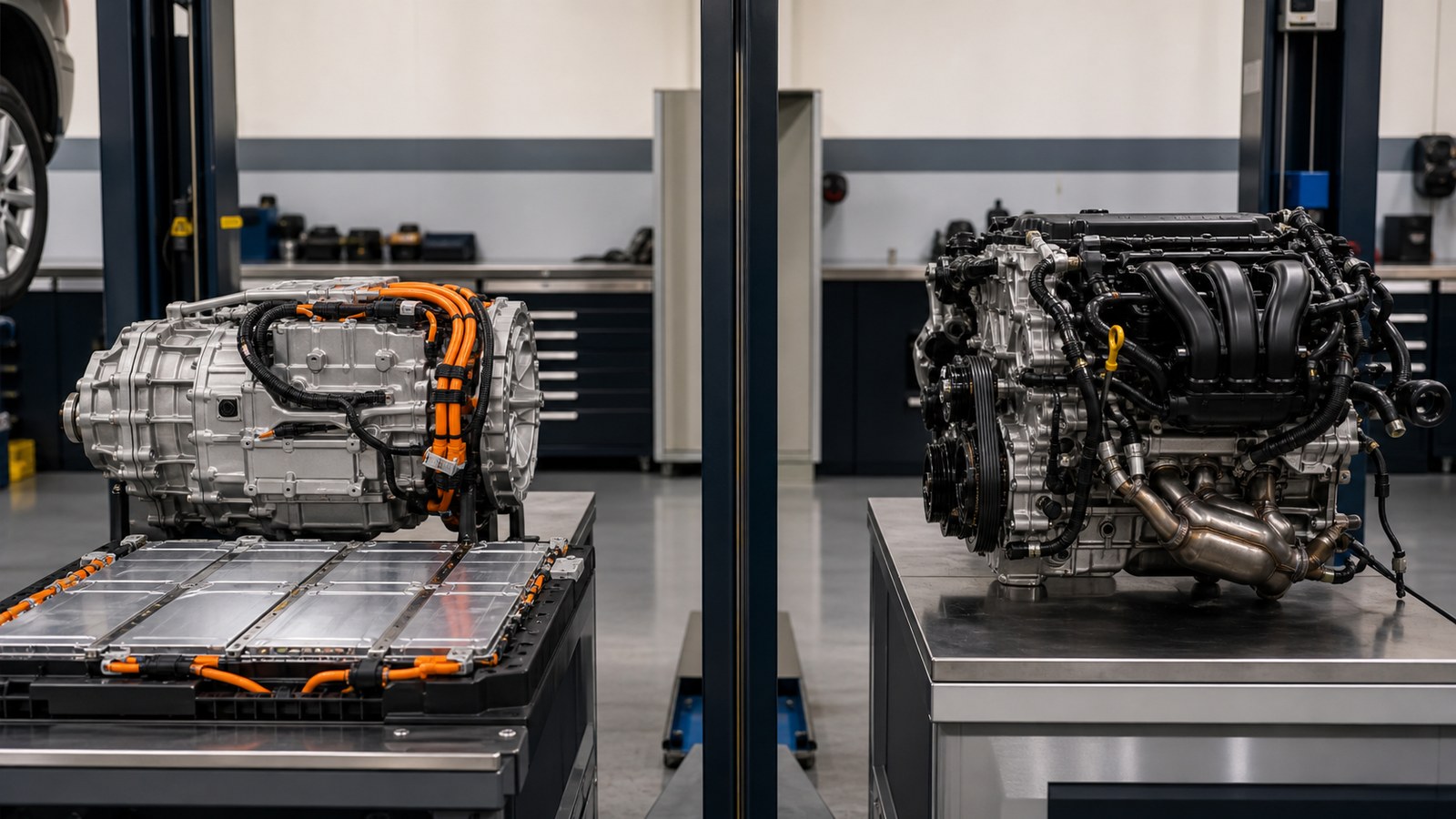
The contrast between EV powertrains and traditional internal combustion engines is dramatic. Gasoline engines rely on controlled explosions to generate power, requiring fuel injection systems, exhaust systems, and complex transmissions to manage performance.
Electric powertrains eliminate most of this complexity. There is no fuel combustion, no exhaust emissions, and far fewer moving parts. This results in a smoother, quieter driving experience with significantly reduced maintenance requirements.
While traditional engines lose a large portion of their energy as heat, EV powertrains are far more efficient. A greater percentage of the energy stored in the battery is used to actually move the vehicle, which translates into better performance and lower operating costs.
Why EV Powertrains Feel So Fast
One of the most noticeable differences when driving an electric vehicle is how quickly it accelerates. This comes down to how electric motors deliver torque. Unlike gasoline engines, which must build up power over time, electric motors provide instant torque the moment they receive energy.
This means that when you press the accelerator, the vehicle responds immediately. There is no waiting for gears to shift or engine speed to increase. The result is smooth, seamless acceleration that feels both powerful and controlled. This characteristic is a defining feature of EV performance and one of the reasons electric vehicles often outperform traditional cars in acceleration tests.
Types of EV Powertrain Layouts
Not all electric vehicles are built the same. Powertrain architecture can vary depending on design goals, performance needs, and vehicle type.
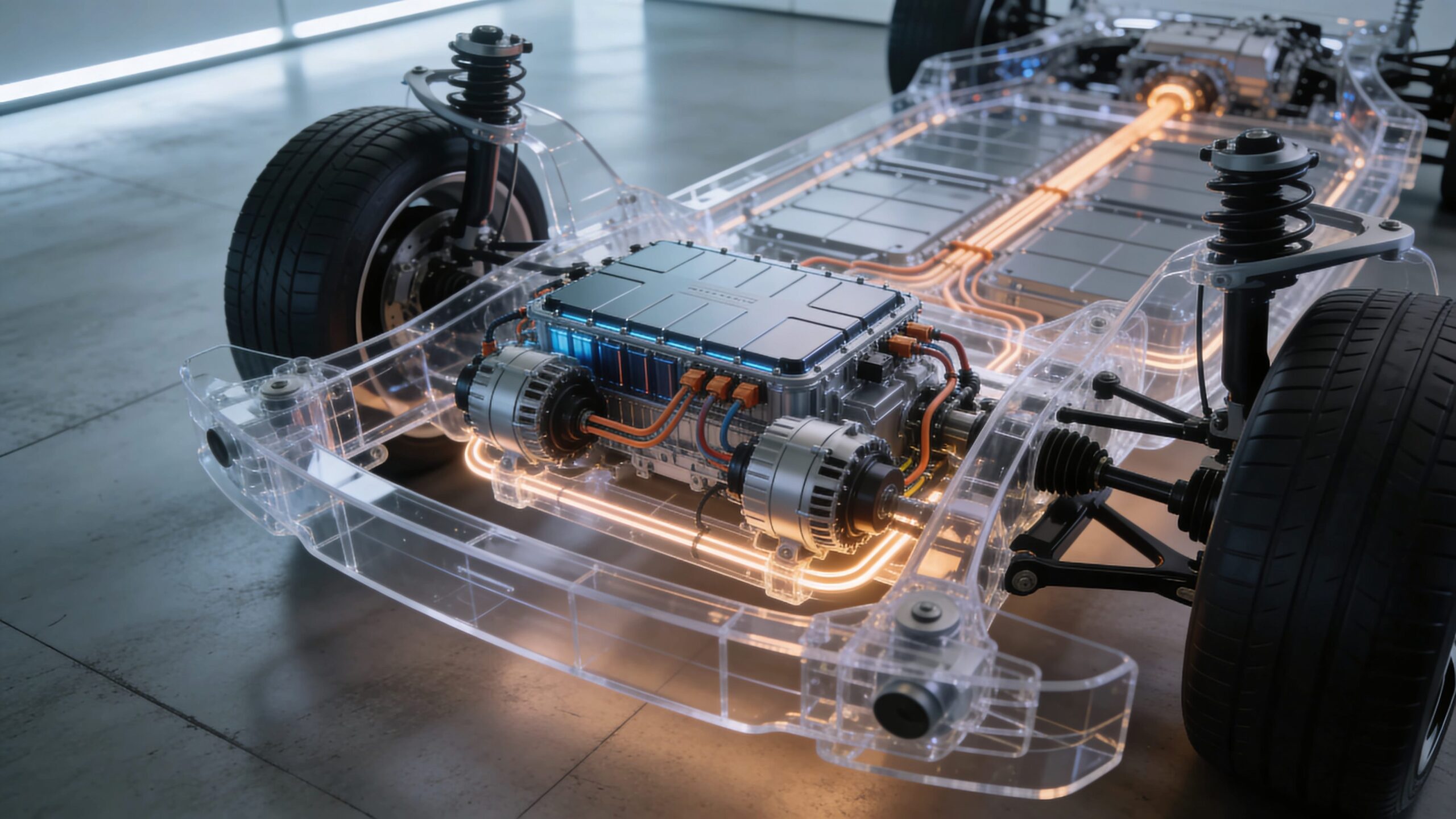
Some EVs use a single motor to drive either the front or rear wheels. These setups are efficient and cost-effective, making them popular in entry-level models. Others use dual motors—one for the front axle and one for the rear—creating all-wheel drive capability with improved traction and performance.
More advanced designs may include multiple motors for precise control over each wheel. These systems can enhance handling, stability, and acceleration in ways that traditional drivetrains cannot match.
The Role of the Battery in the Powertrain
The battery is the heart of the EV powertrain. It stores the energy that powers the entire system and determines how far the vehicle can travel on a single charge.
Modern EV batteries are designed to deliver high energy density while maintaining safety and durability. They are carefully integrated into the vehicle structure, often forming the base of the chassis. This design lowers the center of gravity, improving handling and ride quality. Battery management systems monitor temperature, charge levels, and performance to ensure everything operates safely and efficiently. Without this intelligent oversight, the powertrain would not function reliably.
Inverters and Power Electronics Explained
While the battery and motor receive most of the attention, the inverter plays a critical role in EV powertrain architecture. It acts as the translator between the battery and the motor, converting electrical energy into a usable form.
This conversion must happen rapidly and precisely, especially during acceleration or braking. Power electronics also regulate voltage and current, ensuring that energy flows smoothly throughout the system.
Advancements in inverter technology have significantly improved EV performance, enabling faster acceleration, better efficiency, and more responsive driving experiences.
Regenerative Braking: Energy Recovery in Action
One of the most innovative features of EV powertrains is regenerative braking. Instead of wasting energy as heat when slowing down, electric vehicles capture that energy and reuse it.
When the driver lifts off the accelerator or applies the brakes, the motor reverses its function and acts as a generator. This process converts kinetic energy back into electrical energy, which is stored in the battery. Regenerative braking not only improves efficiency but also reduces wear on traditional braking components. It is a perfect example of how EV powertrains are designed to maximize energy usage.
EV Powertrain Efficiency and Sustainability
Efficiency is one of the greatest strengths of electric vehicles. EV powertrains convert a much higher percentage of energy into motion compared to internal combustion engines.
This efficiency leads to lower energy consumption, reduced emissions, and a smaller environmental footprint. Combined with renewable energy sources, EVs have the potential to dramatically reduce the impact of transportation on the planet.
As technology continues to evolve, improvements in battery design, power electronics, and motor efficiency will push EV performance even further.
The Future of EV Powertrain Technology
The evolution of EV powertrain architecture is far from over. Engineers are continuously developing new ways to improve efficiency, performance, and cost-effectiveness.
Emerging technologies such as higher-voltage systems, advanced cooling solutions, and integrated drive units are already shaping the next generation of electric vehicles. These innovations aim to make EVs faster, lighter, and more efficient than ever before. As the industry grows, the EV powertrain will remain at the center of innovation, redefining what vehicles are capable of and how they interact with the world around them.
Why Understanding EV Powertrains Matters
The EV powertrain is more than just a collection of components—it is the foundation of a new era in transportation. By replacing complexity with efficiency and precision, electric vehicles offer a driving experience that feels both modern and intuitive.
For beginners, understanding how an EV powertrain works unlocks a deeper appreciation for the technology behind electric vehicles. It explains why they accelerate so quickly, operate so quietly, and require less maintenance.
As electric vehicles continue to grow in popularity, this knowledge becomes increasingly valuable. The future of driving is electric, and it all begins with the powertrain.