EV Cost Is More Than the Sticker Price
The true cost of owning an electric vehicle depends on purchase price, incentives, financing, charging location, electricity rates, insurance, maintenance, tires, depreciation, and how many miles the vehicle covers each year. Some drivers save a lot because they charge cheaply at home and avoid many gasoline maintenance costs. Others see smaller savings because they rely on public fast charging, pay higher insurance, buy expensive tires, or choose a model with steep depreciation. The right way to compare an EV is not to ask whether every electric car is automatically cheaper. The better question is how the full ownership picture looks for your driving pattern, your local rates, and the specific vehicle you are considering.
A: No. Many are cheaper for the right driver, but purchase price, charging access, insurance, and depreciation can change the result.
A: Low-cost home or workplace charging combined with high annual mileage usually creates the strongest savings.
A: It can be, especially DC fast charging, so daily reliance on public stations should be budgeted carefully.
A: They often need less powertrain service, but tires, filters, fluids, brakes, and inspections still count.
A: Yes, especially in the first year, although the charger may benefit future vehicles too.
A: No. Eligibility changes by vehicle, buyer, income, location, timing, and tax situation.
A: Repair costs, parts availability, sensors, battery structures, and vehicle value can affect premiums.
A: They can if the vehicle is heavy, powerful, or driven aggressively, so rotation and pressure matter.
A: Not perfectly. EV resale values can shift as prices, incentives, range, and charging standards change.
A: Build a five-year estimate using your own mileage, rates, insurance quote, charger cost, and resale assumption.
Start With the Purchase Price
The first cost is the easiest to see and the easiest to misunderstand. EVs can range from budget-oriented commuters to expensive luxury vehicles, and a higher purchase price can take years to offset through lower energy and maintenance costs. Incentives, dealer discounts, leases, and used-vehicle pricing can change the picture, but they should be treated carefully. A rebate you do not qualify for is not savings, and a low advertised lease may include mileage limits or fees that matter later.
A fair comparison uses similar vehicles. Comparing a compact EV to a large gasoline SUV will distort the answer. Compare size, performance, equipment, warranty, and intended use, then calculate the cost over the years you expect to keep the vehicle.
Charging Cost Depends on Location
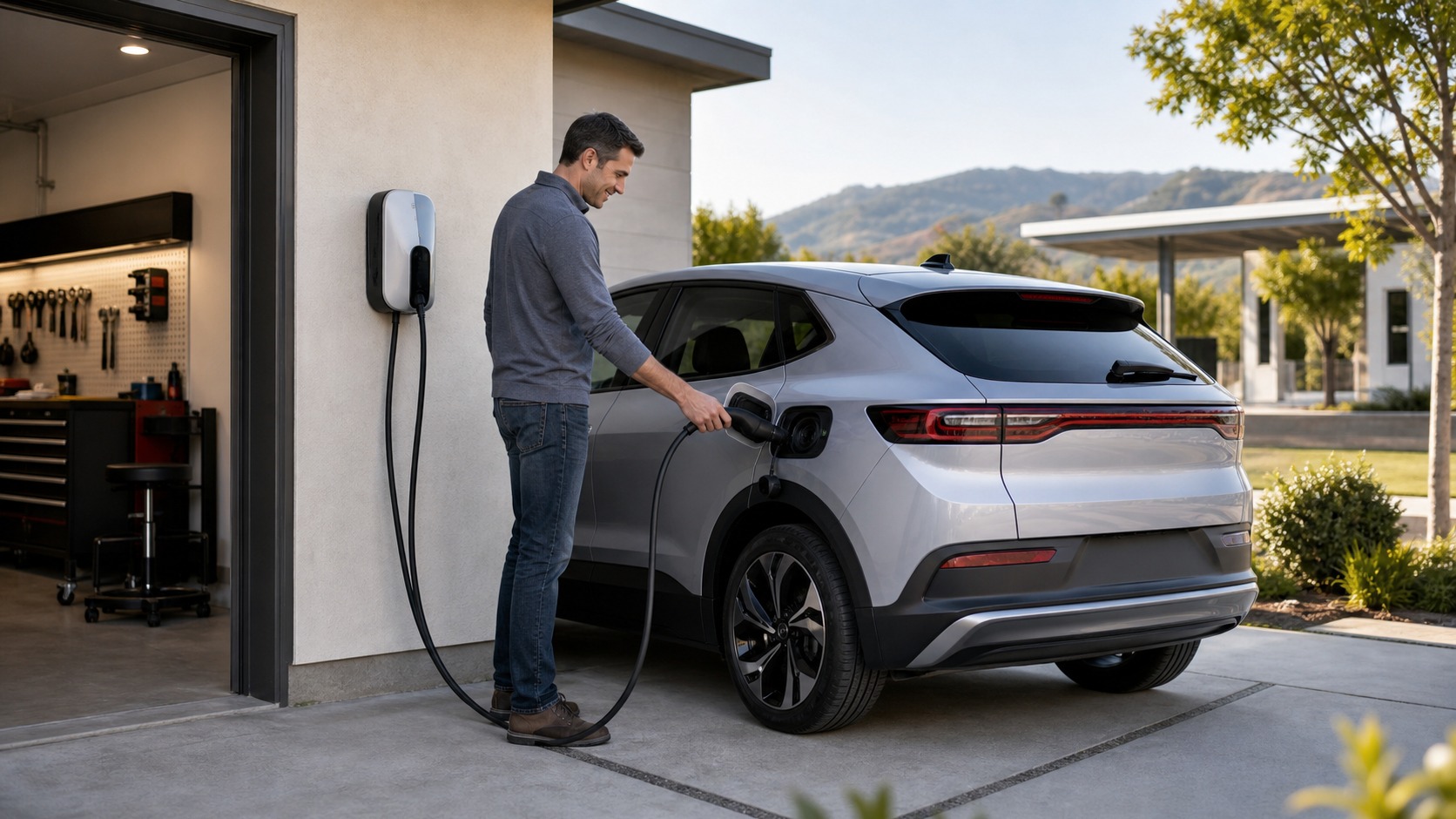
Home charging is where many EVs become inexpensive to run. If electricity costs are low, especially overnight, the cost per mile can be far below gasoline. Time-of-use plans can improve that further when the car charges while household demand is low. The math is straightforward: estimate how many kilowatt-hours the car uses per mile, include charging losses, and multiply by your rate.
Public charging is different. DC fast charging is convenient and valuable on trips, but it usually costs more than home electricity. Some stations charge by energy, some by time, and some include membership discounts or idle fees. Drivers who cannot charge at home should calculate with the actual public chargers they expect to use.
Workplace charging can be a major swing factor. Free or discounted charging at work can make an EV very affordable, while unreliable apartment charging can add cost and frustration. Access matters as much as the posted price.
Home Charger Installation
A Level 2 home charger may be a one-time investment that improves daily convenience for years. The cost depends on panel capacity, distance from the electrical panel, amperage, permit requirements, wall condition, outdoor rating, and whether trenching or upgrades are needed. Some homes can add a charger easily; others need load management or panel work.
Maintenance Savings Are Real
EVs do not need oil changes, spark plugs, timing belts, exhaust systems, or many engine-related repairs. Regenerative braking can extend brake pad life because the motor handles much of the slowing. That can reduce service visits and make ownership feel simpler. For high-mileage drivers, the avoided maintenance time can be almost as valuable as the money.
Still, an EV is not a sealed appliance. Brake fluid, coolant checks, cabin filters, wipers, alignments, suspension parts, and software-related service can remain. The best estimate is not zero maintenance; it is lower maintenance in some categories and normal attention in others.
Tires Deserve Their Own Line
Tires can surprise new EV owners. Many electric vehicles are heavy, powerful, and quiet, which can hide how hard the tires are working. Instant torque is enjoyable, but repeated aggressive launches can shorten tire life. Low rolling resistance tires may also cost more in certain sizes. Regular rotation, correct pressure, and smooth acceleration help protect the budget.
The cost impact varies. A small, efficient EV driven gently may have ordinary tire costs. A heavy performance EV with large wheels may not. Shoppers should price a replacement set before buying, especially when comparing trims with different wheel sizes.
Tire choice also affects range. A cheaper replacement tire that reduces efficiency can raise charging cost over time. The lowest purchase price is not always the lowest ownership cost.
Insurance and Repair Costs
Insurance can be higher or lower depending on the model, repair network, parts prices, sensors, battery structure, safety ratings, and local claim history. Get quotes before deciding that fuel savings will cover everything. A vehicle with expensive body panels, specialized glass, or limited repair options may cost more to insure than expected.
Collision repair is another variable. Battery packs are protected, but when structural or high-voltage areas are involved, repair procedures can be strict. Calibration for cameras and sensors can add cost. This does not make EVs bad purchases; it means repair economics should be part of the comparison.
Depreciation Can Dominate
For many new vehicles, depreciation is the largest cost, and EVs can be volatile. Price cuts, new incentives, faster charging, longer range, changing plug standards, and battery improvements can affect resale value. A model that looks expensive to charge may still be cheap to own if it holds value well, while a discounted new EV may cost more if resale falls sharply.
Registration, Taxes, and Fees
Some states charge extra EV registration fees to replace gasoline tax revenue. Local taxes, charger permits, toll programs, and parking incentives can also affect ownership cost. These items are rarely as exciting as range or horsepower, but they belong in the budget because they arrive every year.
Incentives should be handled with equal care. Federal, state, utility, and local programs may depend on income, vehicle assembly, battery sourcing, lease structure, charger type, or application timing. Confirm the rule before counting the money.
Used EVs Change the Equation
A used EV can be a strong value because the first owner may have absorbed the steepest depreciation. The buyer should check battery warranty remaining, charging history where available, recall completion, tire condition, and fast-charging compatibility. A lower used price can make even modest energy savings feel meaningful.
Annual Mileage Changes Everything
The more miles you drive, the more energy cost matters. A low-mileage driver may like an EV for smoothness, quietness, or home charging convenience, but the financial savings may build slowly. A high-mileage driver can recover more of the purchase premium because every mile charged cheaply at home replaces a mile that would have required gasoline.
This is why national averages can mislead. A household with two cars might use the EV for most daily driving and keep a gasoline vehicle for rare towing or remote trips. Another household may put every mile on the EV. The same purchase price can lead to very different payback periods.
Mileage also affects tires, depreciation, warranty timing, and insurance exposure. A complete cost estimate should not treat annual miles as a footnote. It is one of the main levers.
Leasing Versus Buying
Leasing can make EV costs easier to predict because the owner avoids some resale uncertainty. It may also make certain incentives available through lease structures even when a purchase does not qualify in the same way. The tradeoff is mileage limits, wear rules, fees, and the fact that payments never build ownership equity.
Buying can work well for drivers who keep vehicles for a long time and want to benefit from lower operating costs after the loan is gone. It also gives more freedom over mileage and charging habits. The risk is that future price cuts, battery improvements, or changing connector standards can affect resale value.
Build a Five-Year Estimate
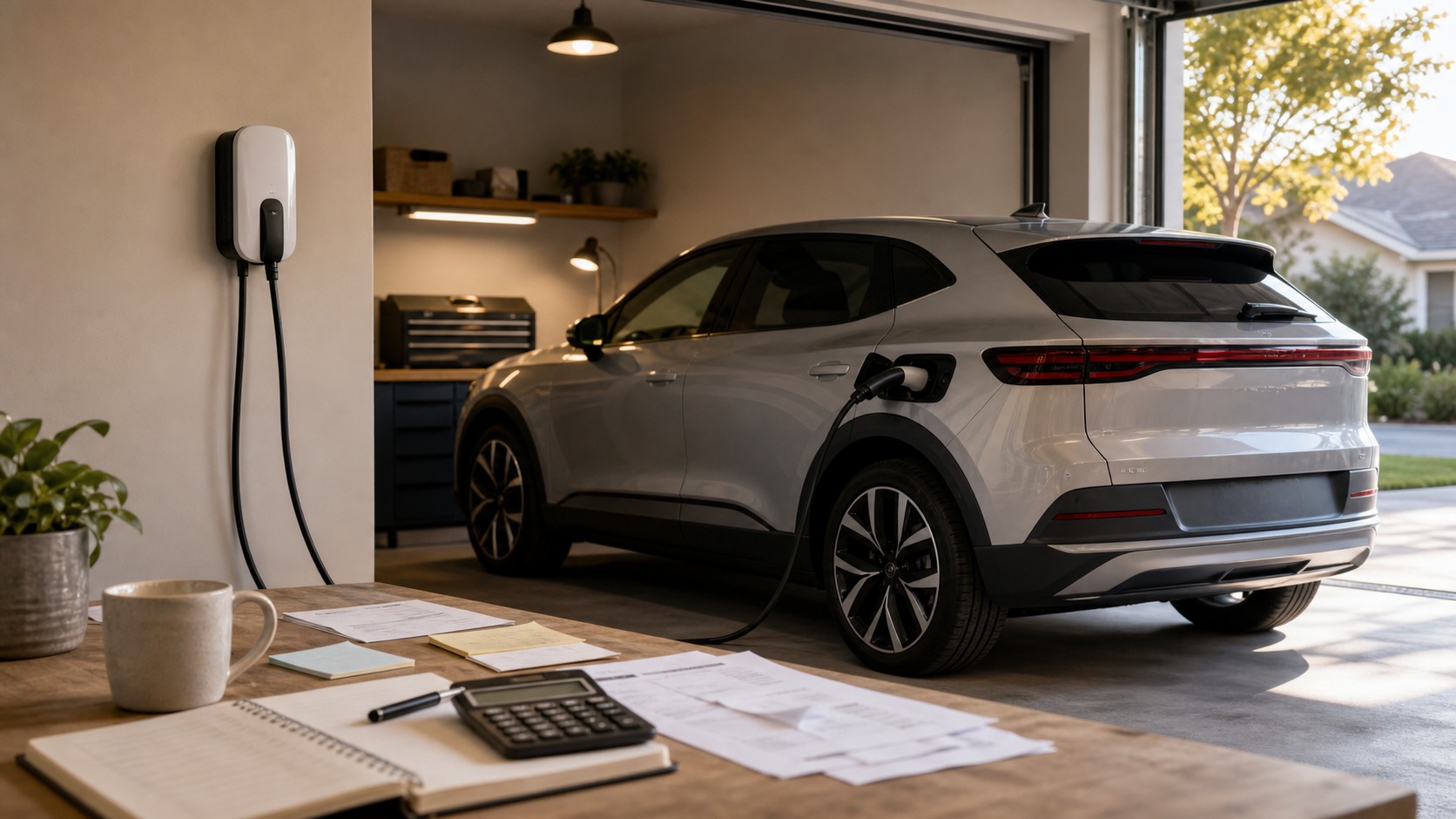
The cleanest answer is a simple five-year worksheet. Include down payment, loan interest, incentives, home charger installation, home charging, public charging, insurance, maintenance, tires, registration, and estimated resale value. Then compare that total with a similar gasoline vehicle using realistic fuel prices and maintenance expectations.
The true cost of owning an EV is personal. It rewards drivers who can charge cheaply, drive enough miles to benefit, and choose a vehicle with sensible insurance and resale prospects. It punishes vague assumptions. Do the math with your real life, and the answer becomes much clearer.
The estimate should include a pessimistic version too. Raise the insurance quote, assume one extra tire replacement, reduce resale value, and add several road-trip fast-charging sessions. If the EV still looks competitive, the financial case is stronger. If the result depends on every assumption being perfect, the purchase deserves more caution.
When the EV Is the Second Car
Many households do not need one vehicle to do every job. If an EV handles commuting, school runs, errands, and local appointments while another vehicle handles rare towing or remote travel, the ownership math can be excellent. The EV gets the high-frequency miles where cheap charging matters most, and the household avoids buying more range or capability than it actually needs.
That setup can also reduce stress for first-time buyers. Instead of demanding that the EV replace every possible scenario immediately, the household can let it replace the miles it handles best. Over time, many owners discover the electric car becomes the default because it is convenient and inexpensive to run.
What Cheap Ownership Feels Like
The lowest-cost EV ownership usually feels uneventful. The car charges at home during off-peak hours, tires are rotated on schedule, software stays current, and public fast charging is saved for trips. The owner is not chasing free chargers across town or relying on best-case range. They simply have a routine that keeps energy cost predictable.
Expensive EV ownership often has the opposite shape. The vehicle is larger or more powerful than needed, charging happens mostly at premium public stations, insurance is higher than expected, and tire costs arrive early. None of those choices is automatically wrong, but they should be understood as choices rather than surprises.
The true cost question is therefore practical, not ideological. An EV can be a bargain, a luxury, or somewhere between. The numbers depend on matching the vehicle and charging plan to the life it will actually serve.
The Best Deal Is the One You Can Repeat
A tempting purchase price is only one part of the decision. The better test is whether the charging plan, insurance premium, tire cost, and payment still feel reasonable month after month. A good EV deal should not depend on rare free charging, unrealistic resale value, or a commute that might change next year.
Repeatable savings are more durable. Overnight home charging, a sensible vehicle size, predictable maintenance, and a realistic ownership period can make the financial case stronger than a single rebate headline. When the everyday plan works, the total cost has a much better chance of working too.
Cost Clarity Makes Shopping Easier
Once the numbers are organized, the shopping conversation changes. Instead of asking whether EVs are cheap or expensive as a category, the buyer can see which specific costs matter for a specific vehicle. That clarity makes it easier to walk away from a bad fit and recognize a genuinely strong ownership case.
That is where confident EV budgeting really begins.
A buyer who can repeat the math in ordinary months is far less likely to be surprised later.