EV Ownership Feels Simple Once the Routine Clicks
The first few weeks with an electric vehicle can feel unfamiliar because the habits are different from gasoline ownership. Instead of waiting until the tank is low, most EV drivers charge during normal parking time. Instead of thinking only about miles per gallon, they learn range, efficiency, battery percentage, charging speed, and route planning. The car itself is usually easy to drive, but the ownership rhythm takes a little practice. Once that rhythm clicks, an EV becomes less mysterious: plug in when it makes sense, keep a sensible range buffer, use fast charging for travel, and let routine maintenance stay refreshingly light.
A: Many owners do, but the real goal is starting each day with enough range and a comfortable buffer.
A: Not always. Drivers with short commutes can begin with existing charging options while they evaluate needs.
A: Occasional full charges are useful for trips, but many vehicles prefer a lower daily limit.
A: Waiting too long to learn public charging often creates stress during the first road trip.
A: A normal buffer depends on weather, commute length, charger access, and how comfortable you are with planning.
A: Maintenance decreases in some areas, but tires, fluids, filters, wipers, and inspections still matter.
A: Yes, if the circuit is suitable, but charging speed may be too slow for higher daily mileage.
A: The estimate reacts to recent speed, temperature, terrain, climate use, and driving style.
A: Buy only adapters that match your vehicle and real charging needs, and choose reputable hardware.
A: Usually after a few charging cycles, one public charging test, and the first longer drive.
Start With How You Park
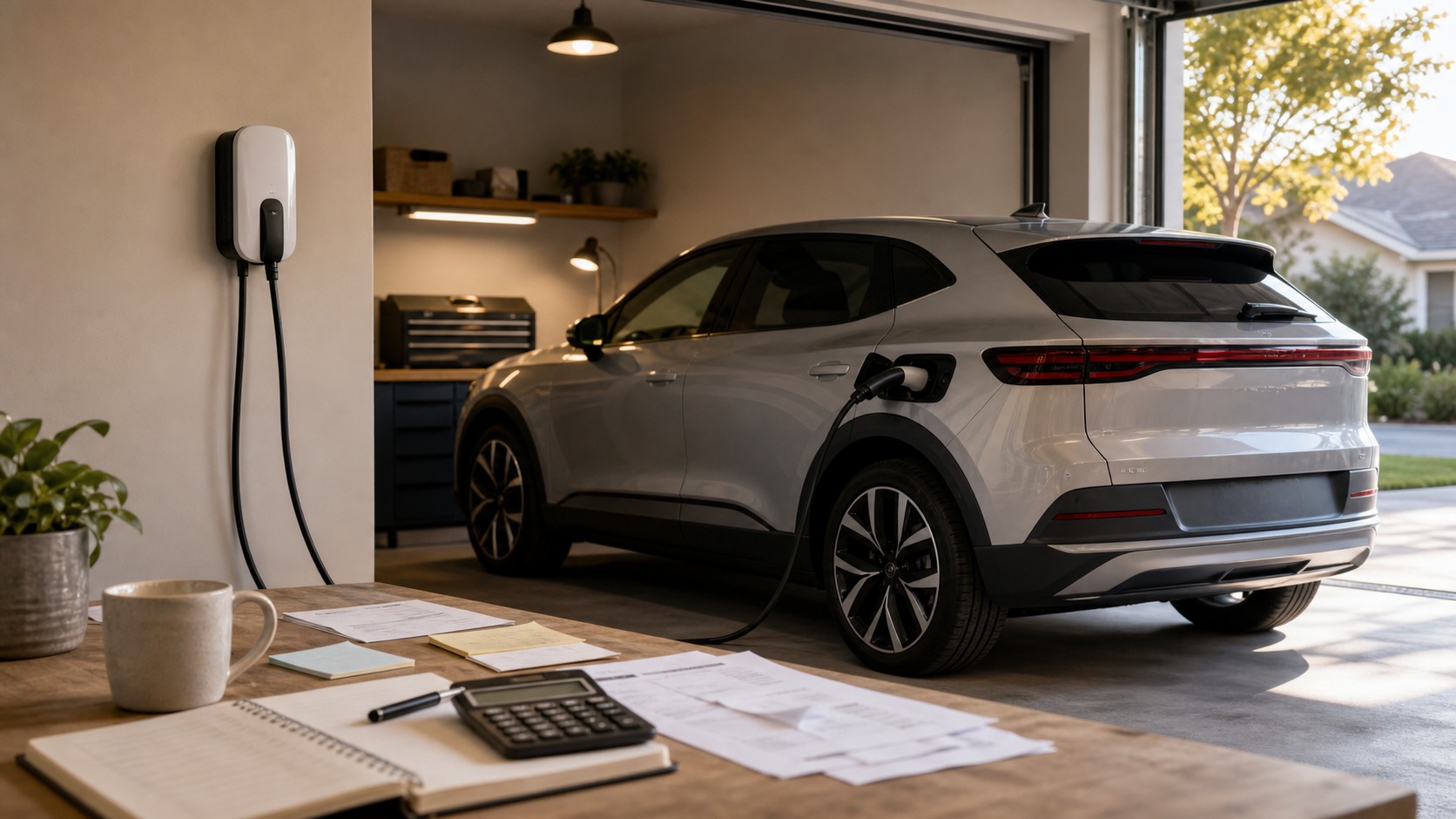
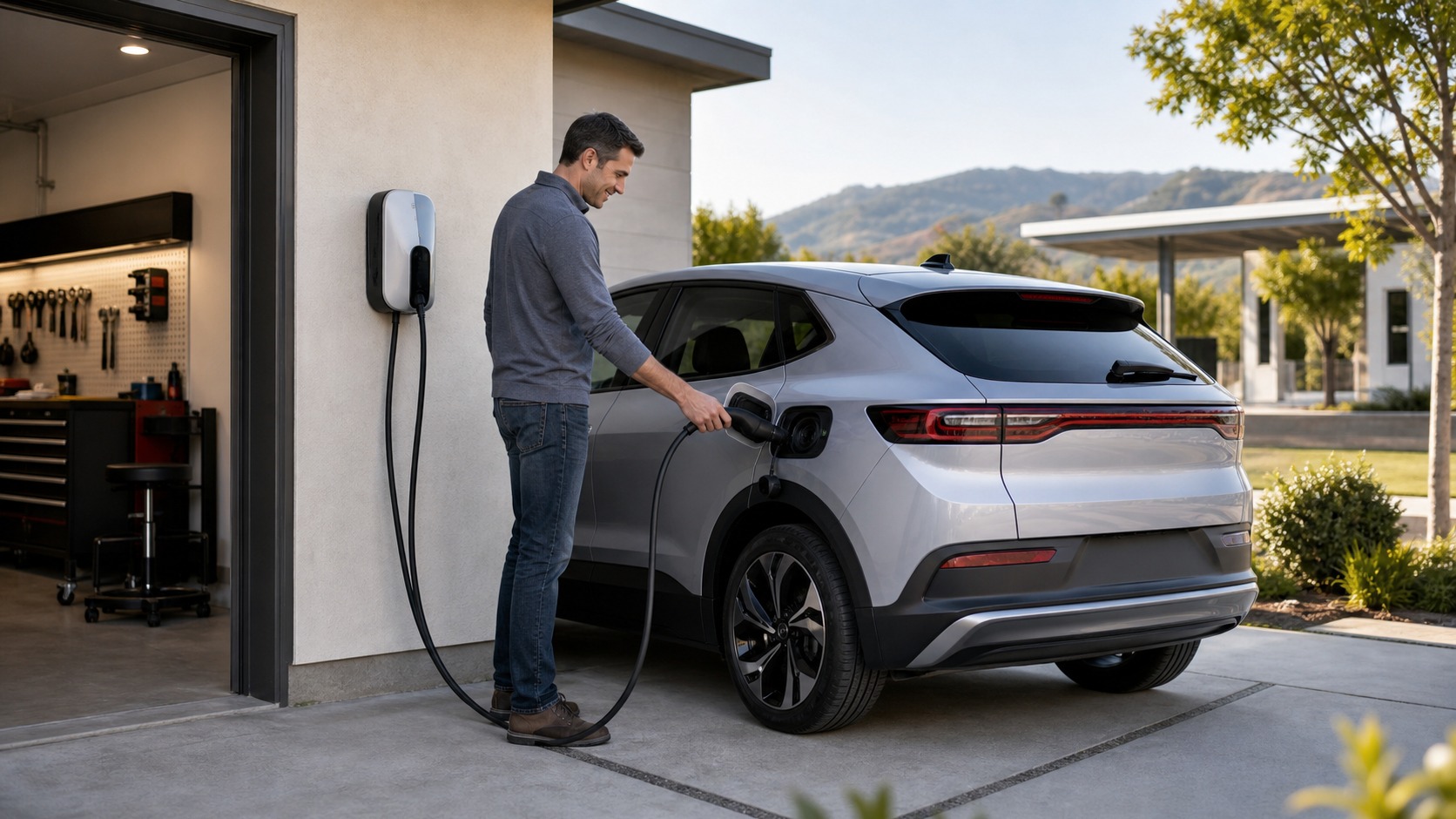
EV ownership begins with parked time. If the vehicle sits at home overnight, at work during the day, or near reliable public charging for several hours, charging can become part of the background. That is the biggest mental shift for new owners. You are not replacing every gas-station visit with a charging-station visit. You are moving much of the energy refill into time the car was already doing nothing.
Look at your normal week before buying equipment. A driver who uses 25 miles a day has different needs from someone with a 90-mile commute, winter highway travel, and no workplace charging. The right setup is the one that restores your routine range comfortably, not the one with the biggest number on the box.
Learn Your Charging Levels
Level 1 charging uses a regular household outlet and is slow, but it can be useful for light driving or temporary ownership. Level 2 charging is the everyday answer for many homes, apartments, workplaces, and hotels because it can add meaningful range over several parked hours. DC fast charging is the travel tool, designed to add range during shorter stops on longer routes.
Set a Daily Battery Target
Most EVs let owners choose a daily charge limit. A common routine is to charge to a moderate level for normal use and raise the target before a long trip. The exact number depends on the vehicle chemistry and manufacturer guidance, so the owner manual matters. The principle is simple: keep enough range for life without treating every day like a road trip.
This habit also helps reduce unnecessary fast charging. If the car wakes up with enough range every morning, public charging becomes something you use by choice rather than panic. That makes ownership calmer and often cheaper.
Do not worry if the first month feels too cautious. Many new owners start with a larger buffer and shrink it as they learn real efficiency. Confidence grows from repeated evidence, not from pretending range estimates are perfect.
Make Public Charging Boring
The best time to learn public charging is before you need it. Visit a nearby station, plug in, start a session, stop it, and confirm the receipt or app record. That short practice run teaches connector handling, parking position, payment flow, and charger etiquette. It also reveals which networks near you are reliable.
On road trips, plan around working chargers and realistic arrival percentages. A station with several stalls is usually better than one lonely charger. Reviews, live availability, and backup options are worth checking because charging reliability varies by location.
Understand Range Without Obsessing
The dashboard range number is an estimate, not a contract. It changes because the vehicle is trying to predict the future from recent driving, weather, elevation, and energy use. Highway speed, cold weather, wet roads, roof racks, and heavy loads can all reduce range. Gentle city driving in mild weather can make the estimate look generous.
A better habit is watching efficiency over time. Learn what your car uses during commuting, errands, highway trips, winter mornings, and mountain drives. After a while, you will know whether a planned route is easy, marginal, or worth a charging stop.
Range anxiety usually fades when owners stop asking whether the car can do everything and start asking where the next comfortable stop belongs. Planning does not need to be elaborate; it just needs to match the route.
Prepare the Home Setup
If you install Level 2 charging, involve a qualified electrician and think about the whole space. Panel capacity, circuit length, charger location, cable reach, weather exposure, and parking habits all matter. A slightly less powerful charger in the perfect spot may be better than an expensive installation that is awkward every night.
Expect Different Maintenance
EVs avoid oil changes, exhaust repairs, spark plugs, and many engine-related services, but they are not maintenance-free. Tires can wear quickly because EVs are often heavy and deliver instant torque. Brake pads may last longer thanks to regenerative braking, yet brake fluid and brake hardware still need attention. Cabin filters, coolant checks, wipers, suspension, and alignment remain part of ownership.
Software also becomes part of maintenance. Updates can improve charging behavior, route planning, battery conditioning, or driver-assistance features. Read update notes before assuming every change is cosmetic.
Drive It Like an EV
Regenerative braking is one of the pleasures of electric driving. It can make the car feel smooth, efficient, and controlled in traffic. Some drivers prefer strong one-pedal behavior, while others choose a lighter setting that feels more like a conventional car. Try the options and choose the one that makes you consistent and comfortable.
Fast acceleration is fun, but smooth driving pays back in range, tire life, and passenger comfort. The point is not to make EV ownership dull. It is to know when efficiency matters and when there is plenty of battery to enjoy the car.
Cold weather adds another layer. Preconditioning while plugged in can warm the cabin and battery before departure, which saves range and improves comfort. Winter tires, pressure checks, and extra trip margin can matter more than beginners expect.
Know Your Warranty and Roadside Rules
Battery warranties often include years, mileage, and sometimes capacity-retention terms. Read the details while everything is fine, not after a problem appears. Also learn towing rules because some EVs require flatbed transport or specific procedures to protect motors and high-voltage components. Keep the roadside assistance number in the car and in your phone so a stressful situation does not become a search project.
Warranty language can also explain what the manufacturer considers normal capacity loss. Batteries age slowly, and a small range change over time does not automatically mean failure. Knowing the coverage threshold helps owners separate ordinary aging from a claim-worthy problem.
Apartment and Street Parking Realities
New owners without a private driveway need a different routine. Apartment charging, curbside charging, workplace stations, and nearby public Level 2 chargers can work, but they require more planning than a garage outlet. Before relying on any station, check whether it is available overnight, whether parking rules allow long sessions, and whether the price includes network or idle fees.
A renter should also talk with the property manager early. Some buildings have charger plans, utility constraints, assigned-space rules, or installation policies that are not obvious from a leasing office tour. A polite written request with a clear hardware proposal can go further than a vague question about EV charging.
If public charging is the main plan, build redundancy. Know two or three stations that fit your weekly routine and keep payment methods active. Living with an EV is still possible without home charging, but the margin for broken equipment or busy stations is smaller.
Family Drivers and Shared Cars
When more than one person drives the EV, make the routine visible. Agree on the daily charge target, where the cable should be stored, who unplugs before leaving, and what range buffer should remain after errands. A shared EV works best when charging is treated like returning the keys, not like a private technical ritual.
It also helps to teach every regular driver the basics of public charging and the meaning of the main dashboard warnings. The person who encounters a low battery, cold morning, or charger error may not be the enthusiast in the household. A five-minute walkthrough can prevent an avoidable call later.
The First Month Checklist
During the first month, build a simple routine. Set the charge target, test public charging, decide whether home Level 2 is needed, learn your real commute efficiency, check tire pressure, and save the roadside number. Take one modest out-of-town trip to practice route planning before a major vacation. Those small steps turn unfamiliar technology into ordinary transportation.
The reward is a car that fits quietly into daily life. Once charging, range, and maintenance habits become familiar, the EV stops feeling like a project. It becomes the vehicle waiting every morning with the range you planned for the night before.
If one part of the routine still feels awkward, isolate it. Maybe the charge limit needs adjustment, the cable location is inconvenient, or a public charging app needs a payment card updated. Small friction points are easier to solve one at a time than to treat as proof that EV ownership is complicated.
What Changes After the First Road Trip
The first longer drive usually teaches more than weeks of commuting. Owners learn how quickly highway speed uses energy, how accurate the navigation arrival estimate feels, how long charging stops actually take, and which snacks or errands fit naturally into the pause. After that trip, the car feels less theoretical. You know what the planning tools got right and what deserves a little extra margin next time.
That experience is also where many owners relax. They stop asking whether EV ownership requires perfection and start building their own habits. A good route, a backup station, a realistic arrival buffer, and a basic understanding of charging speed are enough for most trips.
What Experienced Owners Stop Doing
After a while, most owners stop checking the range estimate every few minutes. They know the commute, the winter penalty, the favorite chargers, and the amount of buffer that feels comfortable. They also stop treating every public charging stop as a test. Plugging in becomes a normal errand, like parking or buying coffee.
They also become more selective with fast charging. Instead of using it because it feels impressive, they use it when it saves meaningful time. Daily charging becomes slower, cheaper, and more predictable, while fast charging stays available for the days that need it.
That is the real beginner milestone. The owner no longer thinks about the EV as a special project. They simply understand the new routine well enough to let the car do its job.
The Confidence Comes From Repetition
The learning curve is real, but it is short for most drivers. After a few weeks of plugging in, checking range, using navigation estimates, and seeing how the car behaves in normal weather, the unfamiliar parts settle into muscle memory. That repetition is what turns a first-time EV owner into a relaxed one.
That confidence is why the early setup work is worthwhile. A driver who knows where to charge, how much buffer to keep, and what maintenance still matters can enjoy the quiet, quick, low-effort parts of electric driving without turning every trip into homework.