The Invisible Engineering That Makes EVs Work
Electric vehicles are often described by their battery size, driving range, horsepower, charging speed, and futuristic design. Those details matter, but one of the most important systems in an EV is usually hidden from view. It does not make dramatic sound, it does not appear on the window sticker in a flashy way, and most drivers will never see its components directly. Yet it affects nearly everything an electric vehicle does. That system is the thermal management system. In simple terms, an EV thermal management system controls heat throughout the vehicle. It cools the battery when it gets too warm, warms the battery when it is too cold, manages cabin comfort, protects the electric motor, supports fast charging, and keeps power electronics operating safely. Without strong thermal management, an electric vehicle would lose range, charge slower, age faster, and struggle to deliver consistent performance in real-world conditions.
A: It is the network that heats and cools the battery, motor, electronics, and cabin to keep the vehicle efficient and safe.
A: Battery temperature affects range, charging speed, power output, safety, and long-term battery life.
A: No. EVs also warm batteries and cabins, especially in cold weather.
A: It prepares the battery temperature before fast charging or demanding driving.
A: Yes. The battery must be in the right temperature range to charge quickly and safely.
A: It moves heat efficiently to help warm the cabin and sometimes support broader thermal control.
A: Yes. Extra heating or cooling energy and inefficient battery temperatures can reduce real-world range.
A: Cold batteries accept energy more slowly, so the vehicle may need to warm the pack first.
A: Yes. Battery cooling and heating can influence battery health and long-term value.
A: It helps the vehicle stay efficient, safe, comfortable, fast-charging capable, and durable over time.
Why Heat Matters So Much in an Electric Vehicle
Every vehicle deals with heat, but electric vehicles handle it differently than gasoline-powered cars. A gas vehicle creates a huge amount of heat from combustion, and much of its cooling system is designed around managing an engine. An EV does not have a traditional engine, but it still produces heat through the battery, motor, inverter, onboard charger, wiring, and cabin climate system. Instead of one hot engine dominating the picture, an EV has several sensitive systems that all need careful temperature control.
Heat matters because electrical components perform best within certain temperature ranges. A battery that is too cold may deliver less power and charge slowly. A battery that is too hot may degrade faster or require the vehicle to reduce performance. Motors and inverters can also lose efficiency or become limited if temperatures climb too high. Thermal management is the system that keeps all of these parts working in their preferred zone.
The Battery Is the Heart of the Thermal System
The battery pack is usually the most important part of an EV thermal management system. It stores the energy that powers the vehicle, and it represents a major portion of the vehicle’s cost and long-term value. Inside the pack are many individual cells grouped into modules. These cells create heat during charging and discharging, especially when the vehicle is driven hard or charged quickly. Battery temperature affects range, charging speed, safety, performance, and battery life. If the pack is too cold, the EV may feel less responsive, regenerative braking may be reduced, and fast charging may take longer. If the pack is too hot, the vehicle may limit charging or power output to protect the cells. A well-designed thermal management system keeps the battery from drifting too far in either direction.
Cooling the Battery Pack
Battery cooling removes excess heat from the pack when it is under stress. This may happen during DC fast charging, aggressive acceleration, mountain driving, towing, hot-weather driving, or repeated high-speed operation. The battery’s cooling system helps prevent hot spots, protects cell chemistry, and allows the vehicle to perform more consistently.
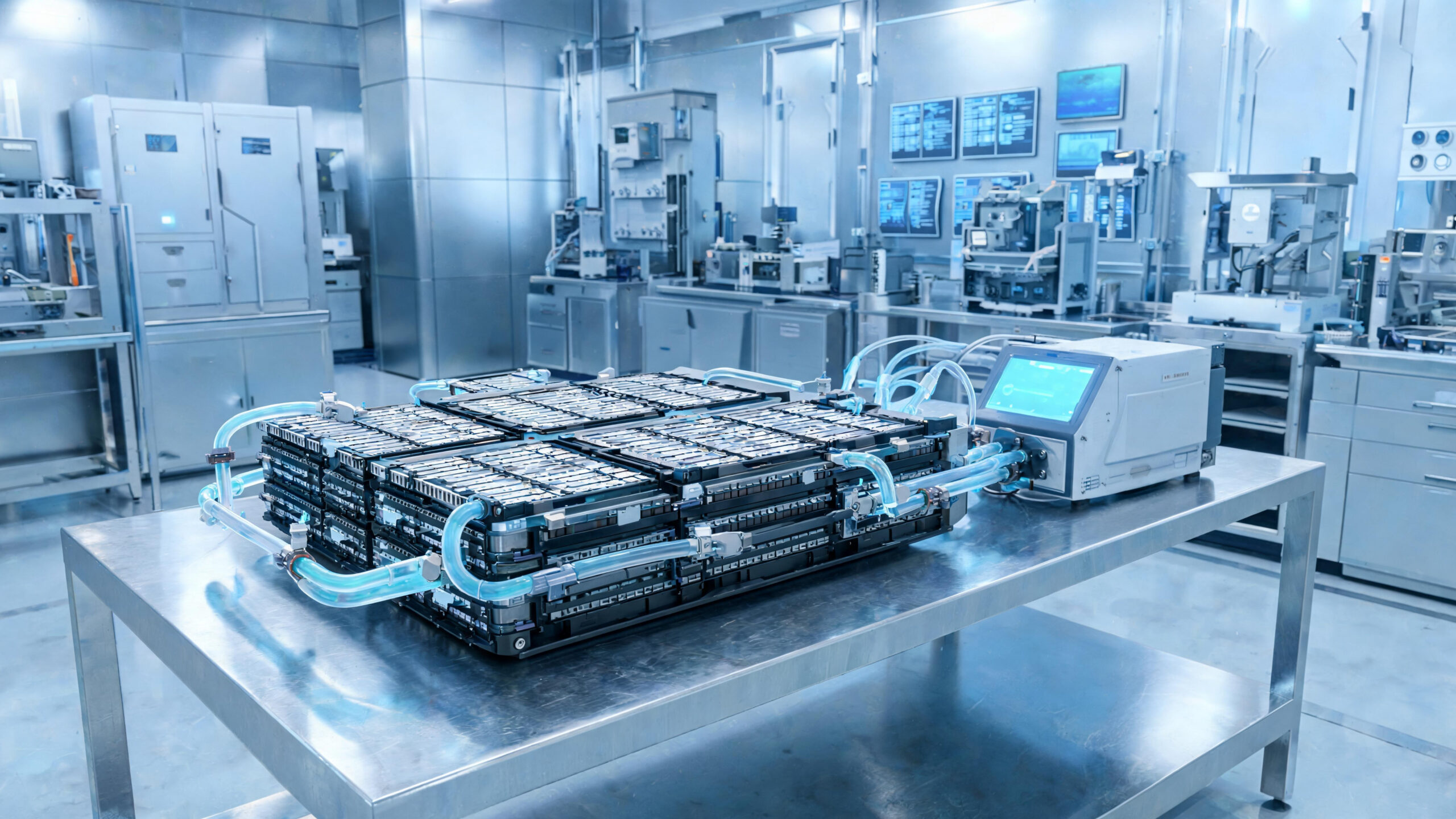
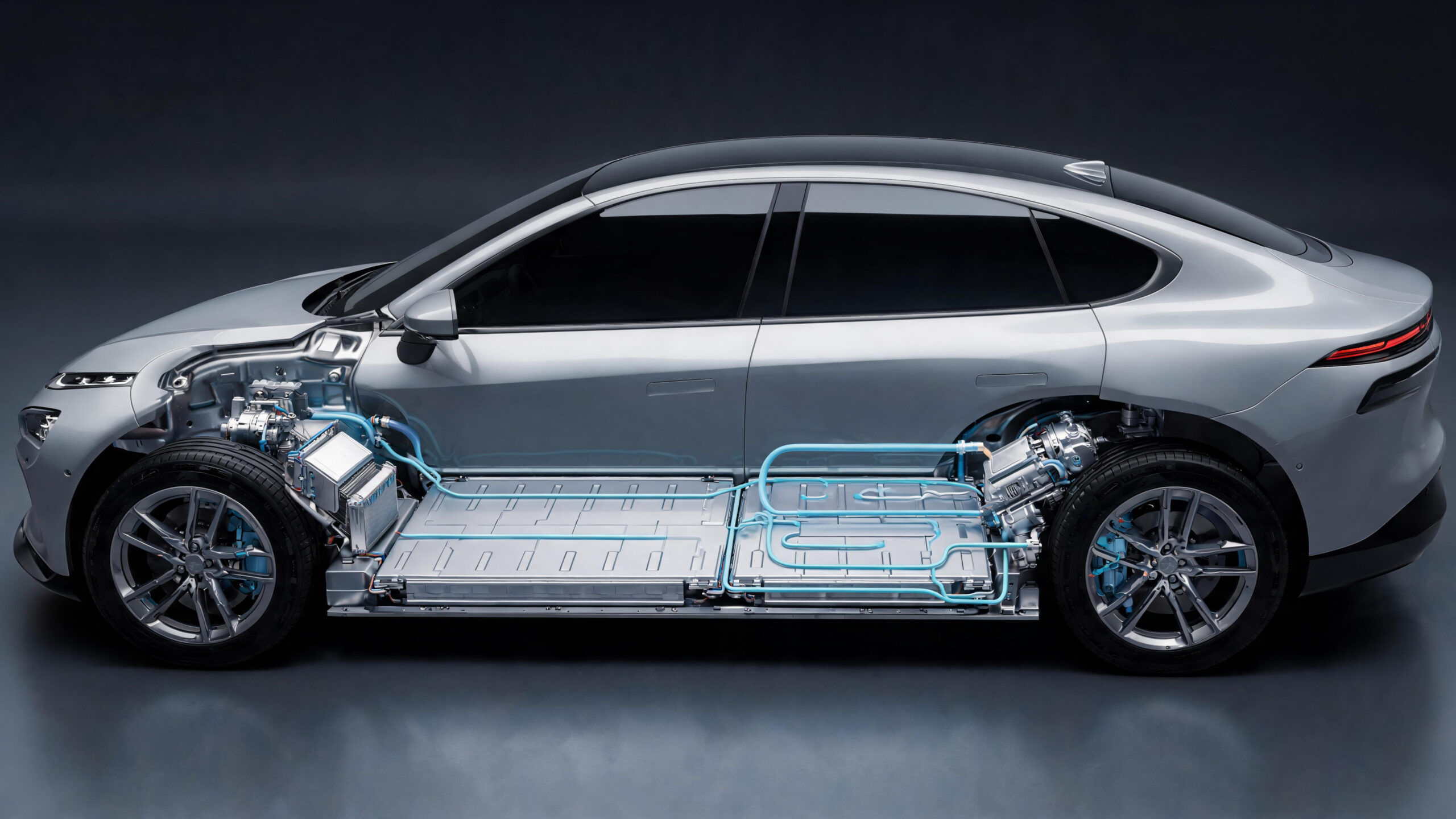
Many modern EVs use liquid cooling because liquid can move heat more effectively than air. In a liquid-cooled battery system, coolant flows through channels, plates, or tubes near the battery cells. Heat moves from the cells into nearby thermal materials, then into the coolant, and finally to another part of the system where it can be released or redirected. This process happens silently beneath the floor while the driver simply sees a range estimate, charging screen, or performance response.
Warming the Battery in Cold Weather
Thermal management is not only about cooling. In cold weather, the battery may need to be warmed. Cold battery cells do not accept charge as easily, and they may not release energy as efficiently. That is why some EVs charge slowly in winter unless the battery has been preconditioned. It is also why range can drop in cold temperatures. Battery heating helps bring the pack into a better operating range. The vehicle may use dedicated heaters, heat from other vehicle systems, or a heat pump to help warm the battery. Some EVs automatically prepare the battery when the driver navigates to a fast charger. This helps the pack arrive at the charger ready to accept more power, reducing waiting time and improving the road-trip experience.
Thermal Management and Fast Charging
Fast charging is one of the biggest reasons EV thermal management matters. When a DC fast charger sends high power into the battery, the pack can heat up quickly. If the battery temperature rises too much, the vehicle may reduce charging speed to protect the cells. If the battery is too cold, the vehicle may also slow charging until the pack warms up.
This is why two EVs with similar peak charging numbers can behave very differently at a charging station. The peak number may look impressive, but the real question is how long the vehicle can sustain strong charging speeds. A well-designed thermal system helps the battery stay in the right temperature range, allowing faster, safer, and more predictable charging. For drivers, that can mean shorter stops and less frustration on long trips.
What Battery Preconditioning Means
Battery preconditioning is the process of warming or cooling the battery before it needs to perform a demanding task. The most common example is preparing the battery before DC fast charging. If the vehicle knows it is heading to a fast charger, it can begin adjusting the pack temperature ahead of time. By the time the EV arrives, the battery may be closer to its ideal charging range. Preconditioning is especially helpful in winter, but it can also matter in hot conditions. It is one of the best examples of how software and hardware work together in an EV. The system uses navigation data, temperature sensors, battery state of charge, and thermal controls to prepare the vehicle before the driver even plugs in. It turns thermal management into a predictive, intelligent feature instead of a simple reaction to heat.
Cooling Motors and Power Electronics
The battery gets most of the attention, but EV thermal management also protects the motor and power electronics. The electric motor creates heat as it converts electrical energy into motion. The inverter creates heat as it converts the battery’s direct current into alternating current for the motor. Onboard chargers, DC-DC converters, and high-voltage components also add to the thermal workload.
If these components become too hot, the EV may reduce power to prevent damage. That can affect acceleration, towing ability, highway performance, and repeatable driving strength. In high-performance EVs, power electronics cooling is especially important because the vehicle may pull large amounts of current repeatedly. A strong thermal system keeps the entire powertrain stable, not just the battery.
Cabin Comfort Without an Engine
Gas vehicles often use waste heat from the engine to warm the cabin. Electric vehicles do not have that steady supply of engine heat, so they must heat and cool the cabin differently. Cabin climate control can have a major impact on EV range, especially in winter when heating demand is high. Thermal management must balance passenger comfort with battery efficiency. Many EVs use heat pumps to improve efficiency. A heat pump moves heat instead of simply creating it through resistance. This can reduce energy use compared with basic electric heating, especially in mild to moderately cold conditions. The system may also coordinate cabin heating with battery heating, defrosting, and powertrain thermal needs. This makes the EV’s climate system part of a larger energy strategy.
Heat Pumps in Electric Vehicles
A heat pump is one of the most talked-about thermal technologies in modern EVs. It works somewhat like an air conditioner that can operate in reverse. Instead of only removing heat from the cabin, it can move heat into the cabin or help support other thermal needs. This can improve winter range because moving heat often requires less energy than generating heat directly.
Heat pumps are especially valuable because EVs are highly sensitive to energy use. Every watt spent on cabin heating is energy that cannot be used for driving. A smart heat pump system helps reduce that tradeoff. It can work with the battery, motor, power electronics, and cabin to move heat where it is useful. This is why heat pumps are becoming increasingly important in EV engineering.
Radiators, Chillers, Pumps, and Valves
An EV thermal management system is made of many physical parts. Radiators help release heat into outside air. Chillers can use the air-conditioning system to cool battery coolant more aggressively. Pumps move coolant through the system. Valves control where the coolant goes. Sensors measure temperature throughout the vehicle. Heat exchangers transfer thermal energy between different loops. These parts may sound simple individually, but together they create a highly coordinated network. The vehicle may need to cool the battery while warming the cabin, or warm the battery while keeping power electronics under control. It may need to prepare for fast charging while also maintaining passenger comfort. Pumps and valves make that possible by directing heat where it needs to go at the right time.
Single-Loop and Multi-Loop Systems
Some EVs use simpler thermal layouts, while others use more complex multi-loop systems. A single-loop system may connect several components through one coolant circuit. This can be more affordable and easier to package. However, it may offer less flexibility when different parts of the vehicle need different temperatures at the same time.
Multi-loop systems can manage separate thermal zones more precisely. One loop may serve the battery, another may serve the motor and inverter, and another may connect to cabin heating or cooling. Advanced systems can share heat between loops when helpful. This adds complexity, but it can improve efficiency, charging performance, and comfort. As EVs become more advanced, thermal architecture is becoming a major area of innovation.
The Role of Software and Sensors
Modern EV thermal management is not just plumbing. It is a software-controlled system that constantly monitors and reacts. Sensors track battery temperature, coolant temperature, motor temperature, inverter temperature, cabin needs, outside weather, charging conditions, and driving behavior. The vehicle’s control systems use this information to adjust pumps, valves, fans, heaters, chillers, and power limits. Software can also make thermal management predictive. If the navigation system knows the vehicle is approaching a fast charger, the battery can be prepared in advance. If the system detects repeated high-power driving, it can increase cooling before temperatures become too high. This predictive approach helps the EV feel smoother and more consistent. The best thermal systems are not just powerful; they are smart.
Thermal Management and Driving Range
Range is one of the biggest concerns for EV shoppers, and thermal management plays a major role. Batteries operate more efficiently when they are at a healthy temperature. When the pack is too cold, the vehicle may use extra energy to warm it. When the pack is too hot, the vehicle may use energy to cool it. Cabin heating and cooling also consume energy, which affects the miles available from each charge.
A smart thermal management system reduces wasted energy. It helps keep the battery in a useful range without overworking pumps, heaters, or air-conditioning components. It may recover heat from the motor or electronics, use a heat pump to reduce cabin energy draw, or prepare the battery only when necessary. Better thermal management can make an EV feel more efficient in daily use, especially in extreme weather.
Thermal Management and Battery Life
Battery life depends on many factors, including chemistry, charging habits, depth of discharge, usage patterns, and temperature. Heat is one of the major enemies of long-term battery health. Repeated exposure to high temperatures can accelerate degradation, reducing how much energy the battery can store. Uneven temperatures across the pack can also cause some cells to age faster than others. Thermal management helps slow this process by keeping the battery temperature more stable. It also helps reduce hot spots inside the pack. Since the battery is one of the most expensive parts of an electric vehicle, protecting it is essential. A strong thermal system can support better long-term ownership confidence, stronger used EV value, and more predictable performance over time.
Thermal Management and Safety
Safety is another major reason thermal management matters. EV batteries are designed with many layers of protection, and temperature control is one of them. If sensors detect abnormal heat, the vehicle can take action by increasing cooling, reducing power, limiting charging, or warning the driver. Thermal systems work alongside battery management software, cell monitoring, pack structure, venting design, and protective barriers.
The goal is prevention and containment. Engineers want to prevent cells from reaching unsafe temperatures, and they also design packs to slow the spread of heat if a problem occurs. While serious battery incidents are uncommon, the consequences can be significant, so automakers take thermal safety seriously. A well-managed battery is not only more efficient; it is also more secure.
Performance EVs and Thermal Limits
Performance electric vehicles show how important thermal management can be. Electric motors can deliver instant torque, but repeated high-power use creates heat. Launches, track driving, steep climbs, and sustained high-speed runs can all push the battery, inverter, and motor hard. Without enough cooling, the vehicle may reduce power to protect itself. This is why thermal management often separates impressive EVs from truly capable ones. A vehicle may have a huge horsepower figure, but the cooling system determines how consistently it can use that power. Advanced thermal design allows performance EVs to repeat hard acceleration, manage track sessions, and recover quickly between demanding runs. In electric performance, cooling is not a background feature. It is part of the powertrain’s personality.
Everyday Driving Benefits
For most drivers, thermal management is not something they think about every day. They simply want the vehicle to start, charge, drive, heat, cool, and perform without drama. A good thermal system makes that happen. It helps the EV feel normal in winter, composed in summer, efficient on commutes, and ready for road trips.
It also reduces driver anxiety. When the car can prepare the battery for fast charging, protect range in changing weather, and maintain performance on long drives, the EV experience becomes more predictable. Thermal management turns electric technology from something that only works well in ideal conditions into something that can handle daily life.
What Beginners Should Look For
For beginners shopping for an EV, thermal management may not be listed as a headline feature, but it is worth understanding. Liquid-cooled battery packs are generally preferable for long-range vehicles, frequent fast charging, hot climates, cold climates, towing, and performance driving. Heat pumps are valuable for drivers in cooler regions because they can improve winter efficiency. Battery preconditioning is useful for road trips and fast-charging convenience. Drivers should also look beyond advertised peak charging rates. Real-world charging behavior, winter range performance, cooling design, and battery warranty confidence all matter. An EV is more than a battery size and a range number. The system that manages heat helps determine how well those numbers hold up after months and years of real driving.
The Future of EV Thermal Management
Thermal management systems will become even more important as EV technology advances. Automakers are pushing for faster charging, longer range, higher performance, lighter battery packs, and better cold-weather efficiency. Each of these goals increases the need for smarter heat control. Future EVs may use improved cooling plates, more efficient heat pumps, advanced refrigerants, better thermal interface materials, and more predictive software.
New battery chemistries and solid-state batteries may also change thermal requirements. Ultra-fast charging will demand even tighter temperature control. Electric trucks, performance vehicles, and commercial fleets will need systems that can handle heavy workloads day after day. The EVs that stand out in the future will not just store more energy. They will manage heat more intelligently.
Final Thoughts: Thermal Management Is the Quiet Hero of EV Innovation
Thermal management systems are among the most important technologies in electric vehicles. They keep batteries healthy, help fast chargers work better, support range, protect safety, improve comfort, and allow motors and power electronics to perform reliably. They operate behind the scenes, but their effects are felt every time an EV starts on a freezing morning, charges on a road trip, climbs a mountain, or sits in summer traffic. For beginners, the easiest way to think about EV thermal management is this: electricity moves the vehicle, but temperature control makes that movement dependable. A great EV does not simply need a big battery. It needs a smart system that knows when to cool, when to heat, when to save energy, and when to prepare for what comes next. That hidden intelligence is one of the biggest reasons modern electric vehicles are becoming more capable, practical, and exciting with every generation.