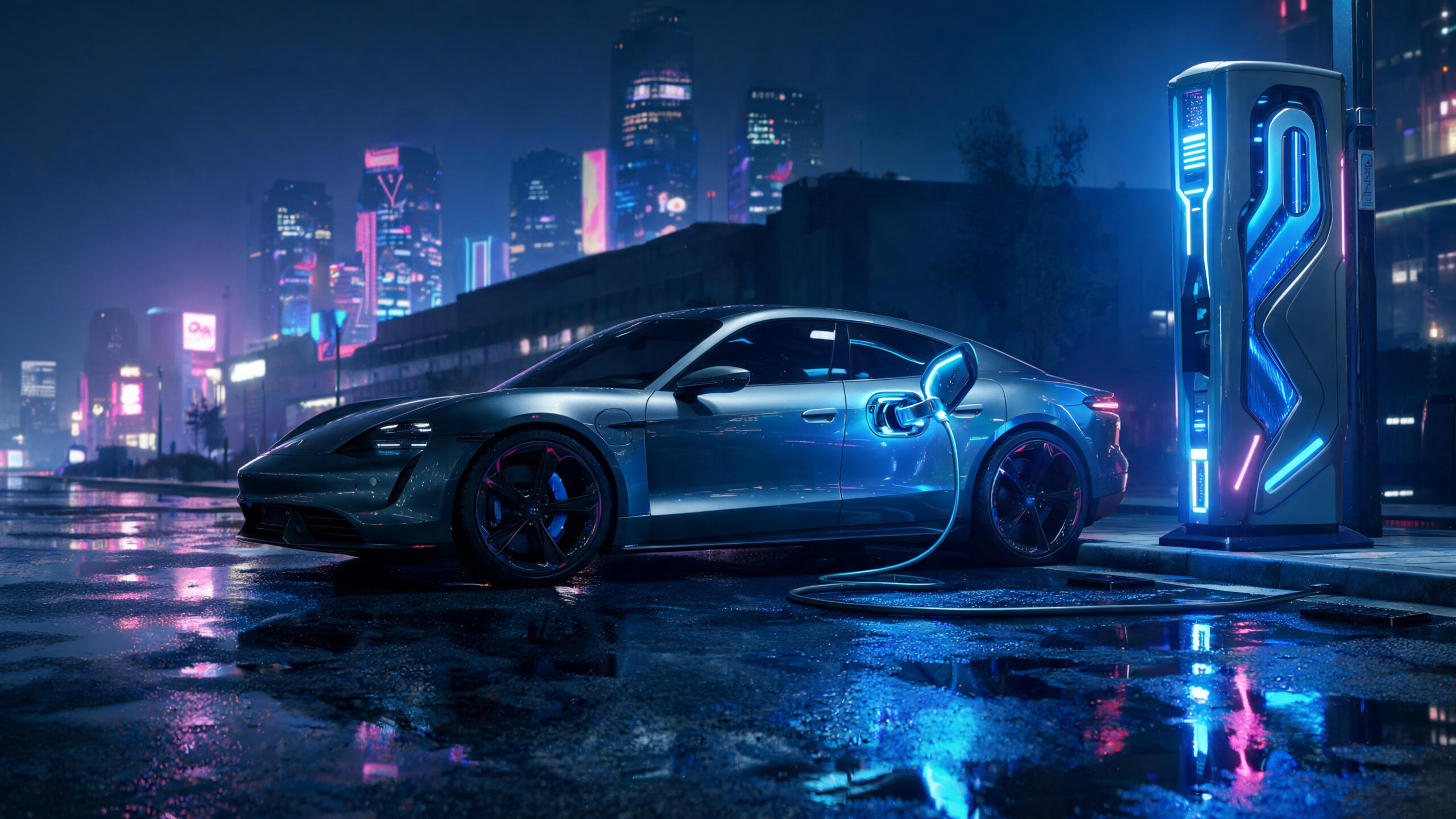
The Battle for the Future of Electric Vehicles
The electric vehicle industry is evolving faster than almost any other part of the automotive world. Every year brings longer driving ranges, faster charging speeds, smarter software, and more advanced vehicle designs. Yet behind all of those improvements sits one critical piece of technology: the battery. Automakers understand that whoever controls the future of battery technology could control the future of transportation itself. That is why solid-state batteries have become one of the most important engineering races in the automotive industry. Companies across the globe are investing billions of dollars into research, development, and manufacturing because solid-state technology promises to solve many of the biggest limitations facing electric vehicles today. Faster charging, greater safety, lighter battery packs, and dramatically longer driving range are all part of the vision driving this intense competition.
A: They promise longer range, faster charging, and improved safety.
A: They use solid electrolytes instead of liquid ones.
A: Yes, they may reduce the risk of overheating and thermal runaway.
A: Higher energy density could dramatically extend driving distance.
A: Most are still in development or limited prototype stages.
A: Faster charging improves convenience and long-distance travel.
A: A dangerous overheating chain reaction inside a battery cell.
A: Toyota, BMW, Nissan, QuantumScape, and several others.
A: Large-scale manufacturing and durability remain difficult.
A: Possibly, but widespread adoption may take many years.
What Makes Solid-State Batteries Different?
Solid-state batteries differ from traditional lithium-ion batteries because they replace liquid electrolytes with solid conductive materials. In conventional EV batteries, lithium ions move through a liquid or gel-like electrolyte during charging and discharging. Solid-state batteries instead use materials such as ceramics, sulfides, or polymers to move those ions.
This change may sound simple, but it could completely transform battery performance. Liquid electrolytes create challenges involving heat management, degradation, flammability, and energy density. By removing the liquid component, engineers can potentially create batteries that are safer, more compact, and capable of storing significantly more energy. That combination is exactly why automakers see solid-state technology as the next major breakthrough for electric mobility.
Why Battery Technology Matters So Much
Electric vehicles are only as good as the batteries powering them. Range, charging speed, acceleration, weight distribution, efficiency, and long-term durability all depend heavily on battery performance. Even the design of an EV platform is shaped around battery packaging and cooling systems. Automakers know that battery improvements directly influence consumer confidence. Drivers want electric vehicles that can travel farther, recharge faster, and perform reliably in all conditions. The company that can deliver the best battery experience gains a massive competitive advantage. Solid-state batteries could help solve several customer concerns at once, which is why manufacturers are moving aggressively to develop them before rivals do.
The Push for Longer EV Range
Range anxiety remains one of the biggest concerns for drivers considering an electric vehicle. Although modern EVs have improved dramatically, many consumers still worry about running out of power during long trips or in areas with limited charging infrastructure.
Solid-state batteries could help eliminate much of that concern. Because they may achieve much higher energy density than traditional lithium-ion batteries, they can potentially store more power in the same amount of space. That means future EVs may travel hundreds of additional miles without requiring larger or heavier battery packs.
For automakers, longer range is not just a technical achievement. It is a marketing advantage. Consumers consistently compare EV range numbers when shopping for vehicles, and manufacturers want to lead those comparisons with the highest and most impressive figures possible.
Faster Charging Is Becoming Essential
Charging speed has become one of the most competitive areas in the EV market. Drivers increasingly expect electric vehicles to recharge quickly enough for convenient road trips and daily use. Even with modern fast chargers, many EV charging sessions still take considerably longer than a gasoline stop.
Solid-state batteries could dramatically improve this situation. Their improved thermal stability may allow them to handle higher charging power with less risk of overheating or long-term damage. Some researchers believe future EVs equipped with advanced solid-state batteries could gain substantial range in just a few minutes. Automakers understand that charging convenience is critical for mass EV adoption. The company that can deliver near gas-station-level charging convenience may reshape consumer expectations across the industry.
Why Safety Is Driving the Solid-State Race
Battery safety is another major reason automakers are pursuing solid-state technology so aggressively. Traditional lithium-ion batteries rely on flammable liquid electrolytes, which can become unstable under certain extreme conditions. While EV battery fires are relatively uncommon, highly publicized incidents have increased pressure on manufacturers to improve safety systems.
Solid-state batteries could reduce the risk of thermal runaway because they eliminate the volatile liquid electrolyte found in conventional battery cells. Solid conductive materials are generally more stable under heat and stress, which may help improve crash safety and battery durability.
For automakers, improving battery safety is not only about engineering. It is also about public trust. Safer batteries can strengthen consumer confidence and reduce concerns surrounding electric vehicle ownership.
Automakers Want Lighter and More Efficient EVs
Battery weight is one of the biggest engineering challenges facing electric vehicles. Large battery packs add significant mass, which affects efficiency, handling, braking, and tire wear. Even high-performance EVs must carefully manage weight distribution to maintain driving dynamics.
Solid-state batteries could help reduce that burden. Higher energy density means manufacturers may be able to build smaller and lighter battery packs without sacrificing range. This opens the door to more aerodynamic vehicles, improved efficiency, and greater design flexibility. Lighter batteries could also benefit electric trucks, SUVs, and performance vehicles where excess weight can reduce capability. Automakers see solid-state technology as an opportunity to improve both efficiency and driving performance simultaneously.
The Massive Financial Stakes
The race toward solid-state batteries is about far more than engineering prestige. The financial stakes are enormous. The global EV market is expected to grow dramatically over the next decade, and battery technology sits at the center of that growth.
Companies that develop reliable solid-state battery systems first could dominate future EV production. They may gain advantages in cost, performance, manufacturing partnerships, and intellectual property. This is why automakers and battery startups are investing billions into factories, research facilities, and development partnerships.
Governments are also supporting battery innovation because energy independence and domestic manufacturing have become strategic priorities. Countries want to secure their place in the future EV supply chain, making battery technology a global economic competition.
Why Toyota Became a Major Player
Toyota has spent years positioning itself as one of the leaders in solid-state battery research. The company recognized early that battery innovation would shape the future of transportation, and it invested heavily in advanced development programs long before many competitors accelerated their EV strategies.
Toyota’s goal has been to create batteries capable of faster charging, higher efficiency, and improved longevity. Although the company has faced delays and engineering challenges like every other manufacturer, its continued investment highlights how seriously automakers take the technology. Other major brands including BMW, Nissan, Mercedes-Benz, Hyundai, Volkswagen, Ford, and Honda are also investing heavily in solid-state development, often partnering with specialized battery startups to accelerate progress.
The Rise of Battery Startups
Alongside established automakers, a wave of battery-focused startups has entered the race. Companies such as QuantumScape, Solid Power, and ProLogium have attracted massive investments because they specialize specifically in next-generation battery chemistry and manufacturing.
These startups often move faster than traditional automakers because they focus entirely on solving battery challenges. In many cases, automakers partner with these companies rather than attempting to develop every technology internally.
The rise of battery startups has created an environment similar to a technology arms race. Every breakthrough in conductivity, manufacturing efficiency, or charging performance can shift investor confidence and industry attention almost overnight.
The Manufacturing Challenge
Despite the excitement surrounding solid-state batteries, mass production remains extremely difficult. Many solid electrolyte materials are fragile, expensive, or difficult to manufacture consistently at automotive scale. Tiny flaws inside the battery can affect performance, lifespan, and reliability. Temperature sensitivity is another obstacle. Some solid-state materials struggle in cold conditions or require extremely precise manufacturing processes to maintain conductivity. Engineers must also solve challenges related to battery expansion and contraction during repeated charging cycles.
These manufacturing hurdles are one reason solid-state batteries have not yet become mainstream. Automakers know the technology is promising, but turning laboratory success into affordable mass-market production is one of the biggest engineering challenges in modern automotive history.
How Solid-State Batteries Could Reshape EV Design
The impact of solid-state batteries may go beyond charging speed and range. Because these batteries could become smaller and lighter, automakers may redesign future EV platforms around them. Vehicles could gain larger cabins, thinner floors, improved aerodynamics, and better weight balance.
Performance EVs may become quicker and more agile, while electric trucks may achieve longer towing range without massive battery packs. Designers could gain more flexibility because cooling systems and battery packaging may become less bulky.
Solid-state batteries may also influence autonomous vehicles, electric motorcycles, electric aircraft, and commercial transportation systems. Their impact could extend far beyond passenger cars alone.
Why the Competition Is Intensifying
The pressure to develop solid-state batteries grows stronger every year because the EV market itself is becoming more competitive. Nearly every major automaker is transitioning toward electric mobility, and companies are searching for ways to stand out in a crowded field.
Battery technology has become one of the clearest ways to differentiate a vehicle. Drivers compare charging speed, range, battery warranty, efficiency, and long-term reliability before making purchasing decisions. A major battery breakthrough could immediately shift consumer attention toward one brand over another. This competitive pressure explains why automakers continue pouring resources into battery development despite the enormous cost and complexity involved.
The Future of Solid-State EV Batteries
Most experts believe solid-state batteries will first appear in premium vehicles before gradually reaching mass-market EVs. Early production costs will likely remain high, but history shows that automotive technologies often become more affordable over time as manufacturing improves.
Some companies are already developing semi-solid-state systems that combine aspects of current lithium-ion batteries with advanced solid materials. These hybrid approaches may help bridge the gap between today’s technology and fully solid-state designs.
Although widespread adoption may still take years, momentum continues building rapidly. Every major automaker understands that battery innovation will shape the next generation of electric vehicles, and solid-state technology remains one of the most promising paths forward.
Final Thoughts
Automakers are racing to build solid-state EV batteries because the future of electric transportation may depend on them. Faster charging, longer range, improved safety, lighter weight, and greater efficiency are all powerful advantages that could redefine what drivers expect from electric vehicles.
The competition has become global, with automakers, startups, governments, and technology companies all fighting to solve one of the most important engineering challenges of the modern automotive era. While significant manufacturing hurdles still remain, the momentum behind solid-state battery development continues accelerating. Whoever successfully delivers reliable and affordable solid-state EV batteries could shape the future of transportation for decades to come.