Electric Cars Are Designed Around Different Safety Systems
Electric cars are safe when they are properly designed, built, charged, maintained, and repaired, but their safety systems differ from gasoline vehicles in important ways. Instead of a fuel tank, exhaust system, and hot engine, an EV has a high-voltage battery pack, power electronics, electric motors, and charging hardware. That changes crash design, fire prevention, service procedures, and emergency response. Modern EVs use strong battery enclosures, sensors, software, automatic disconnects, cooling systems, and crash structures to protect occupants and the battery. They also go through safety testing like other vehicles. The best way to think about EV safety is not that electric cars are risk-free, but that their risks are engineered, monitored, and managed through layers of protection.
A: Modern EVs are designed and tested for crash safety like other vehicles.
A: High-voltage systems include isolation and disconnect protections.
A: Proper EV charging equipment is designed for wet outdoor conditions.
A: Available evidence generally does not support the idea that EVs are more fire-prone overall.
A: It is a chain reaction where battery cells overheat and spread heat to nearby cells.
A: Yes, especially if the battery area, underside, or high-voltage system may be affected.
A: Weight changes crash dynamics, but safety depends on complete vehicle design.
A: Yes, with proper training and vehicle-specific procedures.
A: It is safe when equipment is properly installed and used as intended.
A: Follow warnings, maintain tires and brakes, use proper charging gear, and repair damage correctly.
Crash Safety Basics
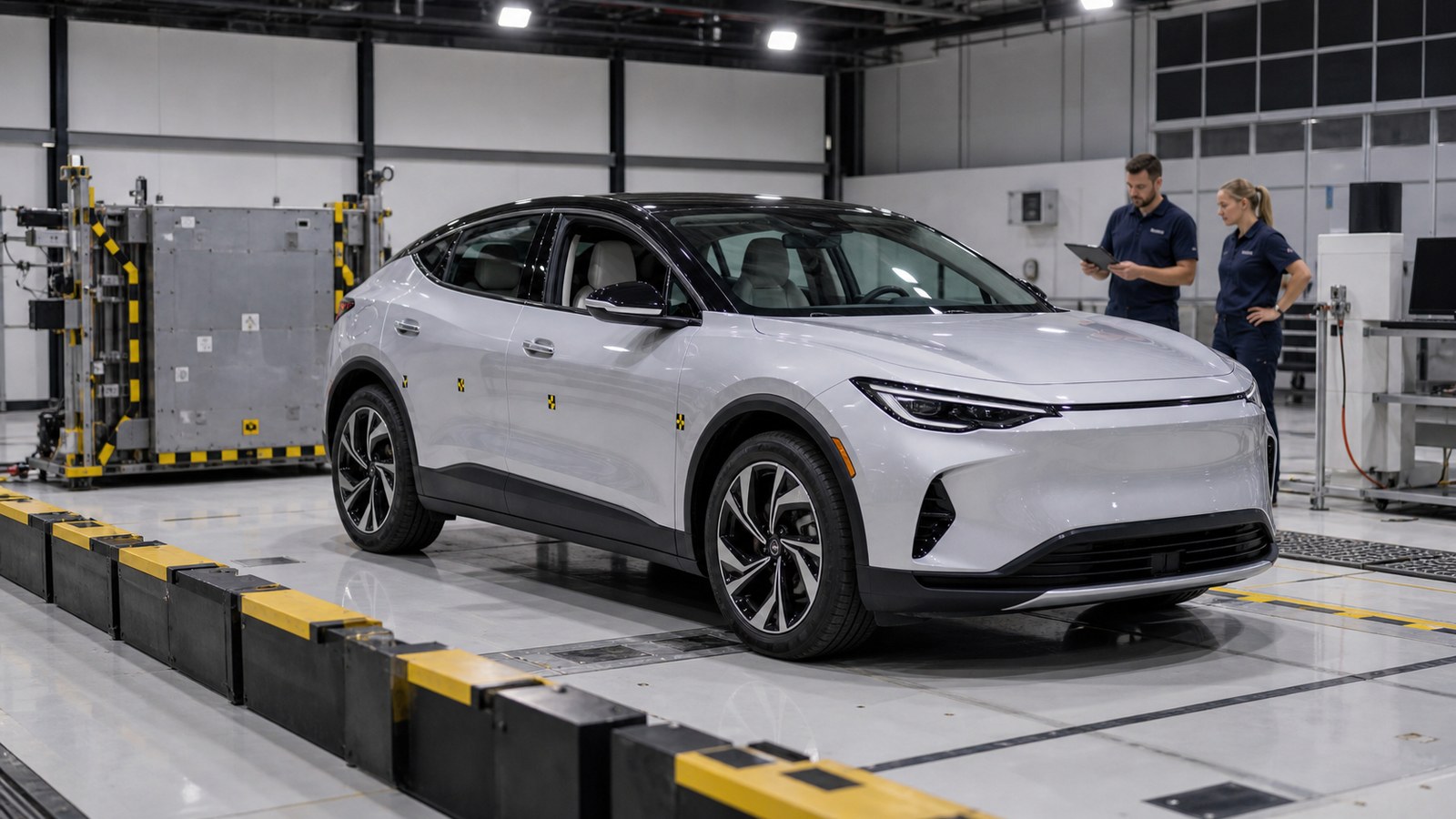
EVs are built around the same occupant-protection goals as other modern vehicles: keep the passenger compartment intact, manage crash forces, restrain occupants, and reduce injury risk. They use airbags, seatbelts, stability control, crumple zones, and structural engineering just like gasoline vehicles.
The difference is that the battery pack becomes a major design consideration. It is large, heavy, and usually mounted low. Engineers must protect it from intrusion while also protecting occupants. A well-designed EV routes crash forces through strong structures rather than through the pack or cabin.
Official crash-test ratings are still important. Buyers should look at results from recognized safety organizations and compare specific models rather than assuming every EV performs the same. Electric power does not automatically make a car safe; good vehicle engineering does.
High-Voltage Protection
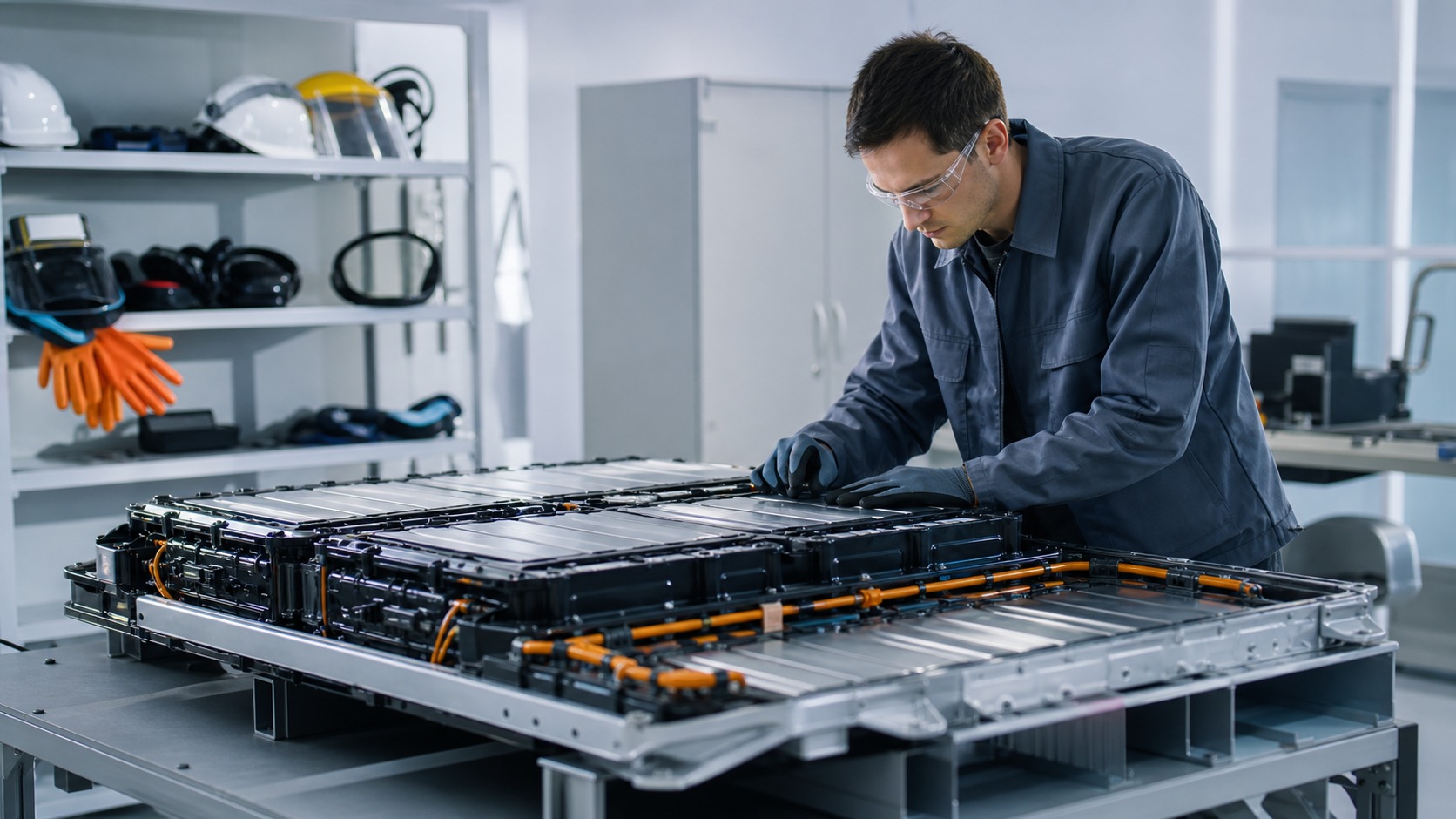
EVs carry high-voltage systems, but those systems are not casually exposed to occupants. Cables are insulated and routed carefully, connectors are protected, and the system can disconnect high voltage when faults or certain crashes are detected. The driver does not interact directly with high-voltage hardware during normal use.
Service is different. Technicians need training and procedures before working near high-voltage components. This is one reason damaged EVs should be repaired by qualified shops. A safe vehicle can become risky if high-voltage repairs are improvised.
Owners should take warning messages seriously. If the car reports an electrical fault, charging issue, or battery warning, it should be inspected rather than ignored. The system is designed to detect problems before they become larger hazards.
The orange high-voltage cables used in many EVs are a reminder that the system has its own rules. Owners do not need to fear them, but they should not treat high-voltage parts like ordinary accessories.
The protection is designed so normal drivers can use the vehicle without thinking about voltage every day. The caution belongs mostly to service, repair, and damaged-vehicle situations.
Battery Fire Reality
Battery fires receive a lot of attention because they are dramatic and technically different from gasoline fires. They can require different firefighting methods, more water, or longer monitoring. That does not mean EVs are automatically more likely to burn. That practical framing keeps the safety discussion grounded in real design layers, real maintenance habits, and real response procedures rather than rumor.
A fair safety discussion compares real risk, not viral clips. Gasoline is highly flammable, and combustion vehicles also catch fire. EV batteries have different hazards, including thermal runaway after severe damage or internal failure. Both technologies require engineering and emergency response knowledge.
Modern packs reduce risk with cooling, monitoring, cell separation, protective enclosures, and software limits. Those layers do not make fire impossible. They make dangerous conditions less likely and easier to detect.
The balanced safety view is strongest when it stays specific. Electric vehicles have strong protection systems, but those systems depend on correct equipment, healthy tires, intact battery structures, trained service, and drivers who respond to warnings instead of ignoring them.
Charging Safety at Home
Home charging is safe when the equipment and electrical work are appropriate. A dedicated circuit, proper breaker, correct wiring, weather-rated hardware where needed, and professional installation all matter. The charger should not be treated like a random appliance plugged into a questionable outlet. That practical framing keeps the safety discussion grounded in real design layers, real maintenance habits, and real response procedures rather than rumor.
Drivers should inspect cords and plugs occasionally. Heat, looseness, cracking, or damage are warning signs. Extension cords should not be used as a normal charging solution because they can overheat or create trip hazards if not rated and managed correctly.
Wet weather is not automatically a problem. EV charging connectors and equipment are designed with safety communication and protection. The bigger risks usually come from damaged hardware, poor installation, or ignoring obvious defects.
If equipment looks damaged, the safest choice is simple: do not use it. Report the issue, choose another charger, and let qualified people handle the repair.
The balanced safety view is strongest when it stays specific. Electric vehicles have strong protection systems, but those systems depend on correct equipment, healthy tires, intact battery structures, trained service, and drivers who respond to warnings instead of ignoring them.
Weight, Tires, and Braking
Many EVs are heavy because battery packs store a large amount of energy. Weight can affect stopping distance, tire wear, and crash dynamics. Safety therefore depends on tires, brakes, suspension tuning, stability control, and driver behavior as well as the battery design. That practical framing keeps the safety discussion grounded in real design layers, real maintenance habits, and real response procedures rather than rumor.
Instant torque can also surprise new drivers. EVs can accelerate quickly and quietly, which makes speed easier to underestimate. Smooth inputs, good tires, and respect for weather conditions are part of safe EV driving.
Regenerative braking can reduce use of friction brakes, but it does not remove the need for brake maintenance. Brake fluid, hardware condition, and corrosion still matter. A safe EV is still a vehicle that needs routine inspection.
The balanced safety view is strongest when it stays specific. Electric vehicles have strong protection systems, but those systems depend on correct equipment, healthy tires, intact battery structures, trained service, and drivers who respond to warnings instead of ignoring them.
Emergency Response and Repairs
First responders increasingly train for EV incidents. They may need to identify high-voltage components, disable the vehicle, avoid certain cut points, monitor a damaged battery, or handle towing differently. Vehicle-specific emergency response guides help with those decisions. That practical framing keeps the safety discussion grounded in real design layers, real maintenance habits, and real response procedures rather than rumor.
After a serious crash, an EV should be inspected carefully. Underside damage, battery-case dents, coolant leaks, warning messages, or charging problems deserve attention. A vehicle that appears drivable may still need professional evaluation if the battery area was hit.
Repair quality matters because EV safety relies on sealed battery structures, high-voltage routing, sensors, and software communication. Shortcuts can compromise systems that were carefully designed at the factory.
This is especially true after underbody impacts. A scraped shield may be harmless, but a dented battery enclosure, coolant leak, or warning light deserves a professional look before the vehicle is treated as normal.
The balanced safety view is strongest when it stays specific. Electric vehicles have strong protection systems, but those systems depend on correct equipment, healthy tires, intact battery structures, trained service, and drivers who respond to warnings instead of ignoring them.
A qualified inspection can confirm whether protective structures, coolant paths, or high-voltage isolation were affected. That confirmation matters before the vehicle returns to family use.
The Practical Safety Answer
Electric cars are safe when the complete vehicle is well designed and properly used. They are not magic, and they are not uniquely dangerous by default. They simply have different systems than gasoline vehicles, so the safety conversation needs the right vocabulary. That practical framing keeps the safety discussion grounded in real design layers, real maintenance habits, and real response procedures rather than rumor.
For owners, the practical habits are straightforward: use proper charging equipment, keep tires and brakes healthy, respond to warnings, repair damage correctly, and follow the manual. For shoppers, the best approach is to compare real crash ratings, safety features, warranty support, and service access.
EV safety is a layered design. The battery is protected, the high-voltage system is monitored, charging is controlled, and crash structures are engineered around the vehicle’s layout. Understanding those layers makes electric cars easier to evaluate with confidence.
A practical owner does not need to become a first responder or battery engineer. The important part is recognizing warning signs, using proper charging equipment, maintaining the vehicle, and choosing qualified repair help when the car has been damaged.
The balanced safety view is strongest when it stays specific. Electric vehicles have strong protection systems, but those systems depend on correct equipment, healthy tires, intact battery structures, trained service, and drivers who respond to warnings instead of ignoring them.
Software and Driver Assistance
Many EVs include advanced driver assistance features, but those systems should not be confused with full autonomy unless the vehicle is specifically designed and approved for it. Lane keeping, adaptive cruise, automatic emergency braking, and blind-spot monitoring can help, yet the driver remains responsible. That practical framing keeps the safety discussion grounded in real design layers, real maintenance habits, and real response procedures rather than rumor.
Electric power can make software integration feel seamless because torque control is precise. Stability systems can reduce motor output quickly, and regenerative braking can be blended with friction braking. These advantages support safety when calibrated well.
The limitation is that assistance features depend on sensors, road markings, weather, and driver attention. A safe EV owner understands what the system can and cannot do.
The balanced safety view is strongest when it stays specific. Electric vehicles have strong protection systems, but those systems depend on correct equipment, healthy tires, intact battery structures, trained service, and drivers who respond to warnings instead of ignoring them.
Charging Around Families and Garages
Home charging often happens around families, pets, storage, bicycles, and garage tools. Cable management matters because a loose cord across a walkway can become a trip hazard. A clean mount and consistent parking position make charging safer and easier. That practical framing keeps the safety discussion grounded in real design layers, real maintenance habits, and real response procedures rather than rumor.
Children should not play with charging equipment, just as they should not play with fuel pumps, outlets, or tools. The equipment is designed for normal use, but it is still electrical equipment. Simple household rules reduce risk.
The balanced safety view is strongest when it stays specific. Electric vehicles have strong protection systems, but those systems depend on correct equipment, healthy tires, intact battery structures, trained service, and drivers who respond to warnings instead of ignoring them.
The Balanced Safety View
The balanced answer is that electric cars are neither automatically dangerous nor automatically flawless. They remove some gasoline-vehicle hazards and introduce different high-voltage and battery considerations. Modern engineering addresses those considerations with layers of protection. That practical framing keeps the safety discussion grounded in real design layers, real maintenance habits, and real response procedures rather than rumor.
For a shopper, the safest approach is model-specific. Look at crash ratings, recalls, warranty support, service network quality, tire specifications, and charging recommendations. For an owner, safe habits are ordinary: inspect equipment, respond to warnings, maintain tires and brakes, and repair damage properly.
EV safety is strongest when technology and behavior work together. The vehicle provides protection layers, and the owner keeps those layers in good condition.
The balanced safety view is strongest when it stays specific. Electric vehicles have strong protection systems, but those systems depend on correct equipment, healthy tires, intact battery structures, trained service, and drivers who respond to warnings instead of ignoring them.
What Shoppers Should Check
Shoppers should look at crash-test ratings, safety recalls, driver-assistance features, tire specifications, warranty coverage, and the availability of qualified service. A safe EV is not defined only by being electric. It is defined by the complete model and support system. That practical framing keeps the safety discussion grounded in real design layers, real maintenance habits, and real response procedures rather than rumor.
It is also worth checking charging recommendations and battery warranty language. Clear guidance from the automaker helps owners use the vehicle safely over time. Confusing or missing support can make ownership harder even when the car itself is well engineered.
The Final Safety Takeaway
Electric cars are safe when designed and used properly, but they deserve their own safety vocabulary. Battery protection, high-voltage isolation, charging equipment, thermal management, crash structure, and emergency procedures all matter. That practical framing keeps the safety discussion grounded in real design layers, real maintenance habits, and real response procedures rather than rumor.
For everyday drivers, the safety habits are straightforward. Charge with proper equipment, keep the vehicle maintained, respect warning messages, avoid improvised electrical work, and have damage inspected by qualified professionals. Those habits let the vehicle’s built-in safety layers do their job.
That is the mature view: trust the engineering, respect the differences, and keep the vehicle’s protective systems intact.