
Charging Time Depends on the Situation
The honest answer to how long it takes to charge an electric car is that it depends on the charger, the car, the battery size, the starting charge level, the target charge level, and the conditions around the session. That may sound evasive, but it is the same kind of practical answer drivers already understand from gasoline cars: filling a small tank is different from filling a large one, and stopping for a few gallons is different from filling from empty. EV charging simply adds more choices. A regular outlet may recover range slowly overnight, a home wall charger may handle daily driving while you sleep, and a public fast charger may add useful road-trip range during a short break. Once those roles are clear, charging time becomes easier to estimate and much less intimidating.
A: It can take many hours, so it works best for short daily driving or plug-in hybrids.
A: Yes, especially with Level 2 charging and a predictable daily mileage pattern.
A: The car reduces power near full to protect battery health and manage heat.
A: Only if the vehicle and electrical circuit can use the extra power.
A: Yes, a larger battery usually needs more energy to move through the same percentage range.
A: Temperature, starting percentage, station power, and vehicle limits all change the result.
A: Usually no, unless the next leg truly requires it.
A: Yes, a cold battery may accept power more slowly until it warms.
A: Charge during normal parked time and leave with enough range for the next day.
A: Compare your charger output, the vehicle limit, and the energy you need to replace.
Why There Is No Single Charging Time
Charging an electric car is not like pouring liquid into a tank at a fixed speed. The battery, charger, and vehicle software work together throughout the session. The car decides how much power it can safely accept, and that answer changes as the battery fills, warms, cools, or approaches its charge limit. A session that starts quickly may slow later, even when nothing is wrong.
That is why published charging times often use ranges. An automaker may describe charging from ten to eighty percent on a fast charger, while a home-charging estimate may assume a certain circuit size and onboard charger rating. Those numbers are useful, but they are not universal promises. They describe a scenario.
The battery’s state of charge is especially important. Charging from a low level to the middle of the pack can feel quick because the car may accept more power there. Charging the final portion can be slower because the battery management system becomes more cautious. This protects the pack and keeps heat under control, but it also means the last few percentage points are rarely the best use of time.
For daily ownership, the better question is simpler: can the car recover the miles you normally use before you need to drive again? If the answer is yes, charging time becomes background noise. If the answer is no, the driver needs a faster home setup, a workplace option, or a planned public stop.
Level 1 Charging: Slow but Sometimes Enough
Level 1 charging uses a standard household outlet. It is the slowest common option, but slow does not mean useless. A driver with a short commute, a plug-in hybrid, or a car that sits for long stretches may recover enough energy overnight. Level 1 can also serve as a backup when visiting family or parking somewhere without better equipment.
The limitation appears when daily mileage is higher than nightly recovery. If the car uses more range each day than the outlet can replace, the battery gradually trends downward. The driver may need a weekend catch-up session or a public charger. That can work occasionally, but it is not ideal as a long-term routine for many full EV owners.
Level 1 also asks more from the outlet than many household devices do. A charger may run for hours at a steady load, so the receptacle and circuit should be in good shape. If the plug feels loose, the outlet gets warm, or the circuit is shared with demanding equipment, the setup deserves an electrician’s attention before it becomes a daily habit. The best use of Level 1 is deliberate rather than desperate. It is a fine solution when the numbers work and the equipment is safe. It becomes frustrating when a driver expects it to behave like a home wall charger.
Level 2 Charging: The Normal Home Answer
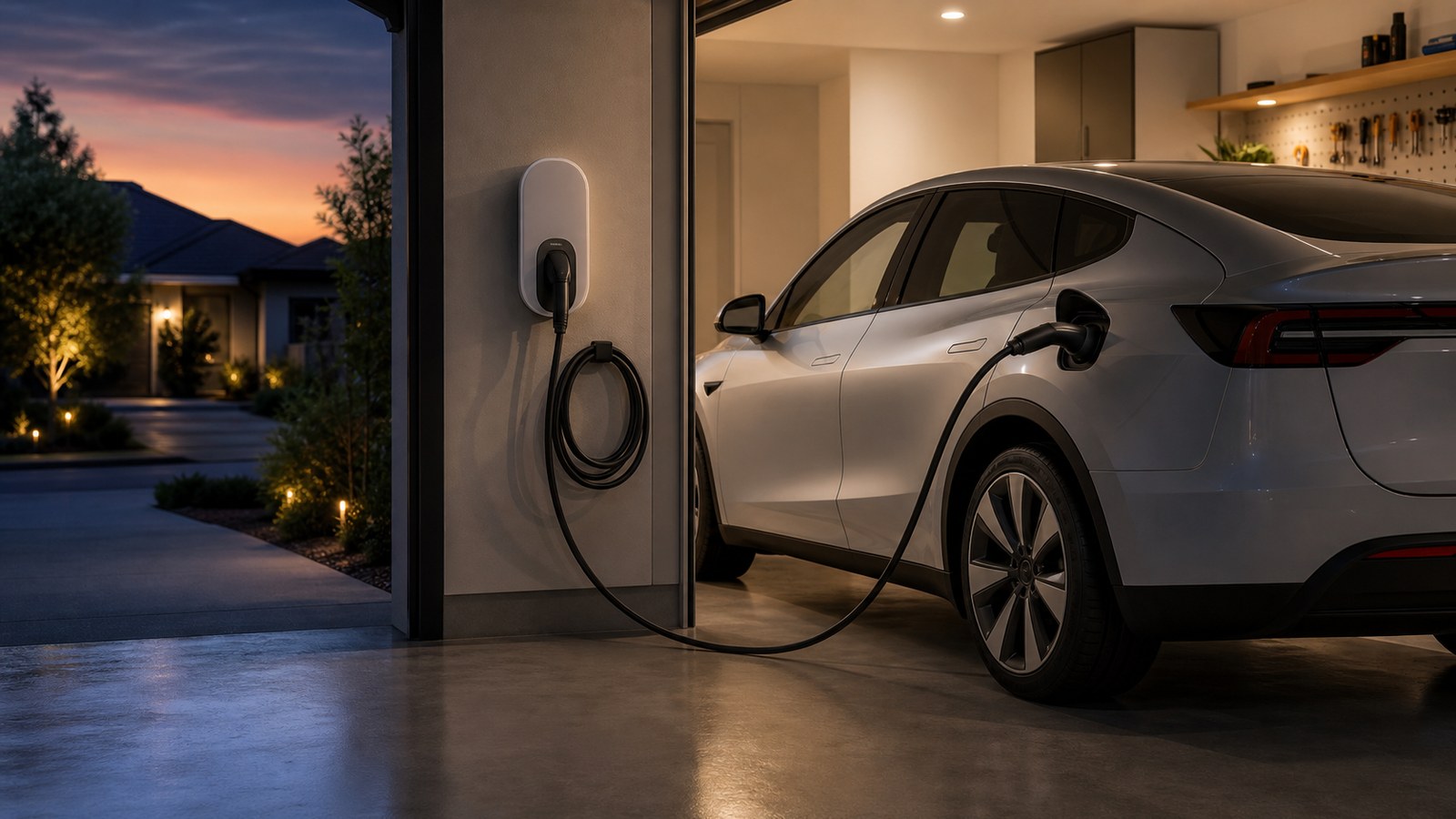
Level 2 charging is the point where EV ownership starts to feel easy for many households. A dedicated higher-voltage circuit can recover a useful amount of range during an evening and overnight window. The exact time depends on circuit size and vehicle limits, but the practical result is often the same: the car is ready in the morning.
A home charger should be chosen around the house and the driver, not simply the biggest number on the box. Panel capacity, parking location, utility rates, outdoor exposure, cable reach, and permitting all matter. A well-sized charger installed cleanly will usually serve better than an overpowered unit squeezed into an electrical system that cannot comfortably support it.
Level 2 also makes partial charging feel natural. The car does not have to be empty before it is plugged in. It can recover what was used that day, pause at a chosen limit, and wait quietly. That is different from a gas-station habit, but it is one of the main conveniences of driving electric.
This is why many owners describe home charging as more convenient than fueling, even though the clock time is longer. The active time is usually only the few seconds it takes to connect and disconnect the cable. The rest of the session happens during hours that were already going to be spent at home.
DC Fast Charging: Useful Range in a Short Stop
DC fast charging is built for time-sensitive situations, especially highway travel. The charger handles high-power conversion outside the car and sends direct current to the battery. This equipment is expensive and power-hungry, which is why it is usually found in public charging networks rather than home garages.
The fastest part of a DC session is usually not the final stretch. Many EVs accept strong power when the battery is low or moderate, then taper as the pack fills. For road trips, the efficient strategy is often to add enough range to reach the next stop with margin, then leave. Waiting for a very high percentage can turn a quick break into a long pause.
Fast charging also depends on preparation. A warm battery may charge better than a cold one. Some EVs precondition the pack when a fast charger is selected in navigation. Arriving at a lower state of charge can help the car accept more power, though drivers should still keep a safe buffer. Station choice matters too. A reliable charger near food or restrooms can make a slightly longer session feel easier than a theoretically faster station in an awkward location. On a long trip, the best charging stop is the one that supports both the car’s needs and the driver’s needs. That practical detail is easy to overlook when comparing only peak kilowatt numbers.
What Makes a Session Slower Than Expected
A charging session can disappoint for reasons that have little to do with the advertised station power. The car may be nearly full, the battery may be cold, the charger may share power with another stall, or the vehicle may have a lower maximum rate than the station. Even a perfect charger cannot force the battery to accept power beyond its limits.
This is why the same station can feel different on different days. A winter arrival after a short drive may be slower than a summer arrival after an hour on the highway. A station that is quiet at night may perform differently when every stall is occupied. Real charging time is a condition-based result.
Another slowdown comes from aiming too high. If the next drive only requires moderate range, waiting for the battery to reach one hundred percent may add time without adding much practical value. Many drivers learn to stop charging when the car has enough range for the next leg plus a reasonable cushion.
That mindset also helps protect public charger availability. A vehicle sitting at a fast charger long after the useful part of the session has passed can delay another driver. Efficient charging is partly personal planning and partly shared etiquette.
How to Estimate Your Own Charging Time
Start with energy needed, not battery size alone. If a commute uses thirty miles of range, the home setup only needs to replace those miles before the next departure. A larger battery may be far from full, but that does not matter if tomorrow’s driving is covered. EV ownership becomes easier when drivers think in terms of useful recovery.
Next, learn the charging rate your vehicle actually sees. The dashboard or app may show power, time remaining, or miles added per hour. After a few sessions, the pattern becomes familiar. You will know what an overnight charge does, how much a public Level 2 stop adds during dinner, and how long a fast-charging road-trip stop usually lasts.
Finally, leave room for real life. Weather, traffic, charger reliability, and route changes can all affect the plan. A small buffer is not a sign that the EV is inconvenient; it is simply good travel planning. If you want a rough home estimate, look at the battery energy you need to replace and the power your setup can deliver. The result will not be perfect because charging has losses and vehicles vary, but it will put you in the right neighborhood. Over time, your own charging history becomes more useful than any generic estimate.
The Practical Answer for Most Drivers
For many EV owners, daily charging takes no active time at all because it happens while the car is parked. The driver plugs in, walks away, and returns to a vehicle with the desired charge. That is the version of charging time that matters most in normal life.
On road trips, charging time becomes part of the route. Smart planning turns it into a break rather than a burden. The car does not need to reach one hundred percent at every stop; it needs enough energy for the next leg. Once that idea clicks, charging an electric car feels less like waiting and more like managing a flexible energy routine. The most confident EV drivers are not the ones who know every charger specification by heart. They are the ones who understand their own pattern. They know how much their commute uses, how their home setup performs, and when a public fast charger is worth the stop. Charging time becomes predictable because the routine becomes familiar.
What Beginners Should Remember
Beginners should remember that charging time is a planning question, not a single universal number. A slow charger can be perfect if the car sits long enough. A fast charger can be wasteful if the driver waits through a slow top-off that was not needed. The right answer depends on how soon the vehicle must leave, how much range it needs, and what charging options are available.
That is good news because it gives drivers control. They can install a better home setup, choose off-peak charging, precondition before fast charging, avoid unnecessary high-percentage waits, and build a route around reliable stations. The car handles the chemistry and safety decisions. The driver handles the routine, and after a few weeks that routine usually feels ordinary rather than technical. The clock still matters, but it no longer dominates the ownership experience because the driver has learned which charging moments are passive, which are planned, and which are worth skipping.
That memory is what turns estimates into confidence. After the first month, most owners stop asking how long every possible charge might take and start knowing what their own car needs on ordinary days, busy days, and travel days.


