Electric vehicles may look sleek and simple from the outside, but beneath the floor sits one of the most advanced pieces of technology in modern transportation: the lithium-ion battery. This powerful energy system is what allows an EV to glide silently down the road, accelerate instantly, recharge from the grid, and replace gasoline with electricity. For many drivers, EV batteries can feel mysterious, but the basic idea is surprisingly easy to understand once you look inside the science. At its core, an EV battery is a rechargeable energy storage system. Instead of burning fuel inside an engine, an electric vehicle stores energy in a battery pack and sends that energy to an electric motor. The motor turns the wheels, and the vehicle moves. What makes lithium-ion technology so impressive is its ability to store a large amount of energy in a relatively compact, lightweight, and efficient package.
A: It stores electricity by moving lithium ions between internal electrodes, then releases that energy to power the motor.
A: Lithium ions move into the anode, storing energy for later driving.
A: Lithium ions move back toward the cathode while electrons power the vehicle.
A: It monitors and protects the battery by managing temperature, voltage, current, and charge levels.
A: The battery reduces charging speed near full to limit stress and protect long-term health.
A: Yes. Cold temperatures can temporarily reduce range and slow charging.
A: It captures energy while slowing the vehicle and sends some of it back to the battery.
A: They gradually degrade over time, but modern packs are designed for many years of use.
A: Many EVs are best kept below full for daily use unless extra range is needed.
A: Yes. Modern EVs use protective structures, cooling systems, sensors, and software safeguards.
What Is a Lithium-Ion Battery?
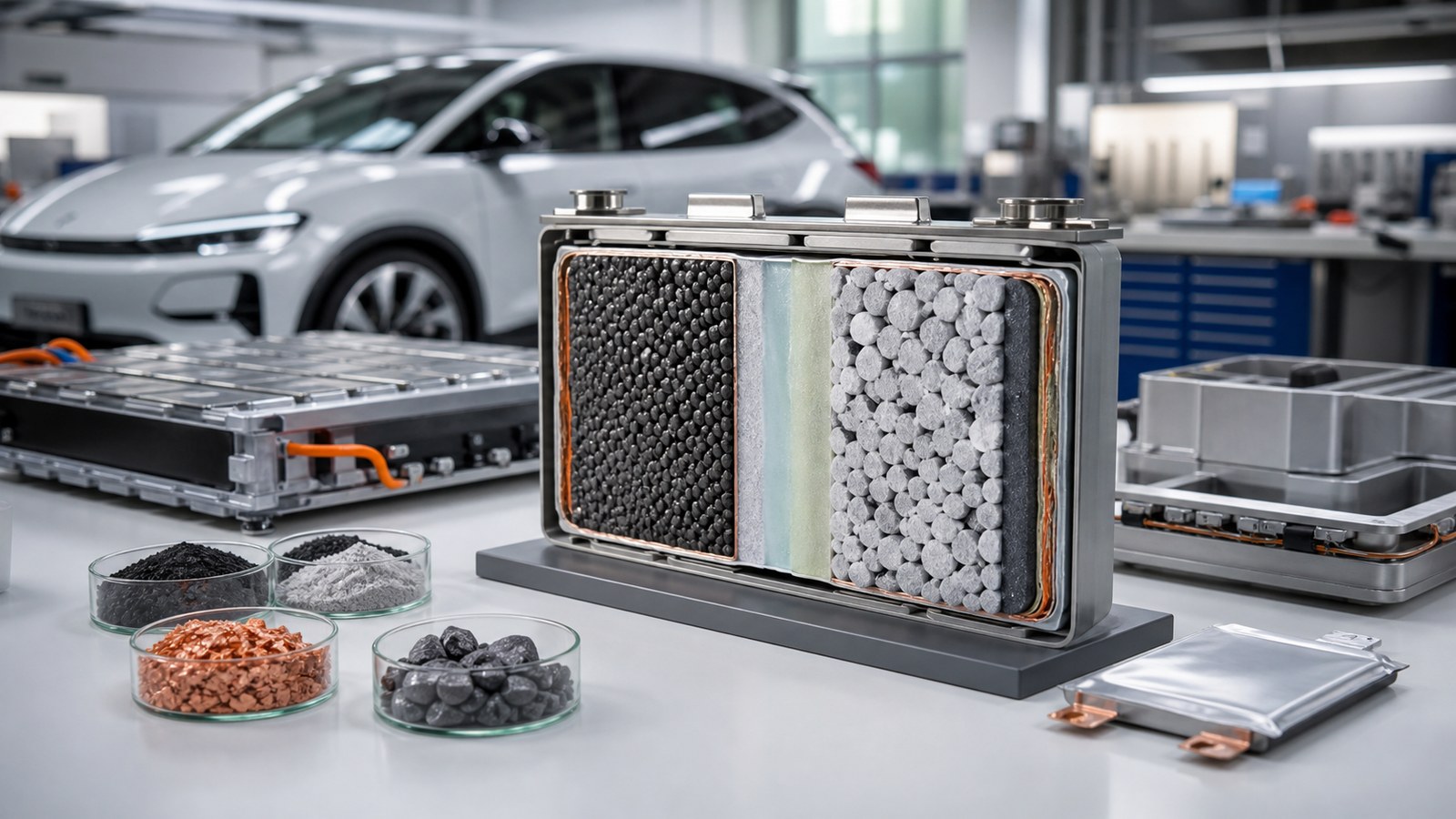
A lithium-ion battery is a rechargeable battery that moves lithium ions back and forth between two internal electrodes. These electrodes are called the anode and the cathode. During charging, lithium ions move from the cathode to the anode. During driving, they move back from the anode to the cathode, releasing electrical energy that powers the vehicle.
The term “lithium-ion” does not mean the battery is made only of lithium. In reality, EV batteries include many materials, including graphite, nickel, manganese, cobalt, iron, phosphate, copper, aluminum, electrolytes, separators, and protective casing. Lithium is important because its ions are excellent energy carriers, but the entire battery depends on a carefully engineered combination of materials.
The Battery Pack: The EV’s Energy Center
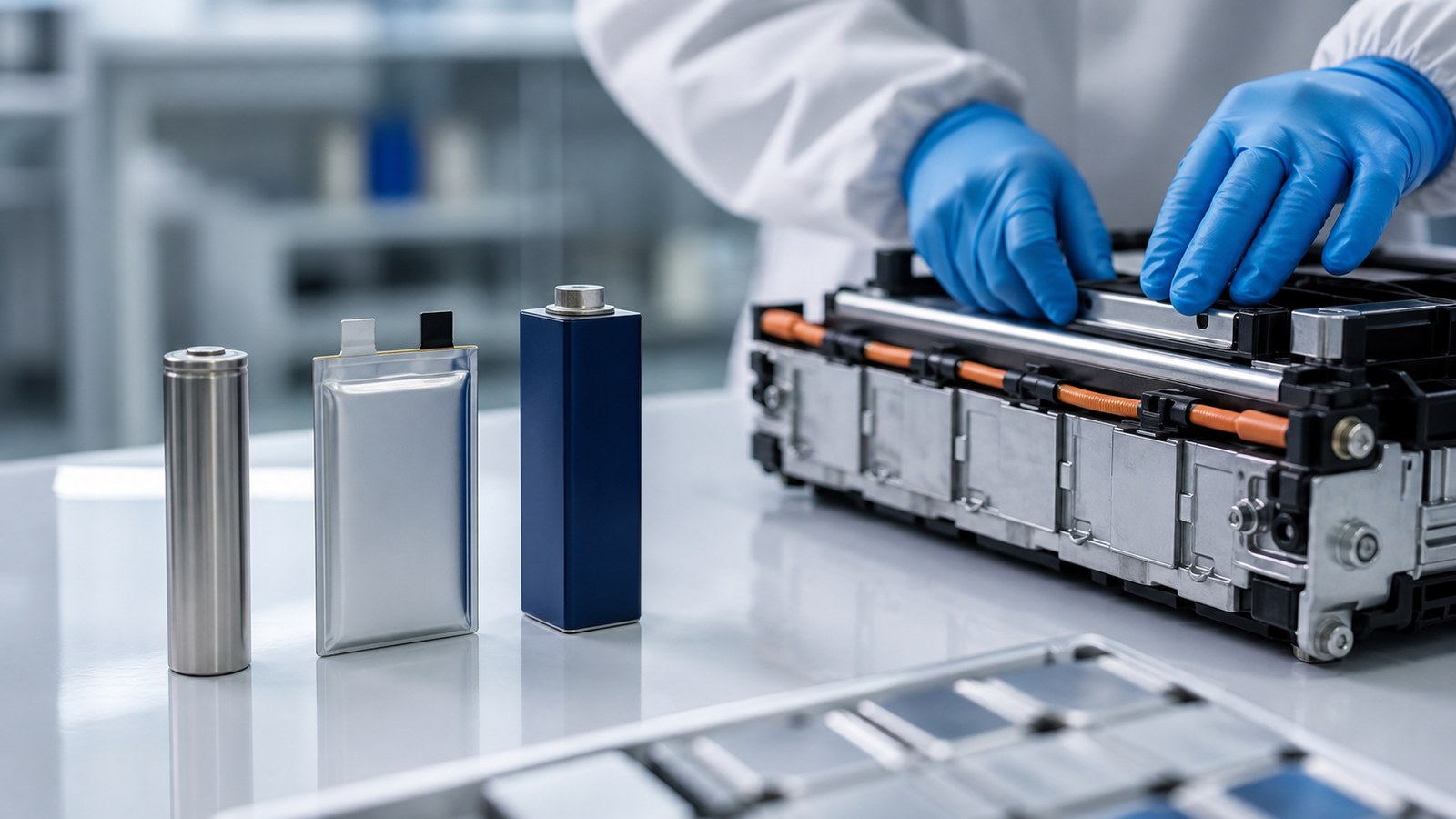
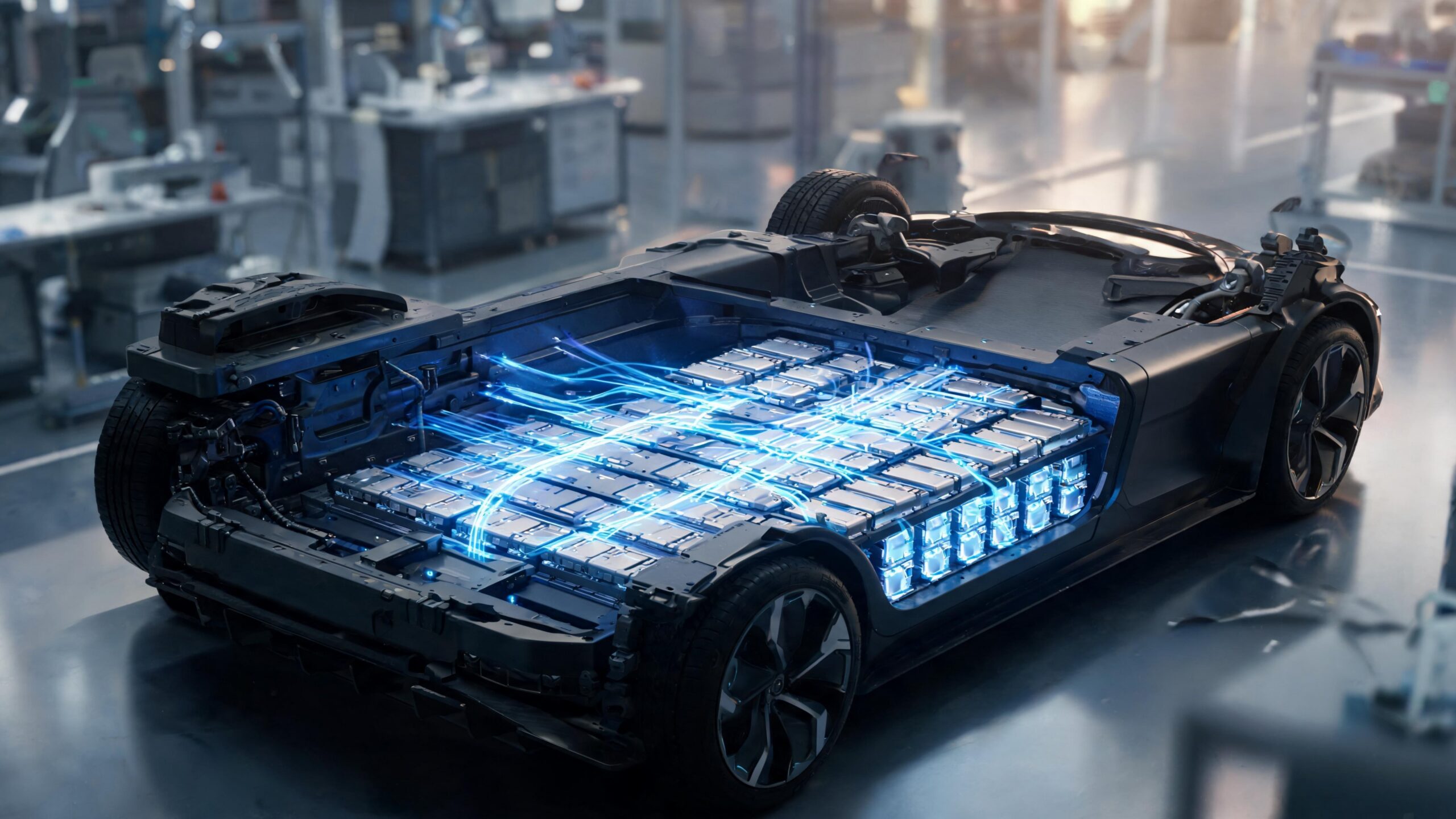
An EV battery is not usually one giant battery cell. Instead, it is made from many smaller cells connected together. These cells are grouped into modules, and the modules are assembled into a complete battery pack. This pack is usually installed low in the vehicle, often beneath the cabin floor. That low placement is useful because it helps lower the vehicle’s center of gravity. This can make EVs feel stable, planted, and responsive on the road. The battery pack also includes cooling systems, electrical connections, protective structures, sensors, and a Battery Management System that constantly monitors performance.
The battery pack stores energy measured in kilowatt-hours, often shortened to kWh. A larger kWh rating generally means the vehicle can store more energy and travel farther, although efficiency, weight, aerodynamics, weather, and driving style also affect real-world range.
The Simple Science of Charging and Driving
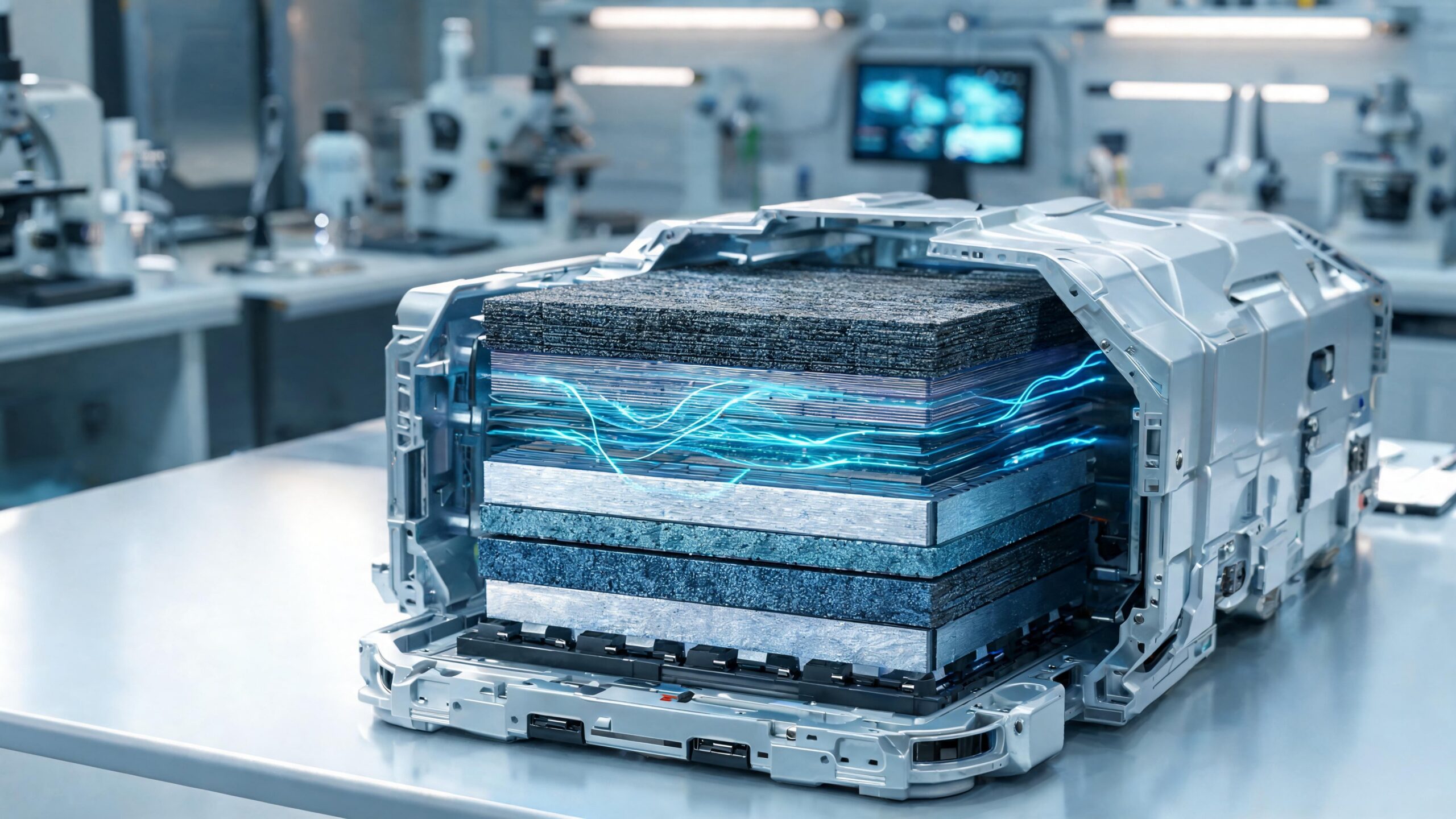
The easiest way to understand an EV battery is to imagine lithium ions moving between two parking lots. When the vehicle is charging, the ions are pushed into storage at the anode. When the vehicle is driving, those ions travel back toward the cathode, and the movement creates electricity. Electrons also move during this process, but they travel through the vehicle’s external circuit rather than through the electrolyte. This flow of electrons is what provides usable electrical power. The battery does not “make” energy from nothing. It stores electrical energy from the grid and releases it when needed.
This reversible movement is what makes lithium-ion batteries rechargeable. The same chemical system can be used again and again, thousands of times, as long as the battery is managed properly.
The Anode: Where Energy Is Stored
The anode is the negative side of the battery during discharge. In most EV lithium-ion batteries, the anode is made primarily from graphite. Graphite has a layered structure that allows lithium ions to slide between its layers during charging.
When you plug in an EV, lithium ions move into the graphite anode and wait there until the vehicle needs power. When you drive, those ions leave the anode and move back toward the cathode.
Graphite is popular because it is stable, conductive, and reliable. It can handle repeated charging cycles while helping the battery maintain good performance over time. Researchers are also exploring silicon-enhanced anodes, which may store more energy, but graphite remains the dominant anode material in many EV batteries.
The Cathode: The Performance Driver
The cathode is the positive side of the battery during discharge and plays a major role in range, cost, lifespan, and performance. Different EV batteries use different cathode chemistries.
Some common chemistries include nickel manganese cobalt, often called NMC, and lithium iron phosphate, known as LFP. NMC batteries are popular because they offer strong energy density, which can help deliver longer driving range. LFP batteries are known for durability, safety, and lower reliance on expensive materials like nickel and cobalt. The cathode chemistry is one of the biggest reasons different EVs can have different range, charging speeds, costs, and battery lifespans. Automakers choose chemistries based on the vehicle’s purpose, price point, performance goals, and supply chain strategy.
The Electrolyte: The Ion Highway
Inside each lithium-ion cell is an electrolyte. The electrolyte acts like a transport pathway for lithium ions, allowing them to move between the anode and cathode. Without the electrolyte, the battery could not charge or discharge properly.
Most traditional lithium-ion batteries use a liquid electrolyte made from lithium salts and solvents. This material must be carefully controlled because it plays a major role in battery performance and safety.
Future battery designs may use solid electrolytes instead of liquid ones. These solid-state batteries could potentially improve energy density, charging speed, and safety, although they are still being developed for large-scale automotive use.
The Separator: Small Part, Big Safety Role
The separator is a thin barrier inside the battery cell. Its job is to keep the anode and cathode from touching each other directly. If they touched, the battery could short circuit. At the same time, the separator must allow lithium ions to pass through. This makes it one of the most important safety components in the battery. It has to be thin, durable, and precisely engineered.
In many ways, the separator is like a security gate. It blocks the wrong kind of contact while allowing the right kind of movement.
How an EV Uses Battery Power
Once energy leaves the battery pack, it flows to the vehicle’s power electronics. These systems control how electricity is delivered to the motor. Because EV batteries store direct current, or DC electricity, and many EV motors use alternating current, or AC electricity, an inverter is used to convert power into the right form.
The electric motor then turns electrical energy into motion. One reason EVs feel quick is that electric motors can deliver torque almost instantly. There is no need to wait for fuel combustion, gear changes, or engine revving in the same way as a gasoline vehicle.
This direct and efficient transfer of power is one of the biggest advantages of electric transportation.
Regenerative Braking: Capturing Energy While Slowing Down
One of the most exciting features of EV battery technology is regenerative braking. In a gasoline vehicle, much of the energy used to slow down is wasted as heat through the brakes. In an EV, the motor can work in reverse as a generator.
When the driver lifts off the accelerator or presses the brake pedal, the motor can send energy back into the battery. This helps improve efficiency and can extend driving range, especially in city traffic. Regenerative braking also reduces wear on traditional brake components. Many EV drivers enjoy one-pedal driving, where the vehicle slows significantly when the accelerator is released.
The Battery Management System
The Battery Management System, often called the BMS, is the brain of the EV battery pack. It monitors temperature, voltage, current, charge level, and cell health. It helps keep the battery operating safely and efficiently.
The BMS also balances cells so that no individual cell becomes too charged or too depleted compared with the others. This balancing helps protect battery life and performance.
When you fast charge, drive aggressively, or travel in extreme temperatures, the BMS is constantly making decisions in the background. It may limit charging speed, adjust cooling, or reduce power output to protect the battery.
Why Temperature Matters
EV batteries work best within a comfortable temperature range. Very cold weather can slow chemical reactions inside the battery, reducing range and charging speed. Very hot conditions can increase stress and accelerate wear if not properly managed.
That is why many EVs include active thermal management systems. These systems may use liquid cooling, heating elements, heat pumps, or software-controlled conditioning to keep the battery in an ideal range. Battery preconditioning is especially useful before fast charging. If the battery is too cold or too hot, it cannot accept energy as quickly. Preconditioning prepares the pack so charging can happen more efficiently.
Understanding EV Charging Levels
EV charging is usually divided into three general levels. Level 1 charging uses a standard household outlet and is the slowest option. Level 2 charging uses a higher-powered home or public charger and is common for overnight charging. DC fast charging is the quickest option and is often used during road trips.
The battery controls how much power it can accept. Even if a charger is extremely powerful, the vehicle will only take what its battery system allows. Charging also slows as the battery gets closer to full, which helps protect the cells.
That is why EV road trips often involve charging from a lower percentage to around 70 or 80 percent rather than waiting for 100 percent every time.
Why Batteries Degrade Over Time
Like all rechargeable batteries, EV batteries slowly lose some capacity as they age. This is called degradation. It happens because repeated charging, discharging, heat exposure, and chemical changes gradually affect the battery’s internal structure.
However, modern EV batteries are designed to last many years. Automakers use advanced software, cooling systems, durable chemistries, and protective charging limits to slow degradation. Daily habits can also help. Avoiding constant charging to 100 percent, limiting unnecessary fast charging, and parking in moderate temperatures when possible can support long-term battery health.
The Future of Lithium-Ion Technology
EV battery technology is advancing quickly. Engineers are working on better cathodes, improved anodes, faster charging systems, safer electrolytes, and more efficient recycling methods.
Solid-state batteries, sodium-ion batteries, silicon anodes, and cobalt-free chemistries are all areas of active development. Each innovation aims to solve a different challenge, whether that means longer range, lower cost, faster charging, improved safety, or reduced environmental impact.
Even as new technologies emerge, lithium-ion batteries remain the foundation of today’s EV revolution. They have already changed how people think about cars, energy, and transportation.
Final Thoughts
EV batteries may seem complex, but their basic function is beautifully simple. Lithium ions move back and forth inside the battery, storing energy when the vehicle charges and releasing energy when it drives. The anode, cathode, electrolyte, separator, cooling system, and Battery Management System all work together to make this process safe, efficient, and repeatable.
Lithium-ion technology is the reason electric vehicles can deliver smooth acceleration, quiet operation, impressive range, and convenient charging. As battery science continues to improve, EVs will become even more capable, affordable, and accessible. Understanding how EV batteries work is not just a technical lesson. It is a glimpse into the future of transportation, where chemistry, software, engineering, and clean energy come together to power the road ahead.