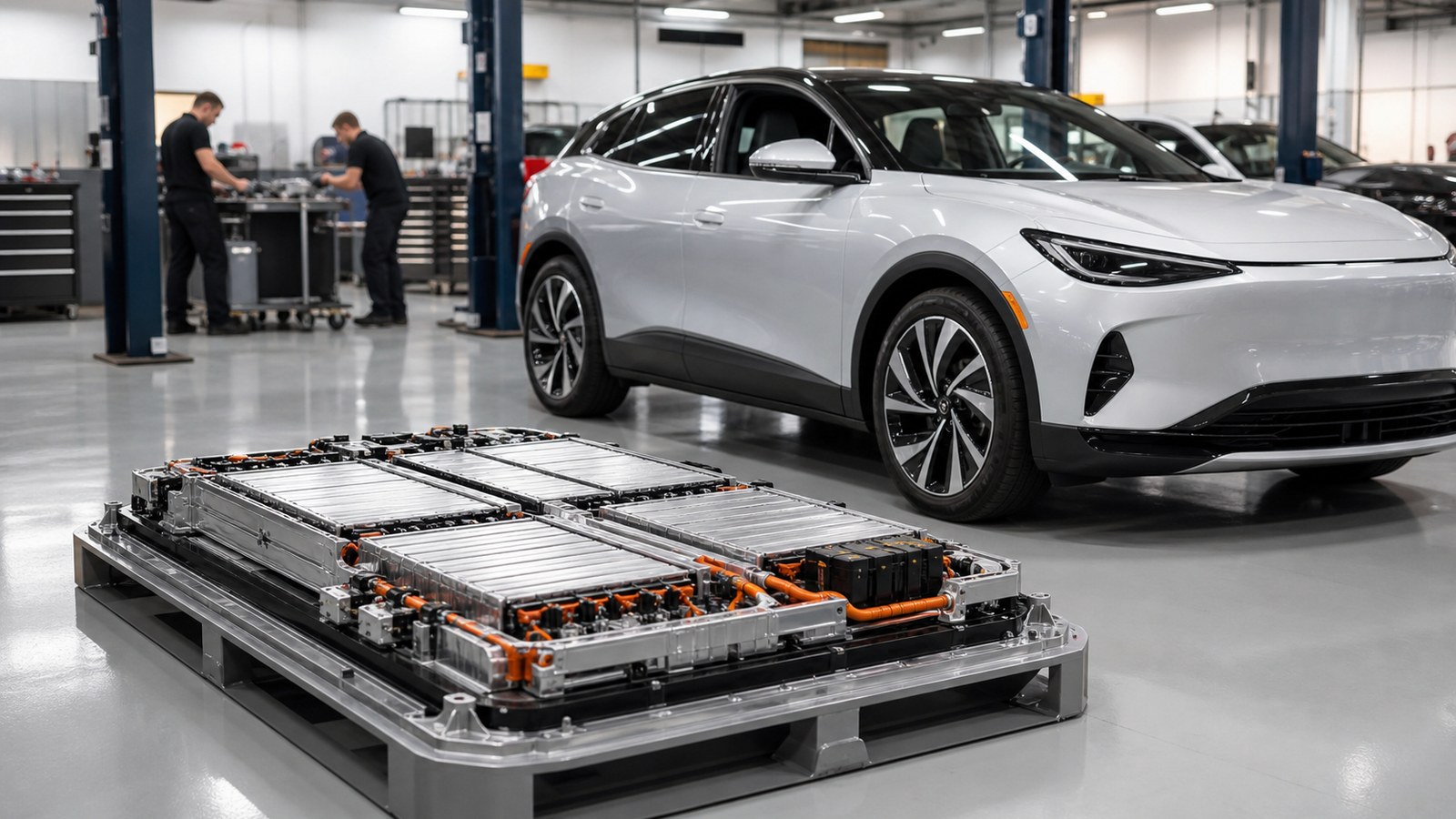
Zero Charge Is Usually a Process, Not a Surprise
When an EV battery runs out of power, the car normally gives the driver several warnings before it stops moving. The display may reduce the estimated range, suggest nearby chargers, limit climate power, and eventually restrict acceleration. If the battery is pushed too far, the vehicle can enter a low-power mode and then shut down propulsion to protect the high-voltage pack. The situation is inconvenient, but it is usually manageable when the driver responds early, moves the car to a safe place, and uses the right recovery method.
The Warning Stage
Most EVs do not fall silent without notice. Long before the car is unable to drive, the display begins warning the driver that the battery is low. The warnings may include a low state-of-charge alert, reduced range confidence, charger recommendations, and route guidance that says a charging stop is required. Some models also change the color of the battery icon or show a more prominent message as the charge level drops.
This stage is where the driver has the most control. A charger ten miles away may still be reachable when the first warning appears, while that same charger may become unrealistic after a detour, traffic jam, cold headwind, or missed exit. The right move is to stop treating the range estimate like a promise and start treating it like a shrinking safety margin.
Reduced Power Mode
As the battery approaches the bottom of its displayed range, the EV may limit available power. Drivers often describe this as softer acceleration or a car that refuses to give full performance. The goal is not to punish the driver. It is to protect the battery and keep the vehicle predictable while the remaining energy gets very low.
Reduced power can also affect climate comfort. Heated seats, cabin heat, air conditioning, and high fan speeds use energy that could otherwise move the car. Some EVs leave those controls available but warn the driver that range will suffer. Others become more assertive and trim nonessential loads.
Drivers should also understand that reduced power is not the same as a mechanical failure. The vehicle is rationing energy and keeping the high-voltage system inside limits. That means a driver may still have a short opportunity to reach a safer pull-off, but the car should no longer be treated as fully capable. Merging, climbing, or crossing fast traffic becomes a poor gamble when the car has already warned that propulsion is limited.
Passengers can help by lowering unnecessary electrical loads and looking for the nearest safe stop. The driver should keep attention outside the car rather than scrolling through charger apps while speed is falling. A calm handoff, where one person navigates and the other drives, can make the final minutes much safer.
When Propulsion Stops
If the battery is pushed past the warnings, the vehicle may eventually stop providing drive power. The car can roll only as traffic, slope, and remaining momentum allow, so the safe choice is to get off the road before the final warning becomes a shutdown. Waiting for the last possible mile is rarely worth it. A safe shoulder, parking lot, or side street is better than a theoretical charger the vehicle may not reach.
The displayed zero percent does not always mean the battery cells have absolutely no stored energy. Automakers normally keep buffers that the driver cannot use. Those buffers help prevent damaging deep discharge and give the vehicle a controlled shutdown point. Even so, the driver should not count on hidden reserve as usable range.
After propulsion stops, the car may still have enough low-voltage power for screens, locks, hazards, communication, and shifting logic. That reserve is valuable. It helps the driver call for help, make the car visible, and prepare for recovery. Leaving accessories on for a long time can make the recovery harder if the 12-volt system becomes weak too.
What Roadside Assistance Can Do
Recovery depends on where the car stopped and what services are available. In some cities, a mobile charging vehicle can add enough energy to reach a nearby charger. That is the closest EV equivalent to a small fuel delivery, but it is not universal. The charging rate may be modest, the provider may need special equipment, and the service may not be available in every area.
A tow is more common. For many EVs, a flatbed is the safest choice because it keeps the drive wheels off the road and avoids turning motors or drivetrain parts in a way the manufacturer does not approve. Some vehicles have tow or transport modes that allow short movements. The owner manual should guide the decision, especially for all-wheel-drive models.
Why Flat Towing Can Be a Problem
Gas cars have long trained drivers to think a tow strap or wheel lift can solve almost anything. EVs are different. Electric motors, reduction gears, parking locks, and regenerative systems can be damaged if the vehicle is dragged incorrectly. The risk is not the high-voltage battery alone; it is the drivetrain and control hardware connected to it.
That is why the roadside call should clearly say the vehicle is electric. The dispatcher needs to send equipment and instructions that match the car. A driver who is nervous, embarrassed, or blocking traffic may be tempted to accept any quick tow. The better answer is the tow that gets the car moved safely without creating a repair bill.
If the vehicle must be moved only a few feet, the manual may describe a specific procedure. That procedure matters because electronic parking locks, axle motors, and wheel-speed sensors may need the car awake and configured correctly. Guessing can turn a simple roadside event into a drivetrain problem.
Battery Damage Concerns
Running an EV to zero once is not automatically a disaster. The battery management system is designed to prevent the driver from using every last bit of chemical energy. Still, deep discharge is not something to make routine. Lithium-ion batteries prefer to avoid sitting at extremely low charge, especially for extended periods. The sooner the vehicle is charged after a depletion event, the better.
The situation is more concerning if the car is left empty for days or weeks. Low-voltage systems may continue drawing small amounts of power, and the high-voltage pack can remain in an unhealthy state. If a vehicle reaches zero at home, it should be plugged in promptly. If it reaches zero away from home, the recovery plan should aim for charging rather than storage.
Cold Weather Changes the Ending
Cold weather can make the final miles less predictable. Batteries deliver energy less willingly when cold, cabin heat uses power, and winter tires or dense air can increase consumption. A car that seemed able to reach a charger in mild weather may become less comfortable in freezing conditions. Drivers should add reserve during winter rather than aiming for the same arrival percentage they use in summer.
How to Avoid the Situation
The best prevention habit is simple: plan charging before the car is desperate. Navigation systems, charger apps, and in-car route planners are most useful when the driver still has options. A charger that is occupied, broken, blocked, or incompatible is annoying at 25 percent and stressful at 3 percent. Checking alternatives early makes the trip calmer.
Drivers should also build a personal reserve. That reserve might be 10 percent for familiar local driving, 20 percent for highway travel, and more for cold weather or rural routes. The exact number matters less than the habit of leaving room for real life. Traffic, wind, rain, elevation, detours, and charger uncertainty are normal driving conditions, not rare exceptions.
Running out of power is not proof that EVs are impractical. It is proof that energy planning matters, just as fuel planning matters in a gasoline car. The difference is that EVs reward routine. A driver who plugs in regularly, plans long routes, and responds to warnings will rarely experience a true zero-charge stop.
What Not to Do
The worst response is to keep driving past safe exits because the map says a charger might be reachable. Low-charge range estimates are not precise enough to justify that gamble in traffic. A driver should avoid coasting in a travel lane, stopping on a blind shoulder, or blocking an intersection while trying to save a few minutes. Safety is the first recovery step, and a calm stop in a safe place is easier to solve than a dead EV in a dangerous spot.
How the 12-Volt Battery Complicates Recovery
An EV has a high-voltage battery for propulsion and a separate low-voltage system for many basic vehicle functions. If the high-voltage pack is depleted but the 12-volt battery still has power, the driver may be able to unlock doors, use hazard lights, shift into the required mode, and communicate with roadside services. If the low-voltage battery also gets weak, the situation becomes more awkward because the car may not respond normally.
This is one reason drivers should not sit for hours with accessories running after the vehicle has already reached zero. Phone charging, cabin fans, screens, lights, and repeated wake-ups can use the remaining low-voltage reserve. It is better to make the necessary calls, follow the vehicle’s roadside instructions, and conserve the systems needed for loading or charging.
Road Trips Need Different Reserve Rules
Local driving and road trips should not use the same bottom-of-battery habits. Around home, the driver may know every charger, every hill, and every shortcut. On a trip, charger spacing, elevation, weather, speed, station reliability, and restroom stops all add uncertainty. A route that looks comfortable on a warm afternoon can feel tighter after a closed stall or a cold headwind.
A better approach is to choose a minimum arrival percentage before the day begins. Some drivers use 10 percent for familiar corridors and 20 percent or more when stations are sparse. Families, night travelers, and winter drivers may want even more margin. The reserve is not wasted energy; it is the space that keeps a minor routing problem from becoming a tow.
Reserve planning should also account for people, not only miles. A driver carrying children, pets, older passengers, or medical equipment may need more certainty about heat, air conditioning, restroom stops, and safe waiting areas. Range anxiety often becomes passenger-management anxiety when the battery is nearly empty.
After the Car Is Moving Again
Once the EV reaches a charger, the driver should confirm that charging has actually started and that the session is adding energy at a reasonable rate. A nearly depleted battery may need a short stabilization period, especially if it is cold or hot. The goal is not to fill completely unless the next leg requires it. Often the smartest recovery is to add enough range to reach a better charger, home, or a safer destination.
The driver should also treat the event as useful feedback. Maybe the route planner was too optimistic, a charger was unreliable, or the personal reserve was too small. Adjusting habits afterward is what prevents a repeat. EVs are forgiving when drivers learn from the first close call.
If the Car Is Left Empty
If an EV cannot be charged immediately, the owner should ask the manufacturer or roadside provider how soon the vehicle needs attention. The answer can vary by model and conditions. The safest habit is to avoid storage at zero, arrange transport promptly, and document any warnings that appeared before shutdown.