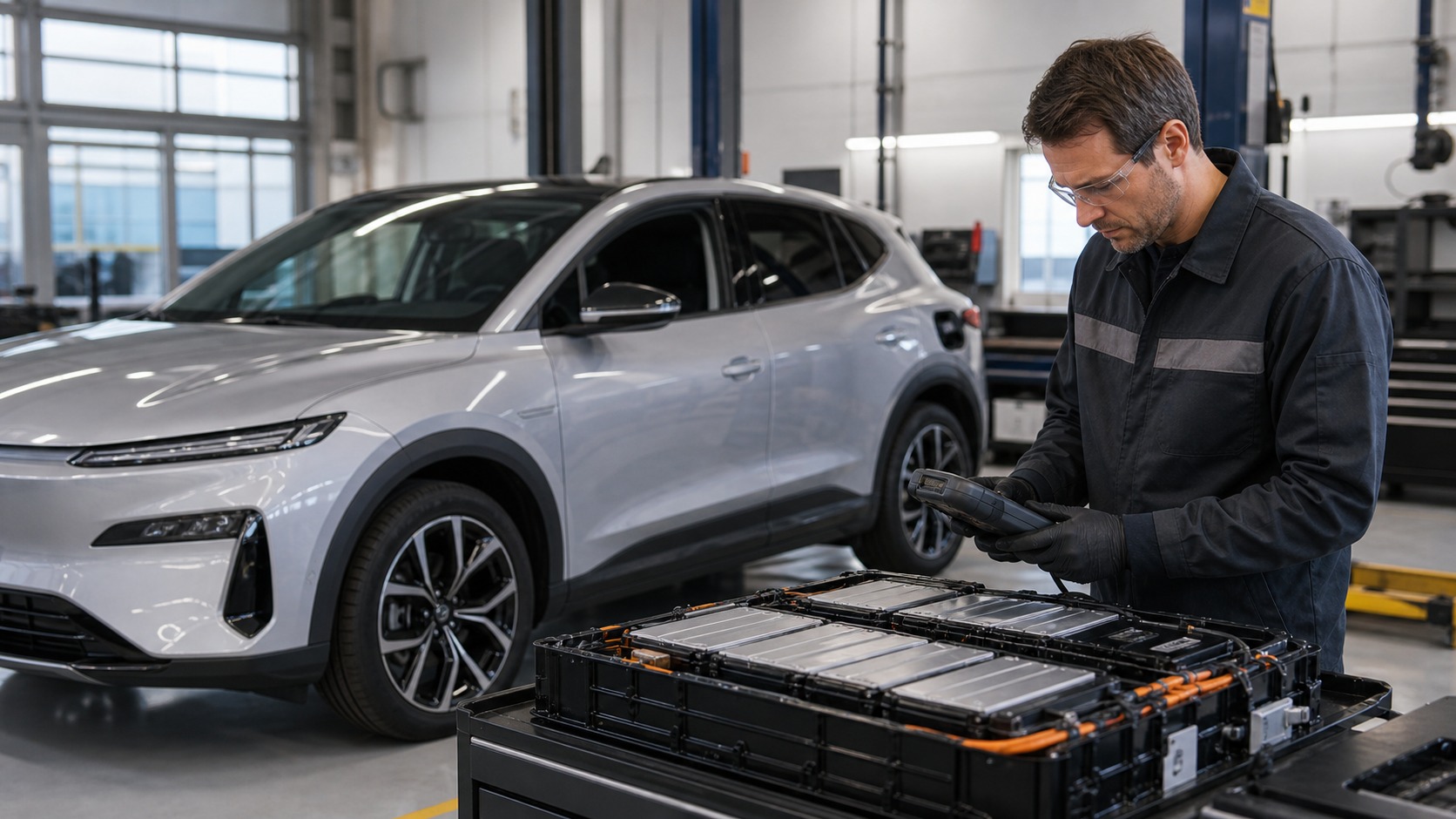
EV Fire Risk Is Often Misunderstood
Electric vehicles can catch fire, but the common fear that they routinely burn more often than gasoline cars is not supported by the broader safety picture. Gasoline is highly flammable, internal-combustion vehicles have many hot and fuel-handling parts, and EVs use sealed battery packs with monitoring, cooling, and isolation systems. The better question is not whether an EV fire is possible; it is how likely different fire risks are, what causes them, and what owners can do to keep charging and crash recovery safe.
Fire Frequency and Fire Complexity Are Different
When people argue about EV fires, they often mix two different ideas. One question is how often fires happen. The other is how difficult a fire can be once it starts. EV battery fires may be more complex for responders, but that does not automatically mean they happen more often.
Gasoline vehicles have their own fire risks: fuel leaks, oil leaks, hot exhaust components, electrical faults, aging hoses, and crash damage. Those risks are familiar, so they often feel less frightening. Familiar risk is still risk.
Why EV Fires Look So Dramatic
Lithium-ion battery fires can involve thermal runaway, where heat spreads from cell to cell if conditions become severe enough. That process can produce intense heat, smoke, and reignition concerns. Firefighters may need large amounts of water and extended monitoring. The images are memorable because crews may keep cooling and observing the battery long after the visible flames are reduced.
That visual drama explains why EV fires travel quickly online. A single burning vehicle can become a symbol for an entire technology, even though gasoline-car fires rarely receive the same sustained attention. Good safety judgment should separate spectacle from probability.
None of this means battery fires should be minimized. They are serious events that require appropriate response. The point is that a serious rare hazard should be understood accurately, not inflated into a daily expectation.
What Usually Reduces EV Fire Risk
Modern EV battery packs are monitored constantly. The car watches voltage, current, temperature, isolation, charging behavior, and fault conditions. If something moves outside expected limits, software can reduce power, stop charging, warn the driver, or isolate the battery. Those checks run quietly during ordinary driving and charging, which is why most owners never notice them unless a warning appears.
Physical design matters too. Battery enclosures, cooling systems, fuses, contactors, venting strategies, and crash structures all help manage risk. The system is not relying on a single protective part.
Charging Safety Starts at the Wall
Many owner-controlled fire risks involve charging equipment rather than the battery itself. A worn outlet, undersized circuit, loose connection, overheated plug, or cheap adapter can create heat during long charging sessions. EV charging asks electrical hardware to work steadily for hours. A dedicated installation also gives a technician a clear place to inspect when a charging problem appears.
A proper Level 2 installation uses the right breaker, wire, enclosure, grounding, charger setting, and inspection process. That may feel less exciting than buying the car, but it is one of the most important safety investments an owner can make.
If a plug feels hot, smells odd, trips repeatedly, or shows discoloration, stop using it. The right response is diagnosis, not trying again with more force. A charging fault is information.
Recalls Deserve Prompt Attention
Some EV recalls involve battery modules, charging ports, software limits, or thermal management. Manufacturers may ask owners to limit charging, park outside, install software, or schedule inspection. Those instructions should be followed even if the car seems normal. A completed recall can turn an alarming news item into a documented repair rather than an open concern.
Gasoline vehicles have fire-related recalls too. The important habit is the same for both: check recall status, complete repairs promptly, and keep documentation. Risk management is not unique to EVs.
Crash and Flood Damage Change the Rules
An undamaged EV is designed for rain, washing, and normal road spray. Flood exposure is different. Water intrusion, corrosion, contaminated connectors, and damaged isolation can create delayed problems that are not obvious when the vehicle first powers on. The danger is not ordinary weather but compromised sealing, crushed structures, or contamination after an abnormal event.
Severe underbody impacts and collisions also deserve respect. The battery enclosure, cooling lines, and high-voltage connectors may be affected even if the car drives afterward. Professional inspection is the safe path.
After a serious event, avoid charging the vehicle until it has been evaluated. Charging a compromised battery or connector can add stress at the worst possible time. Caution after damage is not fear; it is common sense.
What Fire Departments Do Differently
Emergency responders approach EVs with model-specific guidance. They may identify high-voltage cable locations, stabilize the vehicle, cool the battery, monitor temperature, and watch for reignition. The response can take longer than a small engine-bay fire. As training improves, departments become better at identifying battery locations, cooling needs, and safe storage procedures after towing.
That different response is one reason EV fires seem unusual. Firefighters are adapting equipment and training as electric vehicles become more common. Owners can help by keeping emergency information accessible and avoiding damaged-vehicle charging.
Media Coverage Can Distort Risk
A rare EV fire may receive national attention, while thousands of ordinary charging sessions happen silently every day. Humans naturally remember dramatic images more than uneventful statistics. That can make the risk feel larger than it is. Balanced coverage should explain both the rarity of the event and the special care required when it happens.
The opposite mistake is dismissing every concern as anti-EV noise. Battery fires are real, charging installations need care, and recalls matter. A balanced view acknowledges the hazard without letting it define normal ownership.
The best comparison asks about rates, vehicle age, mileage, crash exposure, and data quality. Simple claims rarely capture all of that. If a source does not explain what it is comparing, treat the conclusion carefully.
How Owners Can Lower Risk
Use listed charging equipment, keep plugs and cables in good condition, complete recalls, respond to warnings, and inspect the vehicle after flood or crash damage. These steps are practical, not dramatic. They reduce the risks that owners can actually control. These habits are simple enough to follow without turning ownership into a constant safety exercise.
Do not improvise electrical work. Do not ignore a hot outlet. Do not charge a damaged EV in a garage. These boundaries are easy to remember and more useful than worrying over every headline.
The Real Answer Is Reassuring but Not Casual
EVs do not deserve a blanket reputation as fire-prone vehicles. They also do not deserve careless treatment simply because modern systems are well protected. The healthiest view is boringly practical: the risk is manageable, the protections are real, and owner behavior still matters.
For most drivers, fire risk should not be the reason to avoid an EV. It should be the reason to install charging correctly, respect recalls, and treat damaged vehicles thoughtfully. That is the same mature safety mindset any vehicle deserves.
Once the discussion moves from viral fear to actual causes, EV fire safety becomes much easier to understand. The car, charger, home wiring, repair history, and recall status all matter. Keep those pieces in good shape, and the everyday risk remains far less dramatic than the headlines.
The reassuring part is that normal, maintained EVs are engineered for daily use. The serious part is that damaged batteries, unsafe wiring, and ignored recalls should never be treated casually.
Data Comparisons Need Careful Framing
Fire comparisons can be tricky because data sources count events differently. Some include crashes, some include parked vehicles, some count recalls, and some do not separate hybrids, plug-in hybrids, gasoline cars, and battery EVs cleanly. A confident-sounding number may hide a messy method.
A fair comparison should consider vehicle age, miles driven, fleet size, crash exposure, and reporting quality. Older gasoline vehicles may have different risks than newer ones, and newer EV fleets may have different average ages. Without that context, the comparison can become more emotional than useful.
This is why the safest conclusion is measured. EVs are not immune to fire, but the broad picture does not support treating them as unusually fire-prone in normal use. Owners should focus on the real risk controls they can influence.
Thermal Runaway Is Rare but Serious
Thermal runaway happens when battery cells become hot enough to trigger a self-reinforcing reaction. It can begin from severe damage, defects, contamination, overheating, or abuse. Modern packs are designed to reduce the chance of this chain reaction and slow its spread if it begins. The seriousness comes from the amount of stored energy and the need to prevent heat from spreading through neighboring cells.
Home Charging Is a System, Not a Cord
A safe charging setup includes the circuit, breaker, wiring, receptacle or hardwired connection, charger, cable, connector, vehicle port, and software limits. Weakness anywhere in that chain can create heat or faults. That is why professional installation matters for repeated Level 2 charging.
Portable charging can also be safe when the outlet and circuit are appropriate. Problems arise when owners treat any available outlet as a permanent fueling point. A loose, worn, shared, or underrated outlet should not be asked to carry hours of EV charging night after night.
The simplest owner test is attention. Warm plugs, repeated breaker trips, melted plastic smell, flickering lights, or charging errors should stop the routine until the cause is known. Safe charging should feel uneventful.
Parking Guidance Depends on Condition
A normal undamaged EV can usually be parked like any other vehicle. Special caution applies when the manufacturer issues recall guidance, when the vehicle has been flooded, or when a collision may have compromised the battery pack. Those situations change the risk profile. The correct parking choice depends on whether the car is healthy, recalled, damaged, or awaiting inspection.
If a recall instructs owners to park outside or limit charging, follow that guidance until the remedy is complete. The instruction is not a judgment on every EV; it is a model-specific response to a known condition. Specific guidance beats generic reassurance.
A Practical Fire-Safety Mindset
Owners do not need to live in fear of an EV fire. They do need to respect damaged equipment, complete recalls, install charging correctly, and avoid charging after severe damage. Those habits are ordinary maintenance translated into an electric vehicle context. A practical owner treats the charger, battery, and repair history as connected parts of the same safety picture.
The most useful fire-safety advice is boring: do not improvise wiring, do not ignore warnings, do not buy flood-damaged vehicles casually, and do not treat viral clips as statistics. Calm habits reduce risk far better than panic.
When the conversation is grounded in causes and prevention, EV fire risk becomes understandable. The technology has different failure modes than gasoline vehicles, but different does not mean doomed. It means owners and responders need the right playbook.
The Best Comparison Is Practical
For a shopper, the useful comparison is not whether one dramatic event looked worse than another. It is whether the vehicle has open recalls, whether home charging will be installed correctly, whether the model has a credible safety record, and whether local service can inspect damage properly. Those checks lower actual risk.
Gasoline vehicles and EVs carry different kinds of stored energy, so they fail in different ways. Gasoline leaks and battery thermal events are not identical. A mature comparison respects those differences instead of pretending one technology makes risk disappear.