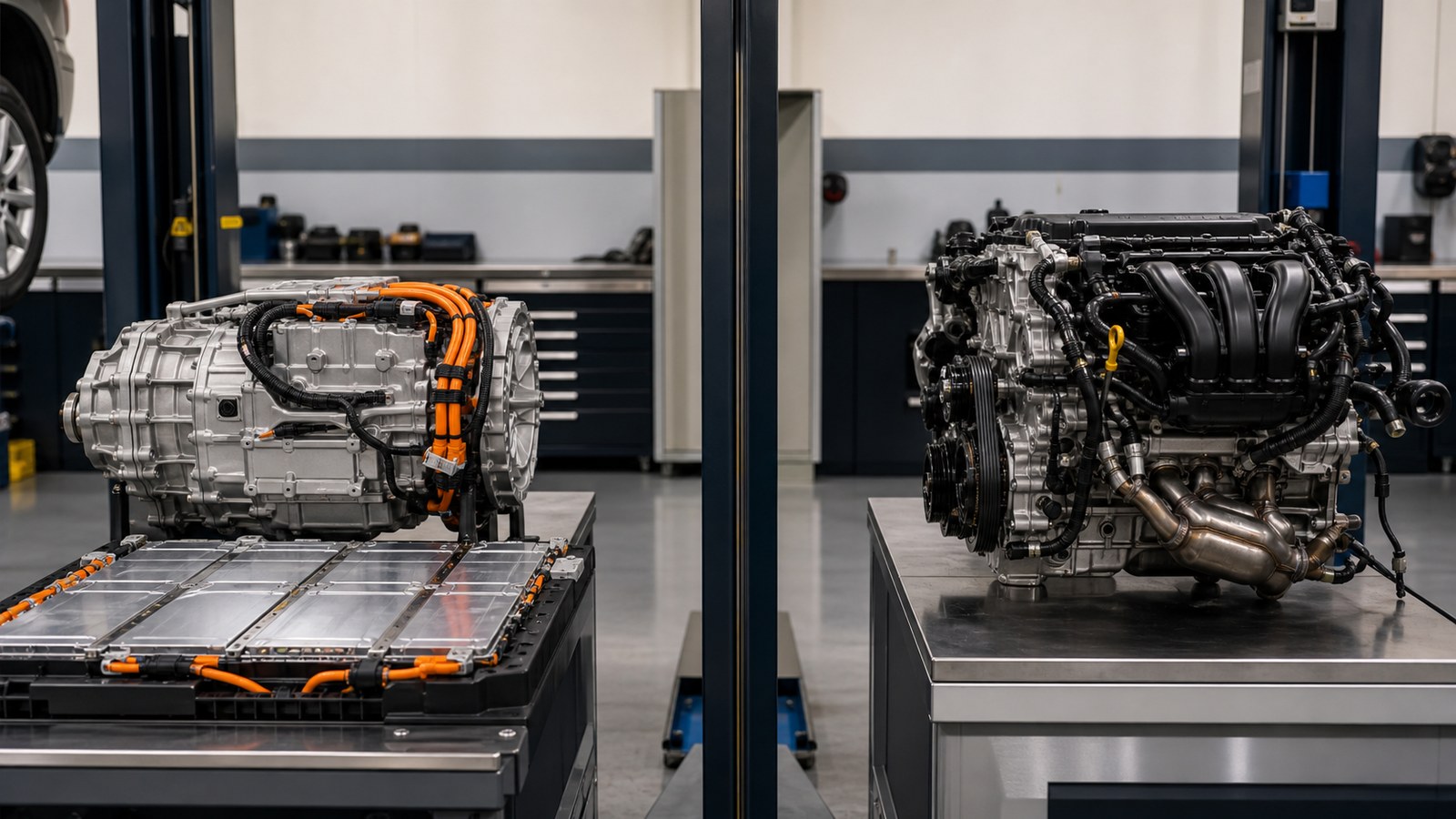
EV Motor Types Explain How Electric Cars Feel
Electric vehicle motor types can sound technical, but the basic idea is simple: the motor turns electrical energy into motion. AC induction motors, permanent magnet motors, wound-field motors, and other designs all solve the same problem in different ways. The choice affects efficiency, cost, rare-earth material use, performance, heat, packaging, and how the vehicle feels from a stop.
Why EV Motors Feel Different From Engines
An electric motor can produce strong torque almost immediately, which is why many EVs feel quick even when they are not marketed as performance cars. There is no need to wait for an engine to build revs or for a transmission to find the right gear. Power delivery can be smooth, quiet, and direct.
That does not mean every EV motor is the same. Automakers choose motor designs based on efficiency targets, cost, supply chain, performance, packaging, and the character they want the vehicle to have. The motor is one part of a larger system that includes the inverter, battery, cooling, software, and gearing.
For EV Motor Types, the why ev motors feel different from engines point works best when it is tied to a real driver routine. Daily mileage, charging access, weather, passengers, cargo, and budget often matter more than the single most impressive number in a spec sheet.
The practical check for this why ev motors feel different from engines discussion is simple: decide what would change the ownership experience after the first month. If the answer affects charging time, range confidence, comfort, service, cost, or resale value, it belongs in the buying decision.
That is why the why ev motors feel different from engines angle should be read as an ownership filter, not just background information. A useful EV article helps the reader connect technology claims to the way the vehicle will actually be charged, driven, maintained, and paid for.
AC Induction Motors
An AC induction motor creates motion by inducing current in the rotor rather than relying on permanent magnets in the rotor. This design is rugged and avoids rare-earth magnets, which can help with cost and supply-chain concerns. It has a long history in industrial use and helped prove early modern EV performance.
The tradeoff is that induction motors can be less efficient in some driving conditions than permanent magnet designs. That does not make them obsolete. Some automakers still use induction motors where durability, high-power behavior, or reduced magnet dependence makes sense.
For EV Motor Types, the ac induction motors point works best when it is tied to a real driver routine. Daily mileage, charging access, weather, passengers, cargo, and budget often matter more than the single most impressive number in a spec sheet.
The practical check for this ac induction motors discussion is simple: decide what would change the ownership experience after the first month. If the answer affects charging time, range confidence, comfort, service, cost, or resale value, it belongs in the buying decision.
That is why the ac induction motors angle should be read as an ownership filter, not just background information. A useful EV article helps the reader connect technology claims to the way the vehicle will actually be charged, driven, maintained, and paid for.
Permanent Magnet Motors
Permanent magnet motors use magnets to create the rotor’s magnetic field. They are common in modern EVs because they can be compact, efficient, and strong at low speeds. That efficiency can help range, especially in everyday driving where small energy savings repeat across thousands of miles.
The main concern is material sourcing. Many permanent magnet motors use rare-earth elements, and supply chains can be expensive or geopolitically sensitive. Automakers balance efficiency benefits against cost, sourcing, recycling, and the desire to reduce dependence on certain materials.
For EV Motor Types, the permanent magnet motors point works best when it is tied to a real driver routine. Daily mileage, charging access, weather, passengers, cargo, and budget often matter more than the single most impressive number in a spec sheet.
The practical check for this permanent magnet motors discussion is simple: decide what would change the ownership experience after the first month. If the answer affects charging time, range confidence, comfort, service, cost, or resale value, it belongs in the buying decision.
That is why the permanent magnet motors angle should be read as an ownership filter, not just background information. A useful EV article helps the reader connect technology claims to the way the vehicle will actually be charged, driven, maintained, and paid for.
Synchronous and Asynchronous Basics
A synchronous motor’s rotor turns in step with the rotating magnetic field. Permanent magnet synchronous motors are common because they can deliver strong efficiency and precise control. A well-managed synchronous design can feel smooth, responsive, and efficient across a wide operating range.
An asynchronous motor is another name commonly associated with induction behavior, where the rotor lags the rotating magnetic field slightly. The naming can confuse beginners, but the practical point is simple: different designs create torque in different ways, and each has advantages in specific use cases.
For EV Motor Types, the synchronous and asynchronous basics point works best when it is tied to a real driver routine. Daily mileage, charging access, weather, passengers, cargo, and budget often matter more than the single most impressive number in a spec sheet.
The practical check for this synchronous and asynchronous basics discussion is simple: decide what would change the ownership experience after the first month. If the answer affects charging time, range confidence, comfort, service, cost, or resale value, it belongs in the buying decision.
That is why the synchronous and asynchronous basics angle should be read as an ownership filter, not just background information. A useful EV article helps the reader connect technology claims to the way the vehicle will actually be charged, driven, maintained, and paid for.
Why Some EVs Use More Than One Motor Type
Dual-motor EVs do not always use identical motors front and rear. An automaker may pair a permanent magnet motor with an induction motor to balance efficiency, traction, cost, and performance. One motor may handle efficient cruising while another adds traction or high-output acceleration when needed.
This is one reason spec sheets can be misleading if they only say dual motor. The software decides when each motor contributes, how torque is split, and how the vehicle manages energy. The driver feels the result as traction, acceleration, stability, or efficiency.
For EV Motor Types, the why some evs use more than one motor type point works best when it is tied to a real driver routine. Daily mileage, charging access, weather, passengers, cargo, and budget often matter more than the single most impressive number in a spec sheet.
The practical check for this why some evs use more than one motor type discussion is simple: decide what would change the ownership experience after the first month. If the answer affects charging time, range confidence, comfort, service, cost, or resale value, it belongs in the buying decision.
That is why the why some evs use more than one motor type angle should be read as an ownership filter, not just background information. A useful EV article helps the reader connect technology claims to the way the vehicle will actually be charged, driven, maintained, and paid for.
Inverters and Controls Matter Too
The motor does not work alone. The inverter converts battery DC power into the AC power many EV motors use. Control software decides how much torque to request, how to manage heat, and how to blend acceleration with regenerative braking.
This means two EVs with similar motor names can feel different. Cooling capacity, inverter design, battery voltage, torque mapping, traction control, and drive modes all shape the final behavior. The motor type is important, but it is not the whole driving experience.
For EV Motor Types, the inverters and controls matter too point works best when it is tied to a real driver routine. Daily mileage, charging access, weather, passengers, cargo, and budget often matter more than the single most impressive number in a spec sheet.
The practical check for this inverters and controls matter too discussion is simple: decide what would change the ownership experience after the first month. If the answer affects charging time, range confidence, comfort, service, cost, or resale value, it belongs in the buying decision.
That is why the inverters and controls matter too angle should be read as an ownership filter, not just background information. A useful EV article helps the reader connect technology claims to the way the vehicle will actually be charged, driven, maintained, and paid for.
Regenerative Braking and Motor Design
Regenerative braking uses the motor as a generator during slowing, sending some energy back to the battery. The amount recovered depends on the motor, battery state, temperature, traction, and software limits. It improves efficiency, especially in city driving.
Regeneration also changes how an EV feels. Some cars allow strong one-pedal driving, while others feel more like a gasoline car. The best setup depends on driver preference, road conditions, and how smoothly the system blends regenerative and friction braking.
For EV Motor Types, the regenerative braking and motor design point works best when it is tied to a real driver routine. Daily mileage, charging access, weather, passengers, cargo, and budget often matter more than the single most impressive number in a spec sheet.
The practical check for this regenerative braking and motor design discussion is simple: decide what would change the ownership experience after the first month. If the answer affects charging time, range confidence, comfort, service, cost, or resale value, it belongs in the buying decision.
That is why the regenerative braking and motor design angle should be read as an ownership filter, not just background information. A useful EV article helps the reader connect technology claims to the way the vehicle will actually be charged, driven, maintained, and paid for.
What Buyers Actually Need to Know
Most buyers do not need to choose a car by motor type alone. They should focus on range, efficiency, charging speed, reliability, warranty, performance, and how the vehicle feels during a test drive. Motor type explains part of those results, but ownership depends on the whole package.
Still, motor knowledge helps decode marketing. If a brand highlights permanent magnets, it may be emphasizing efficiency and compact power. If it highlights magnet-free design, it may be emphasizing supply-chain resilience. If it highlights multiple motors, it may be selling traction and performance.
For EV Motor Types, the what buyers actually need to know point works best when it is tied to a real driver routine. Daily mileage, charging access, weather, passengers, cargo, and budget often matter more than the single most impressive number in a spec sheet.
The practical check for this what buyers actually need to know discussion is simple: decide what would change the ownership experience after the first month. If the answer affects charging time, range confidence, comfort, service, cost, or resale value, it belongs in the buying decision.
That is why the what buyers actually need to know angle should be read as an ownership filter, not just background information. A useful EV article helps the reader connect technology claims to the way the vehicle will actually be charged, driven, maintained, and paid for.
The Practical Bottom Line
AC induction, permanent magnet, and other EV motor designs all turn electricity into motion, but they do it with different strengths. Permanent magnet motors often win on efficiency and compactness. Induction motors remain valuable for ruggedness and reduced magnet dependence.
The best EV motor is the one that fits the vehicle’s mission. A commuter, luxury sedan, pickup, sports car, and delivery van do not all need the same solution. Motor type matters most when it supports the range, performance, cost, and durability the driver actually needs.
For EV Motor Types, the the practical bottom line point works best when it is tied to a real driver routine. Daily mileage, charging access, weather, passengers, cargo, and budget often matter more than the single most impressive number in a spec sheet.
The practical check for this the practical bottom line discussion is simple: decide what would change the ownership experience after the first month. If the answer affects charging time, range confidence, comfort, service, cost, or resale value, it belongs in the buying decision.
That is why the the practical bottom line angle should be read as an ownership filter, not just background information. A useful EV article helps the reader connect technology claims to the way the vehicle will actually be charged, driven, maintained, and paid for.