Electric Powertrains and Gas Engines Solve the Same Job Differently
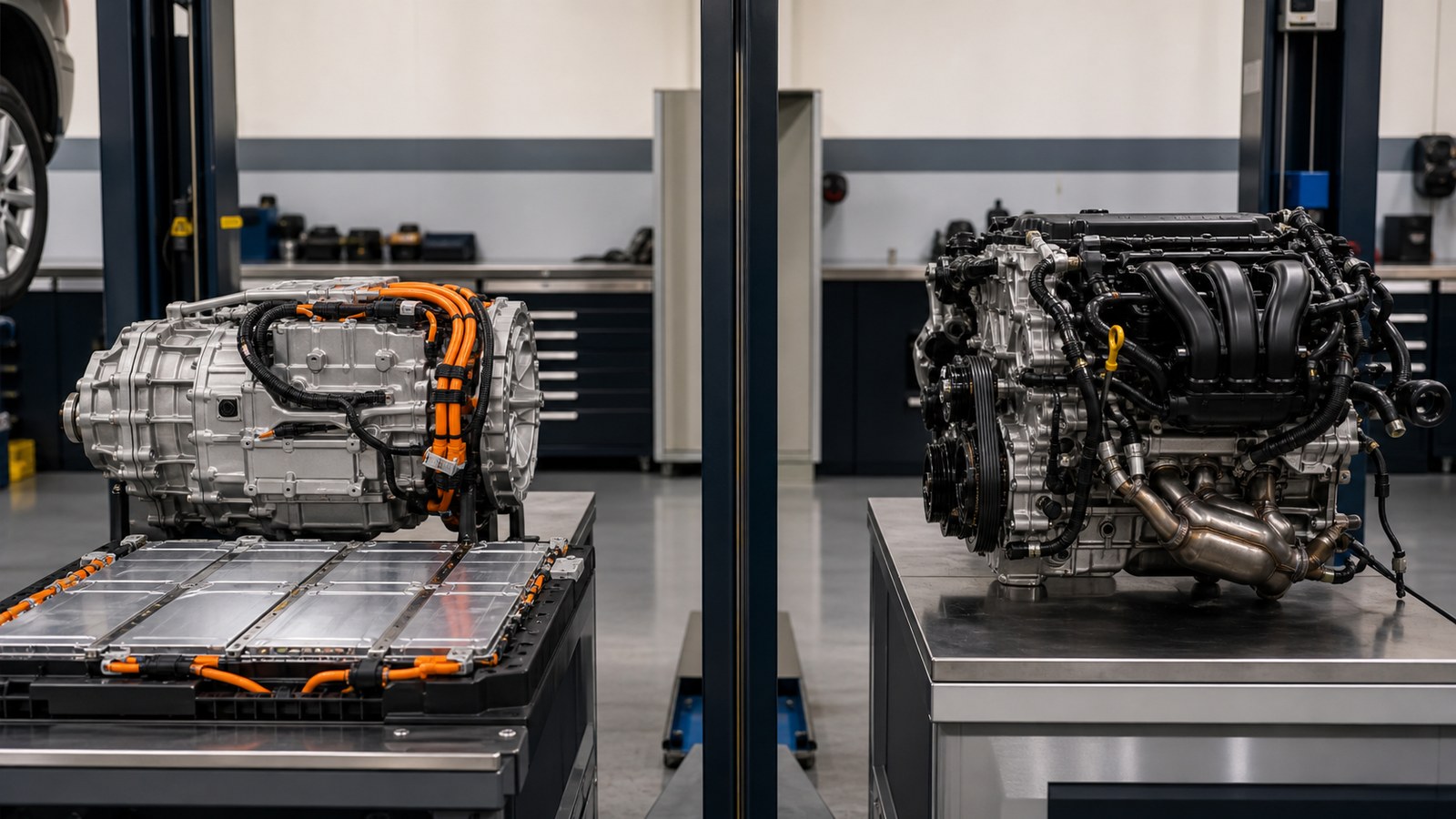
An electric vehicle powertrain and a gasoline engine both exist to move a car, but they solve that job in completely different ways. A gas engine burns fuel, creates heat and pressure, pushes pistons, spins a crankshaft, shifts through gears, and sends mechanical power to the wheels. An EV stores electricity in a battery, sends controlled power through an inverter, spins an electric motor, and uses reduction gearing to drive the wheels. That difference changes efficiency, maintenance, sound, packaging, acceleration, heat, and daily ownership. It also changes how drivers think about energy. Gasoline vehicles convert liquid fuel into motion through combustion. EVs convert stored electrical energy into motion through electromagnetism. The destination is the same road, but the engineering path is very different.
A: No, it produces motion through electromagnetism rather than combustion.
A: Electric motors can deliver strong torque immediately.
A: Most use a single-speed reduction gear instead of a traditional multi-speed transmission.
A: Much of the fuel's energy becomes heat rather than wheel motion.
A: No, it has less engine-related maintenance but still needs routine service.
A: Regenerative braking can handle some slowing before friction brakes are needed.
A: Yes, pumping fuel is usually quicker than charging a battery.
A: Often, but electricity rates, charging habits, insurance, tires, and purchase price matter.
A: There is no combustion engine idling or revving under normal operation.
A: A gas car burns fuel to make motion; an EV uses stored electricity and motor control.
Combustion vs Electromagnetism
A gasoline engine is a controlled combustion machine. It mixes fuel and air, ignites that mixture, and uses expanding gases to move pistons. Those pistons turn a crankshaft, and the vehicle uses a transmission to keep the engine operating in a useful speed range. The process is powerful, familiar, and mechanically complex.
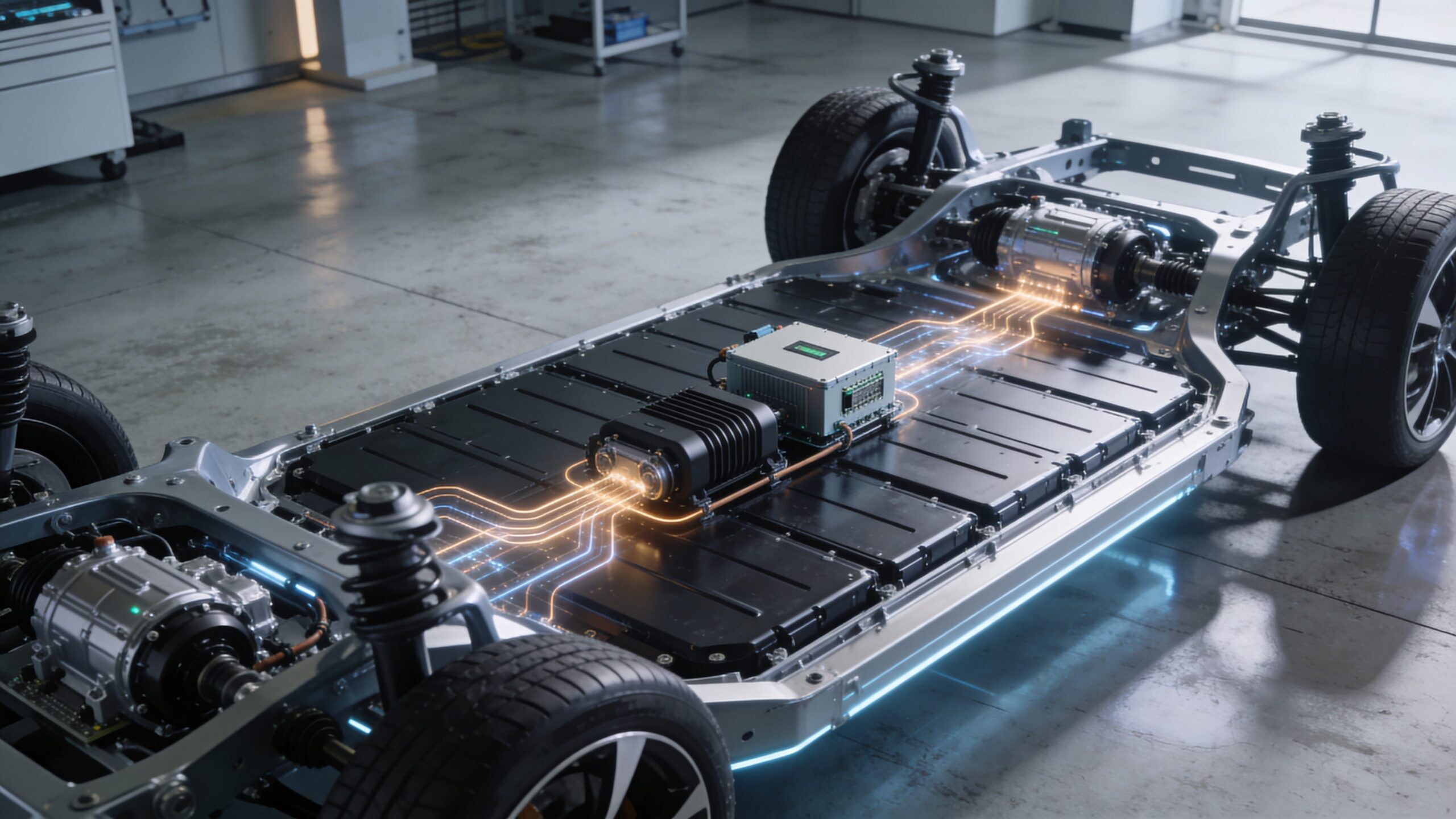
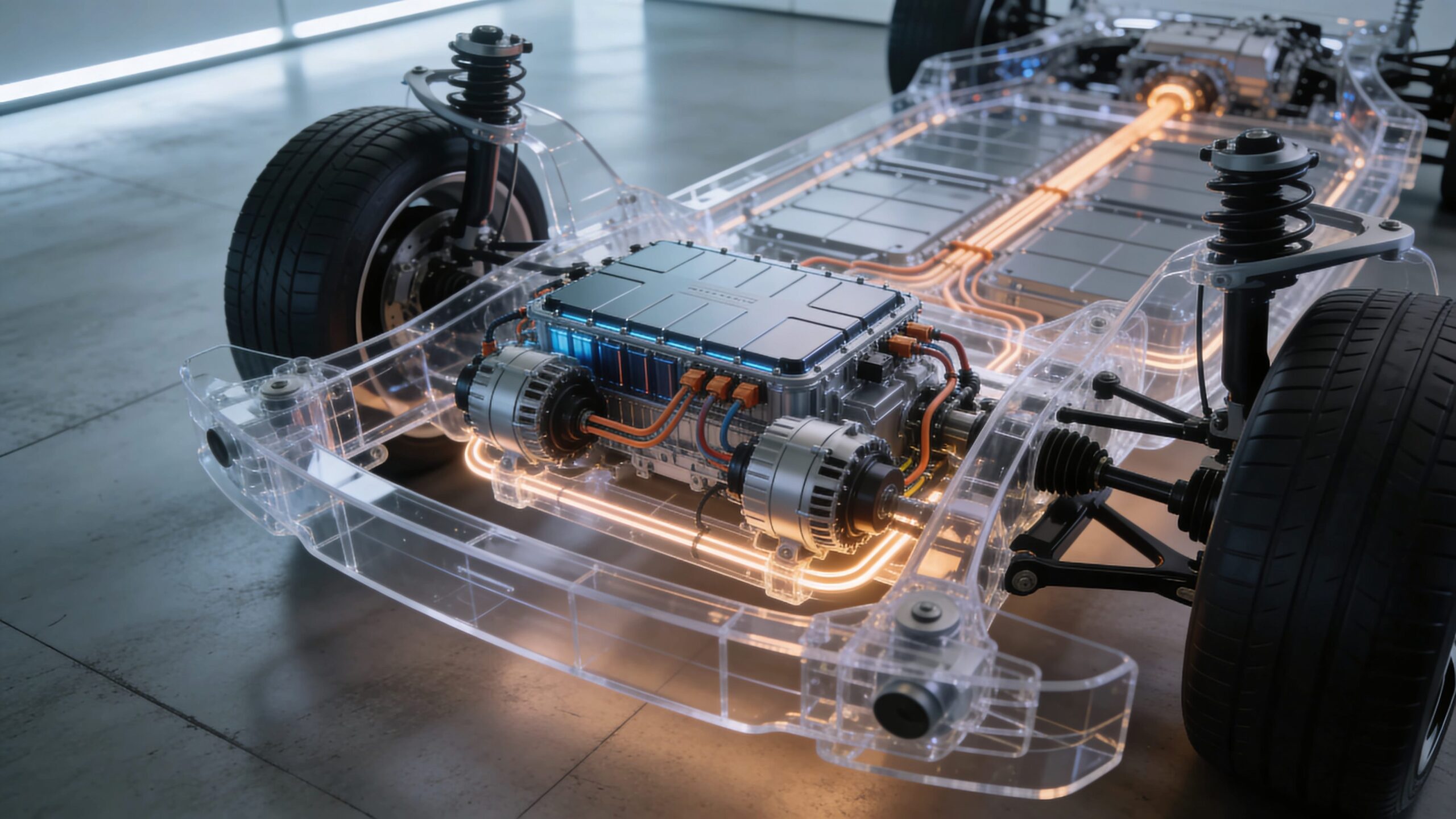
An EV motor works through electromagnetism. Electricity creates magnetic fields that make the motor spin. The inverter controls that electricity with great precision, changing motor output in response to the driver’s accelerator input, traction needs, and system limits. There are still mechanical parts, but the basic energy conversion is not based on explosions inside cylinders.
That is why an EV can feel calm while producing serious acceleration. The motor does not need to build pressure through combustion events or wait for a gearbox to find the right ratio. It responds to electrical control, and that control can be adjusted many times per second.
That difference affects almost everything downstream. A combustion engine creates exhaust, heat, vibration, and noise as part of its normal operation. An EV motor creates motion with far less waste heat and fewer moving parts. The experience feels smoother because the energy conversion is smoother.
Why EVs Are Usually More Efficient
Gasoline contains a lot of energy, but a gas engine cannot turn all of it into motion. Much of that energy becomes heat through exhaust, cooling systems, friction, and combustion losses. This is why engines need radiators, oil, exhaust systems, and emissions controls.
EVs are not perfectly efficient, but electric motors and power electronics typically send a higher share of stored energy to the wheels. Regenerative braking improves the picture in city driving by recovering some energy that would otherwise become brake heat. This is one reason EVs can be especially efficient in stop-and-go traffic.
Efficiency is not the same as unlimited range. EVs still spend energy pushing air, moving weight, heating cabins, cooling batteries, and climbing hills. The advantage is that less energy is wasted in the conversion from storage to motion.
Torque and Acceleration Feel
One of the most obvious differences is torque delivery. Electric motors can produce strong torque at very low speeds, so an EV often feels quick the instant the driver presses the accelerator. There is no need to wait for engine revs to rise or for a transmission to downshift.
A gas engine can be powerful too, but it usually has a narrower range where it performs best. The transmission helps by selecting gears that keep the engine in that range. That shifting can be enjoyable in performance cars, but it also adds complexity and delay compared with direct electric response.
Maintenance and Wear
Gas engines need oil changes because combustion creates heat and byproducts that contaminate oil. They also have spark plugs, belts, exhaust components, fuel pumps, filters, and many moving parts that experience heat and vibration. Maintenance is part of keeping that system healthy.
EVs remove many of those items. There is no engine oil to change, no spark plugs, no muffler, and no catalytic converter. Regenerative braking can reduce brake wear because the motor handles some deceleration. That can lower routine maintenance demands.
Still, an EV is not maintenance-free. Tires, alignment, brake fluid, coolant, suspension, cabin filters, wipers, and inspections still matter. EV tires can wear quickly if the vehicle is heavy or driven aggressively. The maintenance story is simpler, not nonexistent.
That distinction is important for realistic ownership expectations. EV owners may visit service less often for engine-related work, but they should still listen for suspension noises, monitor tire wear, keep brake components healthy, and maintain cooling systems where required. Simpler does not mean invisible.
Brake service is a good example. Regeneration may reduce brake-pad wear, yet friction brakes still need inspection because corrosion, fluid age, and hardware condition matter. An EV can use its brakes less often and still require responsible brake maintenance, especially in wet climates where parts may sit unused for long stretches.
Heat, Noise, and Vibration
Combustion engines produce heat and vibration by design. Engineers work hard to manage both, using mounts, cooling systems, insulation, exhaust routing, and calibration. Drivers may enjoy the sound of an engine, but from an engineering perspective, noise and vibration are things that must be controlled.
EVs are quieter because the motor does not idle, rev, or exhaust gases. At low speeds, that silence can make the car feel refined. At highway speeds, wind and tire noise become more noticeable because there is no engine sound covering them. Automakers then focus on sealing, glass, tire choice, and body structure to preserve quietness.
Heat still matters in EVs, just differently. Batteries, motors, inverters, and chargers all need thermal management. The system may cool the battery during fast charging or warm it in winter. EVs have fewer combustion heat problems, but they still depend on careful temperature control.
That thermal difference affects vehicle design. A gasoline car must manage exhaust routing and engine-bay heat. An EV must manage high-voltage components and battery temperature. Both require engineering discipline, but the hot spots and failure modes are not the same.
The quietness of an EV can also change what drivers notice. Sounds from tires, suspension, cargo, or wind may stand out more because there is no engine masking them. Automakers often spend extra effort tuning those details so the vehicle feels refined rather than merely silent.
Gas vehicles have their own refinement challenges. Engineers tune engine mounts, exhaust tone, shift behavior, and vibration paths so combustion feels controlled. EV engineers focus more on electronic whine, tire noise, wind sealing, and thermal-system sounds.
Packaging and Vehicle Design
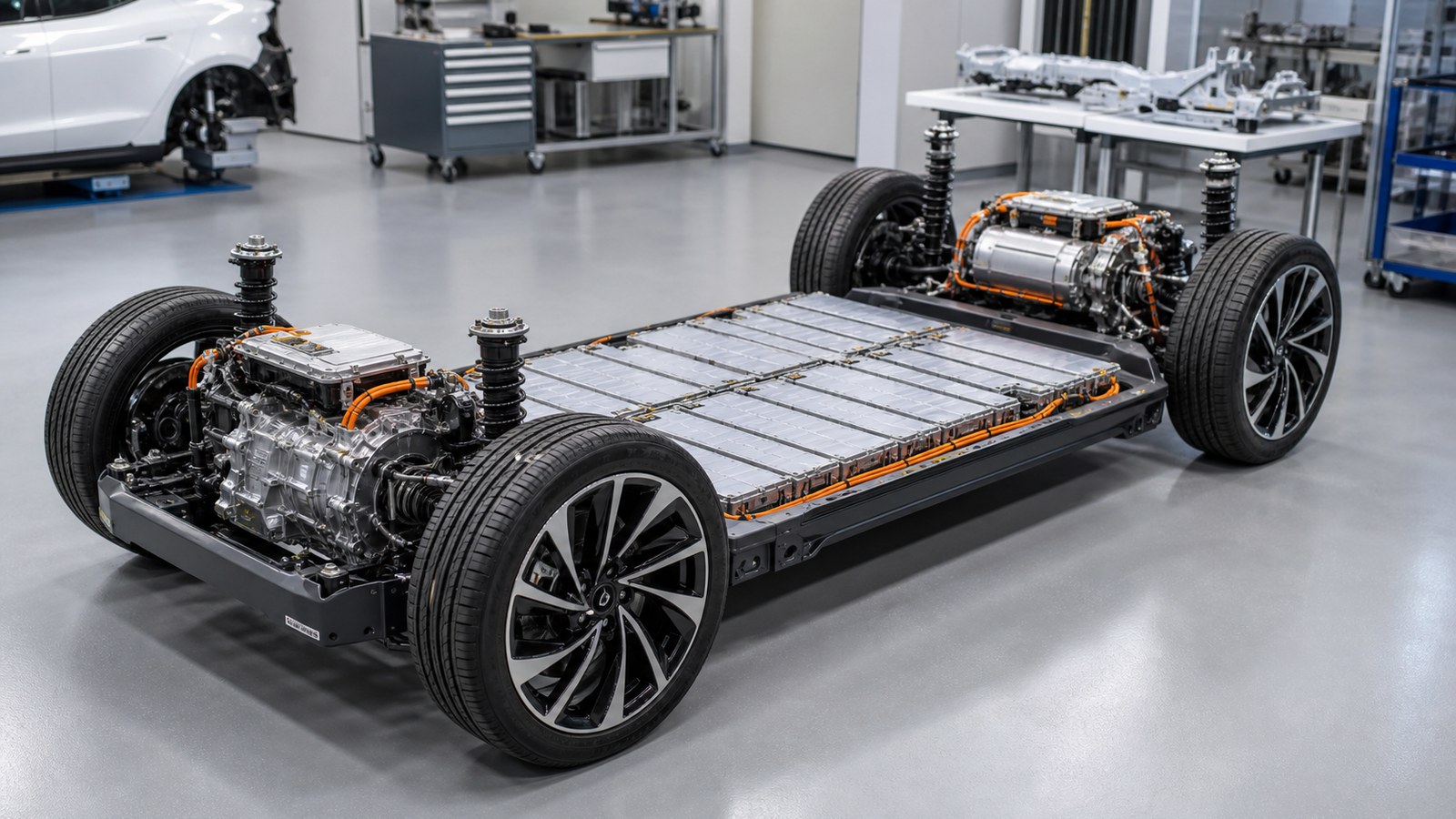
A gasoline vehicle must package an engine, transmission, fuel tank, exhaust system, emissions hardware, and driveline. Those parts shape the body. An EV can place the battery under the floor and use compact drive units near the axles. This can free up cabin space and create a lower center of gravity.
That packaging difference is why dedicated EV platforms often feel different from converted gasoline platforms. A dedicated design can optimize crash structure, floor height, wheelbase, cabin space, cooling, and charging hardware around the battery. A conversion may still work well, but it starts with compromises from the original engine-based layout.
Refueling vs Charging
Gasoline has a convenience advantage when the only question is how quickly energy can be added during a stop. A fuel tank can be filled in minutes. Charging a battery usually takes longer, especially when adding a large amount of energy.
EVs answer that disadvantage with a different routine. Many owners charge while parked at home or work, so the active time is only plugging in and unplugging. The vehicle gains energy while the driver sleeps, works, or eats. For road trips, charging requires more planning, but daily energy can be more convenient than visiting a fuel station.
The best comparison depends on use. A driver with home charging may find the EV easier most weeks. A driver without reliable charging access may value the speed and availability of gasoline stations. Infrastructure changes the experience.
Which System Is Better?
Neither system can be judged by one feature. Gas engines refuel quickly, have mature service networks, and remain familiar to many drivers. EV powertrains are efficient, quiet, responsive, and mechanically simpler in several key ways. The better choice depends on driving patterns, charging access, budget, climate, and personal preference.
The real difference is the energy pathway. Gas vehicles burn fuel and manage the consequences of combustion. EVs move stored electricity through electronics and motors. Once drivers understand that split, the differences in sound, maintenance, acceleration, packaging, and efficiency make much more sense.
Durability Looks Different
Gas-engine durability often centers on mechanical wear, lubrication, cooling, and combustion health. Owners worry about oil condition, timing components, fuel systems, and exhaust hardware. A well-maintained engine can last a long time, but it has many parts moving through heat and friction.
EV durability shifts attention toward battery health, power electronics, cooling loops, software, tires, and suspension. The motor itself can be mechanically simple, but the battery is expensive and must be managed carefully. Long life comes from stable temperatures, good software, sensible charging, and solid manufacturing.
This does not make one system automatically fragile and the other automatically tough. It means the maintenance mindset changes. A driver moving from gas to electric needs to stop looking for engine-oil clues and start paying attention to charging habits, tires, software notices, and range patterns.
Driver Habits Change Too
A gas driver often thinks in fuel stops. The tank gets low, the driver pulls into a station, and energy is added quickly. An EV driver with home charging may think in parked time instead. The car gains energy while sitting overnight, and public charging becomes occasional rather than weekly for many owners.
Acceleration habits can change as well. Instant torque makes quick launches easy, but repeated hard acceleration uses energy and can wear tires. Regenerative braking encourages smoother anticipation because lifting early can recover energy and reduce brake wear.
The Ownership Difference
The real ownership difference is not only what powers the wheels. It is how the vehicle fits into daily life. EVs can be cheaper to energize when home electricity is affordable, quieter in traffic, and simpler to maintain in several areas. Gas vehicles can be faster to refuel, easier to use without home charging, and familiar in remote areas with limited charging infrastructure.
For many households, the decision comes down to access and routine. If charging is easy, the EV powertrain’s advantages show up every day. If charging is inconvenient, the gasoline engine’s fast refueling still matters. The technology comparison is inseparable from the driver’s environment.
Seen that way, the difference becomes practical rather than ideological. EVs and gas vehicles are two engineering answers to mobility. One burns fuel through mechanical complexity. The other moves stored electricity through electronic control. Understanding that split helps drivers choose with clearer expectations.
What Buyers Should Compare
A buyer comparing EV and gas power should look beyond horsepower. For an EV, charging access, efficiency, battery warranty, fast-charging curve, tire cost, and software support matter. For a gas vehicle, fuel economy, maintenance history, transmission behavior, emissions equipment, and local fuel cost matter. The best comparison is a full ownership picture.
Driving style matters too. Someone who loves mechanical sound and long remote trips may value gasoline differently from a commuter with solar, home charging, and dense local charging options. The powertrain is only one part of the life built around it.