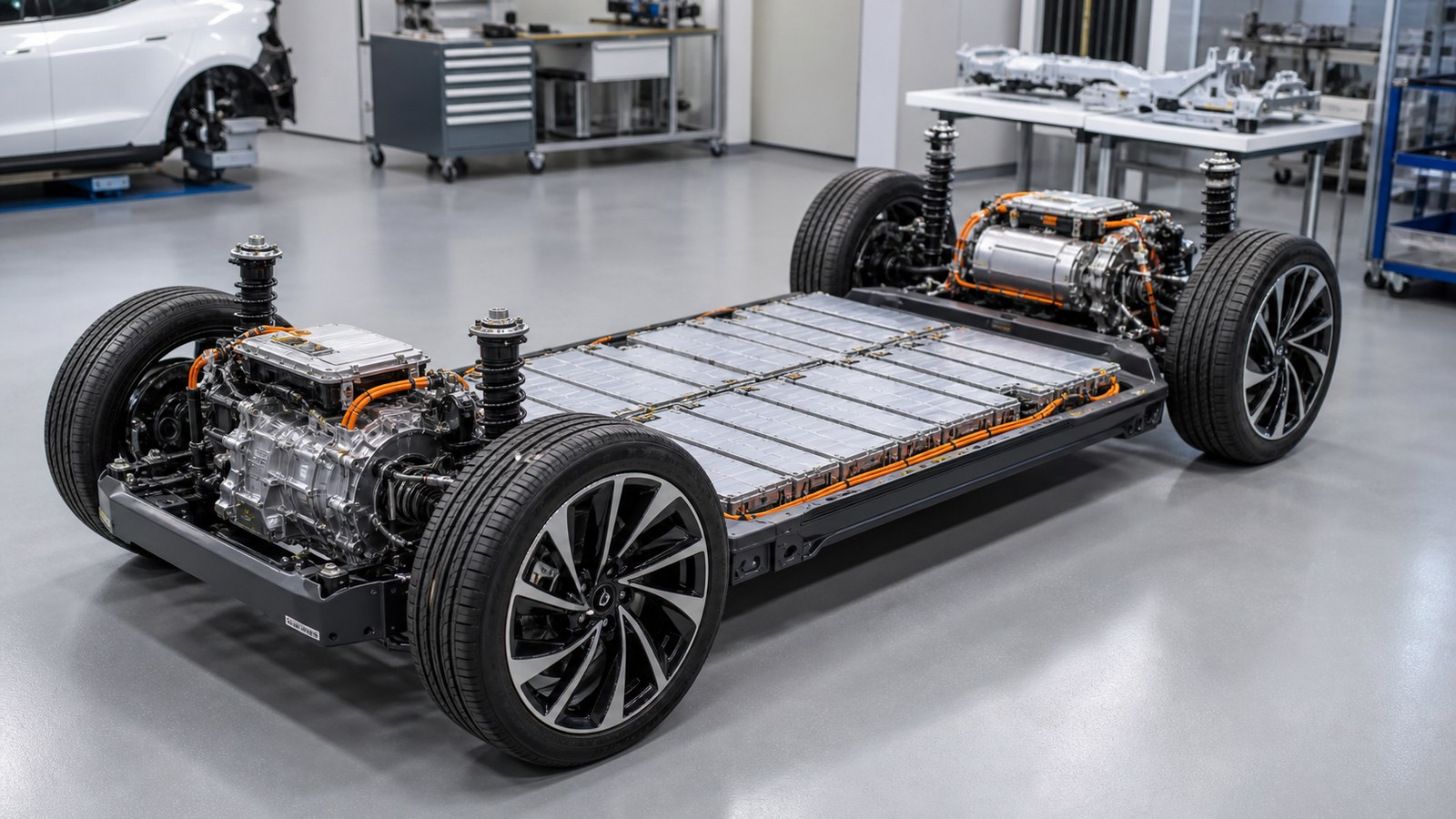
FWD, RWD, and AWD EV Powertrains Change Efficiency, Traction, and Driving Feel
EV powertrain types describe which wheels receive motor power and how the vehicle manages traction. Front-wheel drive, rear-wheel drive, and all-wheel drive EVs can all work well, but each layout changes acceleration, efficiency, cost, packaging, and how the car feels in bad weather.
Front-Wheel Drive EVs
Front-wheel drive EVs place the driven motor at the front axle. This layout can be efficient, cost-effective, and familiar to drivers moving from ordinary compact cars or crossovers.
FWD can work especially well for affordable commuter EVs. The tradeoff is that hard acceleration can ask the front tires to steer and pull at the same time.
For EV Powertrain Types, the front-wheel drive evs point works best when it is tied to a real driver routine. Daily mileage, charging access, weather, passengers, cargo, and budget often matter more than the single most impressive number in a spec sheet.
The practical check for this front-wheel drive evs discussion is simple: decide what would change the ownership experience after the first month. If the answer affects charging time, range confidence, comfort, service, cost, or resale value, it belongs in the buying decision.
That is why the front-wheel drive evs angle should be read as an ownership filter, not just background information. A useful EV article helps the reader connect technology claims to the way the vehicle will actually be charged, driven, maintained, and paid for.
Rear-Wheel Drive EVs
Rear-wheel drive EVs send power to the rear axle. Many drivers like the balance because acceleration shifts weight rearward, helping the driven tires maintain grip.
RWD can feel smoother and more natural in performance driving. It may also support efficient highway behavior in vehicles designed around a rear motor.
For EV Powertrain Types, the rear-wheel drive evs point works best when it is tied to a real driver routine. Daily mileage, charging access, weather, passengers, cargo, and budget often matter more than the single most impressive number in a spec sheet.
The practical check for this rear-wheel drive evs discussion is simple: decide what would change the ownership experience after the first month. If the answer affects charging time, range confidence, comfort, service, cost, or resale value, it belongs in the buying decision.
That is why the rear-wheel drive evs angle should be read as an ownership filter, not just background information. A useful EV article helps the reader connect technology claims to the way the vehicle will actually be charged, driven, maintained, and paid for.
Dual-Motor AWD EVs
Dual-motor AWD EVs usually place one motor at the front axle and one at the rear. That gives the vehicle more control over torque distribution without a traditional mechanical transfer case.
The benefits include stronger acceleration, better bad-weather traction, and finer stability control. The tradeoffs are added cost, weight, and sometimes lower efficiency.
For EV Powertrain Types, the dual-motor awd evs point works best when it is tied to a real driver routine. Daily mileage, charging access, weather, passengers, cargo, and budget often matter more than the single most impressive number in a spec sheet.
The practical check for this dual-motor awd evs discussion is simple: decide what would change the ownership experience after the first month. If the answer affects charging time, range confidence, comfort, service, cost, or resale value, it belongs in the buying decision.
That is why the dual-motor awd evs angle should be read as an ownership filter, not just background information. A useful EV article helps the reader connect technology claims to the way the vehicle will actually be charged, driven, maintained, and paid for.
Performance AWD Systems
Some high-performance EVs use advanced torque control to shift power quickly between axles or even between individual wheels.
That can improve launch traction and cornering behavior, but it also depends heavily on software, tires, battery temperature, and thermal management.
For EV Powertrain Types, the performance awd systems point works best when it is tied to a real driver routine. Daily mileage, charging access, weather, passengers, cargo, and budget often matter more than the single most impressive number in a spec sheet.
The practical check for this performance awd systems discussion is simple: decide what would change the ownership experience after the first month. If the answer affects charging time, range confidence, comfort, service, cost, or resale value, it belongs in the buying decision.
That is why the performance awd systems angle should be read as an ownership filter, not just background information. A useful EV article helps the reader connect technology claims to the way the vehicle will actually be charged, driven, maintained, and paid for.
Efficiency Differences
Single-motor EVs are often more efficient because they carry less hardware and have fewer losses. Dual-motor vehicles can still be efficient, but they must manage when each motor is active.
Many AWD EVs disconnect or reduce front-motor use during steady cruising to save energy. The details vary by automaker.
For EV Powertrain Types, the efficiency differences point works best when it is tied to a real driver routine. Daily mileage, charging access, weather, passengers, cargo, and budget often matter more than the single most impressive number in a spec sheet.
The practical check for this efficiency differences discussion is simple: decide what would change the ownership experience after the first month. If the answer affects charging time, range confidence, comfort, service, cost, or resale value, it belongs in the buying decision.
That is why the efficiency differences angle should be read as an ownership filter, not just background information. A useful EV article helps the reader connect technology claims to the way the vehicle will actually be charged, driven, maintained, and paid for.
Winter and Wet Roads
AWD can help an EV accelerate on slippery surfaces, but tires remain the most important grip factor. All-season or winter tires can matter more than the drivetrain badge.
Drivers should not confuse AWD with shorter braking distance. Braking grip still depends on tire contact, road surface, speed, and stability systems.
For EV Powertrain Types, the winter and wet roads point works best when it is tied to a real driver routine. Daily mileage, charging access, weather, passengers, cargo, and budget often matter more than the single most impressive number in a spec sheet.
The practical check for this winter and wet roads discussion is simple: decide what would change the ownership experience after the first month. If the answer affects charging time, range confidence, comfort, service, cost, or resale value, it belongs in the buying decision.
That is why the winter and wet roads angle should be read as an ownership filter, not just background information. A useful EV article helps the reader connect technology claims to the way the vehicle will actually be charged, driven, maintained, and paid for.
Cost and Complexity
A dual-motor EV usually costs more to buy and may use more energy. It can also add more parts, more cooling demand, and more software complexity.
That extra hardware is worthwhile when the driver needs traction, towing confidence, high performance, or better launch behavior. It may be unnecessary for a mild-climate commuter.
For EV Powertrain Types, the cost and complexity point works best when it is tied to a real driver routine. Daily mileage, charging access, weather, passengers, cargo, and budget often matter more than the single most impressive number in a spec sheet.
The practical check for this cost and complexity discussion is simple: decide what would change the ownership experience after the first month. If the answer affects charging time, range confidence, comfort, service, cost, or resale value, it belongs in the buying decision.
That is why the cost and complexity angle should be read as an ownership filter, not just background information. A useful EV article helps the reader connect technology claims to the way the vehicle will actually be charged, driven, maintained, and paid for.
The Practical Bottom Line
FWD is practical and affordable, RWD often feels balanced and efficient, and AWD adds traction and performance at a cost.
The best EV powertrain type depends on climate, driving style, budget, tires, and whether the owner values range or traction more in daily life.
For EV Powertrain Types, the the practical bottom line point works best when it is tied to a real driver routine. Daily mileage, charging access, weather, passengers, cargo, and budget often matter more than the single most impressive number in a spec sheet.
The practical check for this the practical bottom line discussion is simple: decide what would change the ownership experience after the first month. If the answer affects charging time, range confidence, comfort, service, cost, or resale value, it belongs in the buying decision.
That is why the the practical bottom line angle should be read as an ownership filter, not just background information. A useful EV article helps the reader connect technology claims to the way the vehicle will actually be charged, driven, maintained, and paid for.
EV Powertrain Types Ownership Check
The useful way to apply EV Powertrain Types is to connect the topic to a real driver, not an idealized test loop. Commute length, highway speed, parking access, charging location, winter weather, passengers, cargo, and service support can change whether the same EV feels excellent or frustrating.
Buyers should confirm the exact trim and model year before trusting a general claim. Battery size, wheel package, motor layout, heat pump availability, charging hardware, software version, and adapter support can all shift the ownership result.
Charging access remains the foundation. A driver with reliable home or workplace charging can tolerate different compromises than a driver who depends on public stations for ordinary weekly use.
The financial side should be checked with the same care. Electricity rates, DC fast-charging prices, tires, insurance, registration fees, home electrical work, incentives, and depreciation all affect whether the vehicle remains a smart buy after the first month.
A strong EV decision does not need the highest number in every category. It needs a clear match between the vehicle’s strengths and the driver’s real habits.
What to Verify Before You Decide
Published EV numbers are useful starting points, but they depend on test conditions and configuration. Range, charging speed, efficiency, acceleration, and price can all change when wheels, weather, speed, payload, charger power, and trim equipment change.
That is why a careful buyer checks the owner’s manual, window sticker, current manufacturer information, charging-network access, warranty terms, and local service options before treating any article or spec sheet as the final answer.
If the vehicle still fits after those checks, the choice is stronger. If the case depends on a future software promise, an adapter that has not arrived, a charger that is often full, or a price that only exists with rare incentives, the buyer should slow down and verify the practical path.
How the Topic Fits Long-Term Ownership
Long-term EV satisfaction often comes from predictable habits. Owners who know when they charge, what range they need, how weather changes the vehicle, and where service happens usually have a calmer experience.
Software can improve that experience when it explains battery status, routes to dependable chargers, preconditions the pack, schedules charging for lower-cost hours, and gives range estimates that match reality.
The best articles make EV ownership easier to picture. They turn unfamiliar terms into decisions about parking, travel, comfort, cost, and confidence.
That final translation is the point. A useful article leaves people knowing what to look for, what to question, and how the topic affects a real electric car after the showroom visit is over.