EV Architecture Starts With a Different Shape
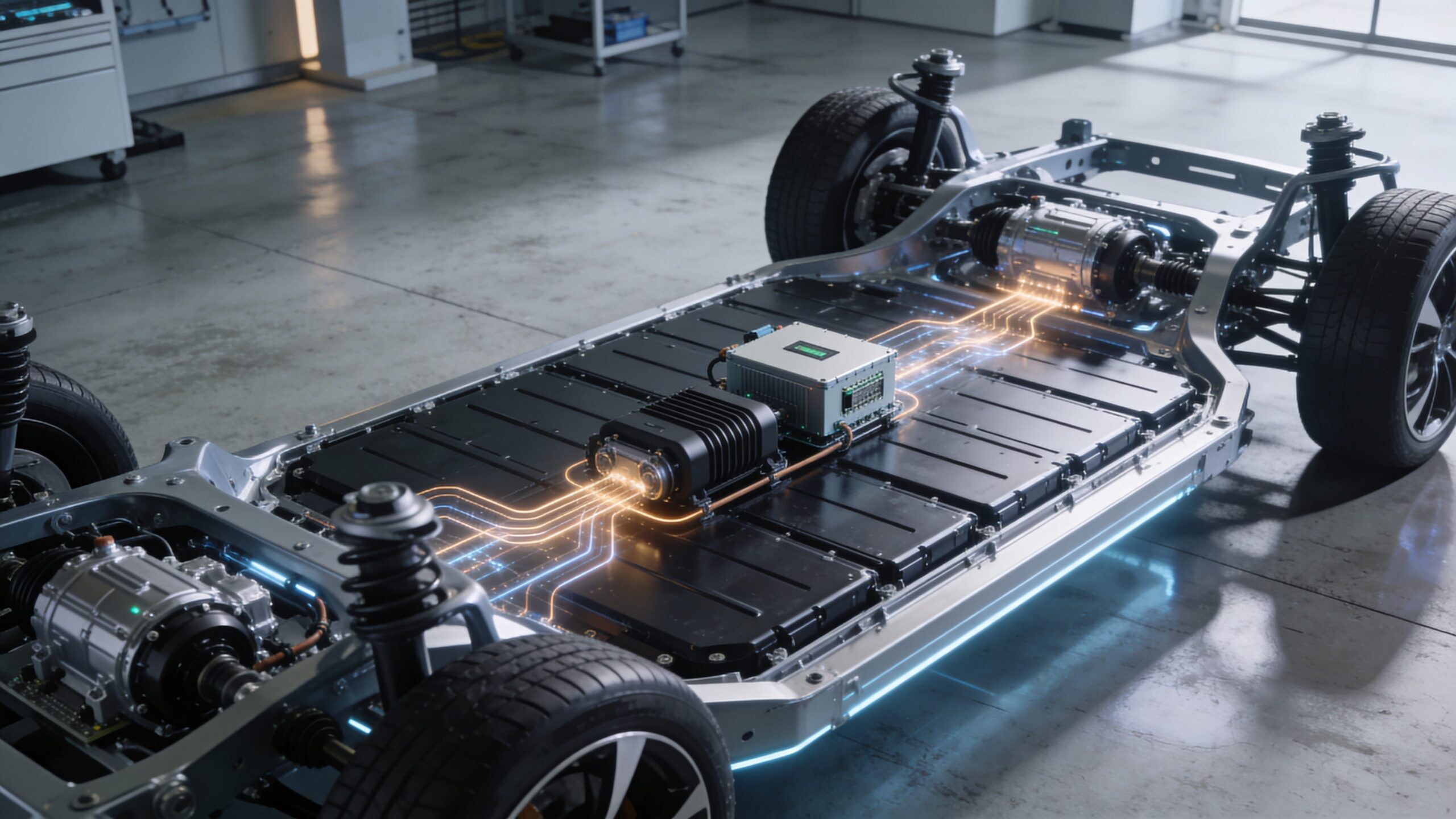
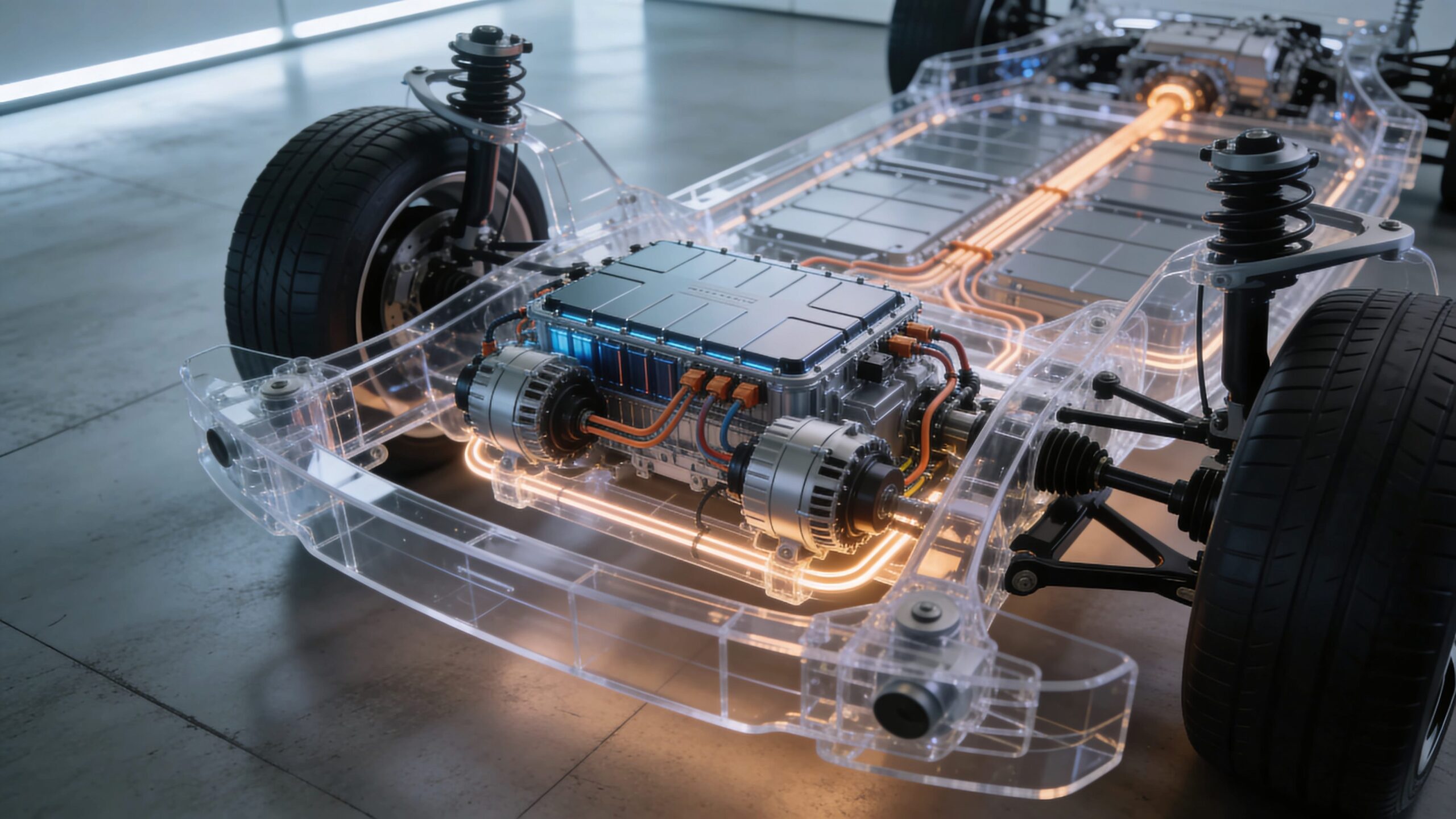
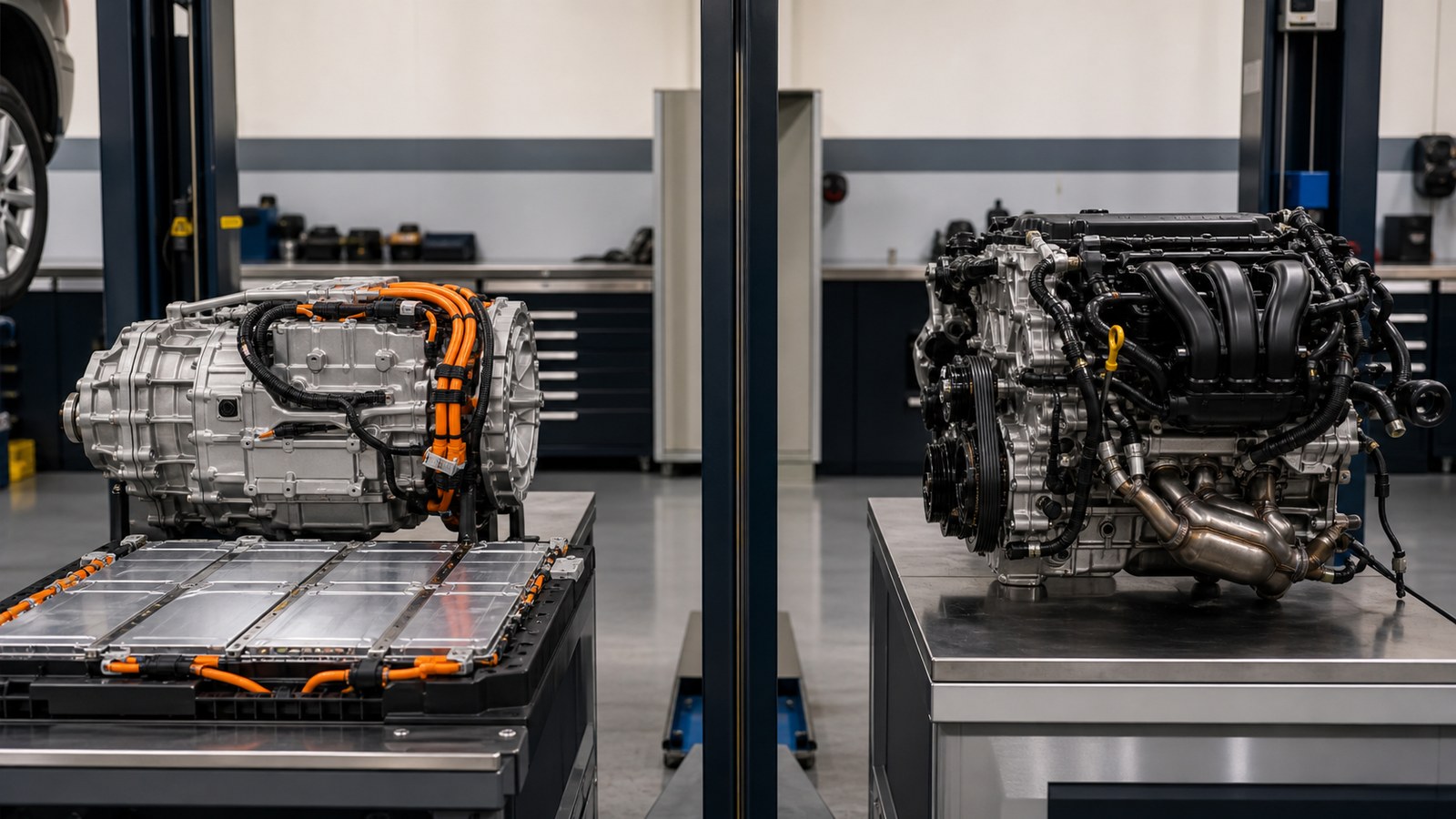
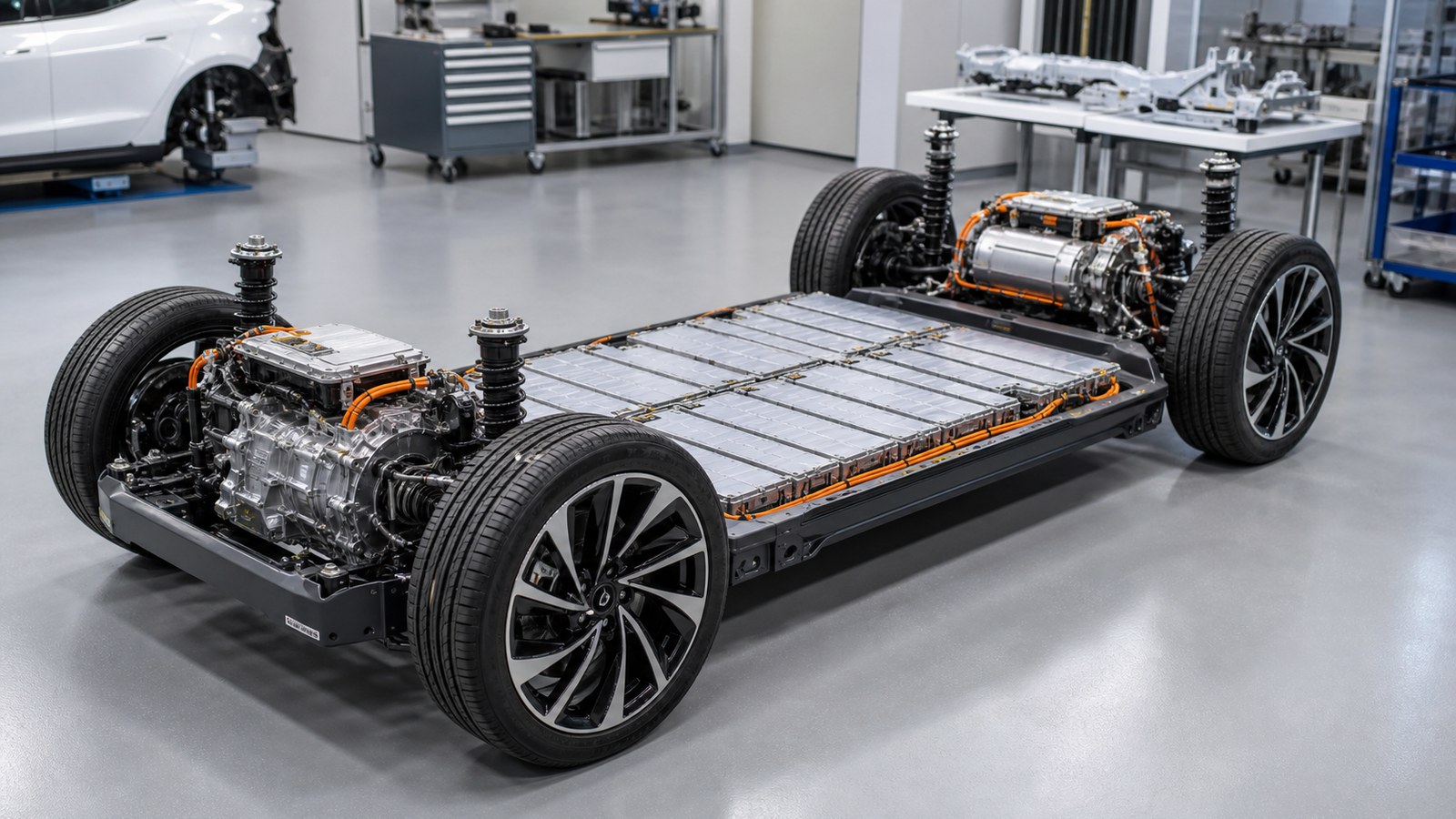
Electric vehicle powertrain architecture is the layout of the major systems that store energy, convert it, and turn it into motion. In a gasoline car, the engine, transmission, exhaust, fuel tank, and driveline dominate the package. In an EV, the battery pack, inverter, electric motor, reduction gearing, charging hardware, cooling system, and control software take over those roles. The result is not simply a gasoline car with a battery swapped in. EV architecture allows designers to place heavy energy storage low in the chassis, use compact drive units near the axles, free up cabin space, and tune performance through software. Understanding the architecture helps explain why EVs feel quick, why many have flat floors, why all-wheel drive can be added with another motor, and why platform design matters so much.
A: It is the system that stores electrical energy and turns it into wheel motion.
A: The battery pack can sit low under the cabin, reducing the need for a central tunnel.
A: Most use a single-speed reduction gear rather than a multi-speed transmission.
A: It converts and controls electrical power so the motor can produce torque.
A: Electric motors can deliver strong torque at very low speeds.
A: One motor can drive one axle while another drives the other axle.
A: Yes, it is often the largest and most important packaging element.
A: Heat affects battery, motor, inverter, charging, and performance consistency.
A: Yes, skateboard-style platforms can support several body types.
A: EV design is built around energy storage, compact drive units, and software control.
The Battery Pack as the Foundation
In many modern EVs, the battery pack is the foundation of the architecture. It is large, heavy, and usually mounted low in the vehicle. That placement supports range because the pack can stretch between the axles, and it supports handling because mass sits close to the road.
Battery placement also changes interior design. Without a bulky engine and transmission tunnel, designers can create flatter floors and more flexible cabins. This is why some EVs feel roomy compared with gasoline vehicles of similar exterior size. The architecture gives designers different constraints and different freedoms.
The pack still has to be protected. It needs crash structure, sealing, cooling, high-voltage isolation, and service access. A low battery is helpful for dynamics, but it also lives near road debris, water, curbs, and impact zones. Good architecture balances packaging benefits with serious protection.
Motors and Drive Units
The electric motor is the part most directly responsible for motion. It converts electrical energy into rotational force. In many EVs, the motor is packaged with reduction gearing and sometimes the inverter inside a compact drive unit. That drive unit can sit near the front axle, rear axle, or both.
Because electric motors can spin very fast and make useful torque from low speeds, most EVs do not need a traditional multi-speed transmission. A reduction gear set brings motor speed down to a wheel-friendly range. The result is smooth acceleration with fewer shifting events and fewer mechanical parts than a conventional drivetrain.
The Inverter’s Central Role
The battery stores direct current, while many EV motors use alternating current. The inverter bridges that gap. It converts and controls power so the motor receives the right electrical waveform for the requested torque, speed, and direction. It is one of the most important power electronics components in the vehicle.
The inverter also helps with regenerative braking. When the vehicle slows, the motor can act as a generator. The inverter manages that returning energy so it can flow back toward the battery when conditions allow. This is one reason EV powertrains feel so responsive: power delivery and recovery are both software-controlled.
Inverter design affects efficiency, heat, cost, and performance. Silicon carbide electronics, advanced cooling, and careful software can improve how smoothly energy moves through the system. Drivers may never see the inverter, but they feel its work every time the car accelerates or regenerates.
Front, Rear, and All-Wheel-Drive Layouts
EVs can be front-wheel drive, rear-wheel drive, or all-wheel drive. A single motor at the front can be cost-effective and familiar for compact vehicles. A rear motor can support balanced handling and strong acceleration. A dual-motor layout can drive both axles without a mechanical driveshaft running through the vehicle.
That flexibility is one of the major architectural advantages of EVs. In a gasoline all-wheel-drive vehicle, power must travel from the engine through a transmission, transfer case, driveshafts, and differentials. In an EV, the automaker can add another drive unit at the other axle and coordinate both through software.
Torque can also be adjusted front to rear almost instantly. That helps traction on wet roads, launches, corner exits, and stability-control events. The driver may simply feel confidence, but underneath that feeling is a control system making rapid decisions about where power should go.
More motors are not automatically better for every driver. They can add traction, performance, and control, but they also add cost, mass, and complexity. A commuter EV may be excellent with one efficient motor. A performance SUV or truck may justify two or more.
Thermal Architecture
An EV powertrain needs thermal management even without an engine block full of hot combustion parts. Batteries, motors, inverters, onboard chargers, and cabins all have temperature needs. The vehicle may need to warm the battery in winter, cool it during fast charging, cool the inverter during hard acceleration, and heat or cool passengers at the same time.
This creates a thermal architecture of pumps, valves, heat exchangers, refrigerant loops, coolant lines, and software decisions. Some vehicles can move heat from one area to another. Others use heat pumps to reduce cabin-heating energy. The details are hidden, but they affect range, fast charging, and performance consistency.
Software as a Powertrain Component
In an EV, software is not just an infotainment feature. It is part of the powertrain. Software decides torque delivery, traction response, regenerative braking feel, charge limits, thermal preparation, battery protection, and sometimes drive-mode personality. Two vehicles with similar hardware can feel different because their software is tuned differently.
This software layer allows fast reactions. If a wheel slips, motor torque can be adjusted rapidly. If the battery is too cold, power may be limited. If a fast charger is selected in navigation, the vehicle may prepare the pack before arrival. The powertrain is mechanical, electrical, and digital at the same time.
Updates can refine behavior after the vehicle is built. That does not mean hardware limits disappear, but calibration can improve charging, efficiency, or drivability. Architecture now includes the ability to manage the vehicle over time.
Why Platform Design Matters
A dedicated EV platform gives engineers room to optimize around the battery, drive units, crash structure, and cabin. A converted gasoline platform may still produce a useful EV, but it often carries compromises because the original body was not designed around a large floor battery and compact electric drive units.
Dedicated platforms can also reduce cost across several models. Automakers can share battery modules, motors, electronics, and structural ideas while changing body shapes. That is why one EV platform may support a sedan, crossover, SUV, or van. The architecture becomes a family foundation.
The Beginner Takeaway
EV powertrain architecture is the arrangement of energy storage, power electronics, motors, gears, cooling, and software. Its design explains many EV traits: quick response, quiet operation, low battery placement, flexible cabins, and dual-motor all-wheel drive.
The easiest way to understand it is to follow the energy. Electricity is stored in the battery, shaped by the inverter, turned into motion by the motor, sent to the wheels through reduction gearing, and managed by software the entire time. That path is shorter than a gasoline drivetrain, but it is not simple. It is a different kind of engineering, built around electricity rather than combustion.
That difference is why EV design should be judged on its own terms. A clean architecture can make the car roomier, quicker, quieter, and easier to package. A weak architecture can waste space, add weight, or limit charging and performance. The layout is not background trivia; it shapes the vehicle every day.
How Architecture Changes Service Access
EV architecture also changes how vehicles are serviced. A compact drive unit may be easier to replace as a module, but harder to repair internally. A structural battery pack may improve stiffness and packaging, but it can complicate certain body or pack repairs. Engineers must think about manufacturing, safety, service, and cost at the same time.
High-voltage safety creates another layer. Technicians need procedures, insulation checks, disconnect points, and diagnostic tools. The architecture must make those steps possible without exposing people to unnecessary risk. Good design helps both the assembly line and the service bay.
Why Cooling Routes Matter
Cooling paths are easy to overlook because they are hidden behind panels and underbody covers. Yet they decide how consistently the powertrain performs. A battery may need warming before fast charging, cooling during repeated acceleration, or protection during extreme heat. The inverter and motor also need stable temperatures when power demand is high.
A well-integrated thermal system can move heat where it is useful and remove it where it is harmful. That can improve winter efficiency, charging speed, and repeatable performance. Poor thermal planning can make a powerful EV feel strong once and then limited when heat builds.
This is why architecture is more than where the big parts sit. Pumps, valves, radiators, heat exchangers, and software routes are part of the design. The vehicle’s energy system includes both electricity and heat.
The Design Basics in Plain English
The basic EV layout starts with a low battery, compact drive units, power electronics, charging hardware, cooling, and software. The exact arrangement changes by vehicle, but those pieces form the core. If the pack is the energy floor, the drive unit is the muscle, the inverter is the translator, and the software is the coordinator.
Beginners should not worry about memorizing every component name. It is enough to understand the relationships. The battery stores energy, the inverter controls it, the motor turns it into motion, and the architecture decides how efficiently those pieces fit into the vehicle.
How Architecture Affects the Driving Feel
Architecture is not only visible on a service diagram. It changes how the EV feels from the driver’s seat. A low battery can make the car feel planted, a rear drive unit can make acceleration feel balanced, and dual motors can make traction feel seamless in poor weather. The driver may never name those parts, but the layout is shaping the experience.
It also affects compromise. A vehicle tuned for maximum efficiency may use smaller motors, narrower tires, and careful cooling. A performance EV may use stronger inverters, wider rubber, and more thermal capacity. A truck may prioritize payload, ground clearance, and towing hardware. The same architecture principles are adjusted for different jobs.
That is why EV shoppers should not assume all electric platforms are alike. Two vehicles can both have batteries and motors yet behave very differently because of layout, weight distribution, cooling, software, and component sizing. Architecture is the hidden framework behind those differences.
When that framework is strong, the vehicle feels coherent. Range, acceleration, charging, handling, cabin space, and serviceability all make more sense because the major components were arranged to support the same purpose.
That same framework helps explain future EVs, too. As batteries become structural, motors become more integrated, and software grows more capable, architecture will keep shaping what electric vehicles can be. The parts may evolve, but the design logic remains the same: store energy well, move it efficiently, control it precisely, and package it intelligently.
That is the quiet power of architecture: when it is done well, the driver does not think about packaging diagrams. They simply feel an EV that uses its space, energy, and power with purpose.