The Hidden System That Makes EVs Move
Electric vehicles feel almost magical the first time you drive one. There is no engine rumble, no gear hunting, no exhaust note, and no delay between pressing the accelerator and feeling the car surge forward. Instead, the movement is quiet, smooth, and immediate. That unique driving experience comes from one central system: the EV powertrain. An EV powertrain is the collection of components that stores energy, manages electricity, converts that electricity into motion, and sends power to the wheels. In a gasoline car, the powertrain includes the engine, transmission, fuel system, exhaust system, and drivetrain. In an electric vehicle, many of those complicated mechanical parts are replaced by a battery pack, inverter, electric motor, power electronics, software controls, and usually a much simpler gear reduction system. Understanding how an electric car works does not require an engineering degree. The basic idea is simple: energy starts in the battery, flows through electronic control systems, reaches the electric motor, and becomes rotation at the wheels. What makes EVs exciting is how efficiently and precisely that process happens.
A: It is the system that stores electricity, controls energy flow, powers the motor, and moves the wheels.
A: Key parts include the battery pack, inverter, motor, controller, charger, and drive unit.
A: No. EVs use electric motors instead of internal combustion engines.
A: Most use a single-speed reduction gear rather than a traditional multi-speed transmission.
A: Electric motors deliver instant torque without waiting for engine revs or gear shifts.
A: It converts battery DC power into AC power that the motor can use.
A: It is a system that recovers energy while slowing the vehicle and sends some of it back to the battery.
A: Yes. They usually have fewer moving parts and less mechanical complexity.
A: Yes. Cold temperatures can affect battery performance, range, and charging speed.
A: They can be very reliable because of their simpler design, but battery care, software, and cooling systems still matter.
What Is an EV Powertrain?
An EV powertrain is the complete electric drive system that moves an electric vehicle. It includes the battery, inverter, electric motor, onboard control units, thermal management systems, charging hardware, and mechanical components that transfer power to the wheels.
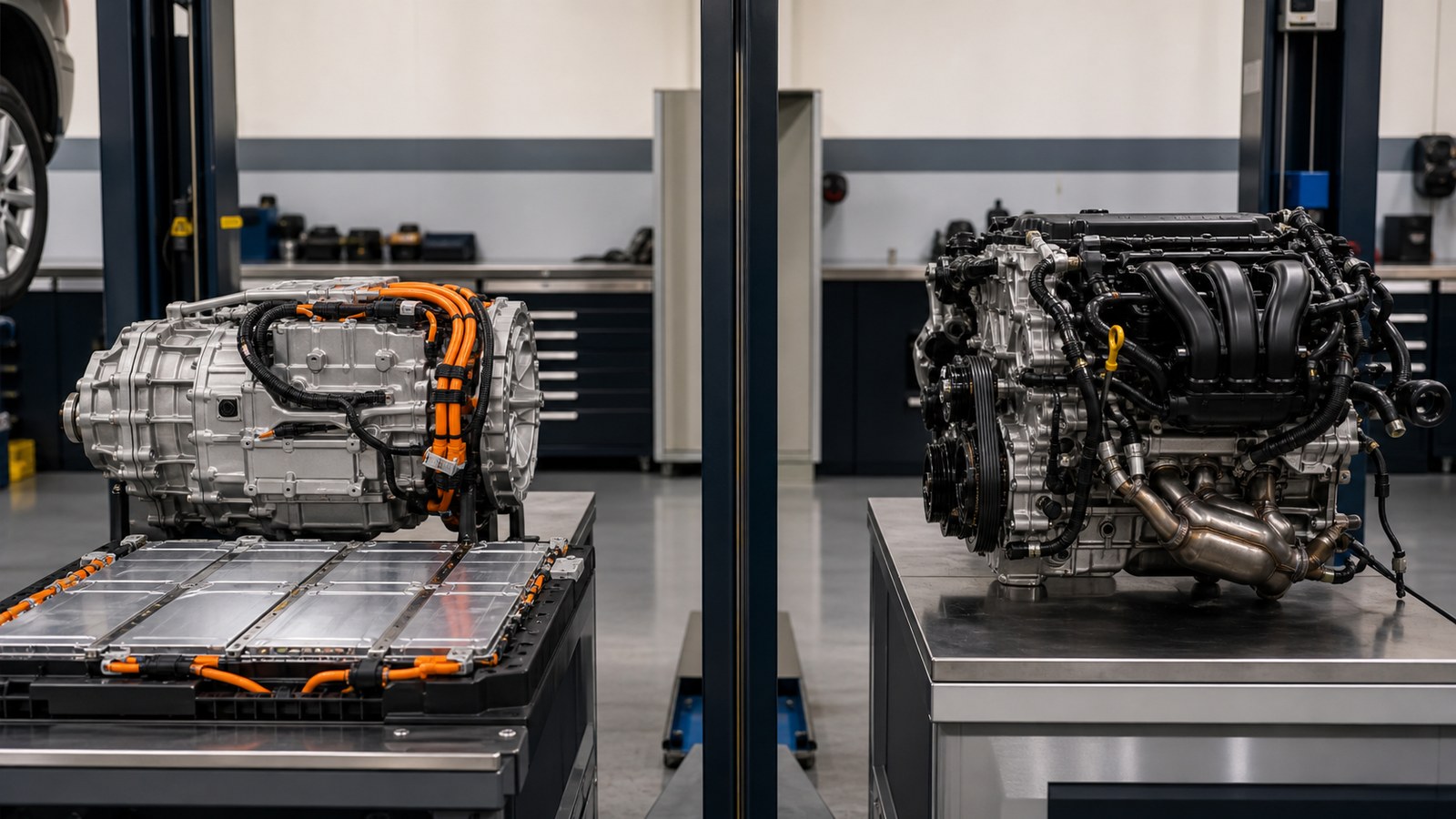
In a traditional vehicle, fuel is burned inside an engine to create motion. That motion must pass through a transmission, driveshafts, gears, and other mechanical parts before reaching the wheels. In an EV, stored electricity powers a motor directly. The motor creates rotational force, also called torque, and that torque turns the wheels with very little delay.
This is why electric vehicles feel so responsive. The powertrain does not need to wait for fuel combustion, engine revs, or multiple gear changes. It simply sends electricity where it is needed, when it is needed.
The Battery Pack: The EV’s Energy Source
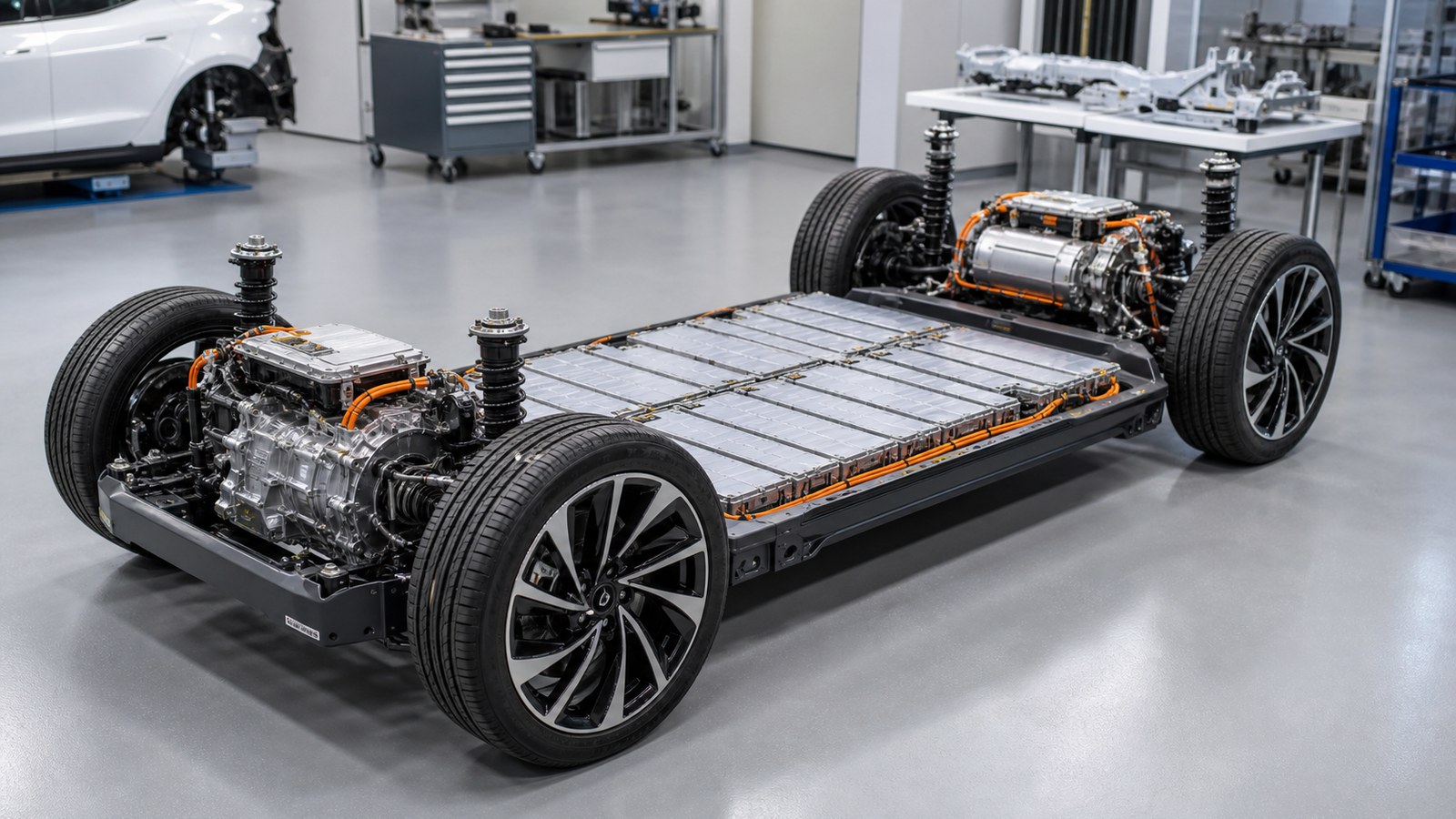
The battery pack is the energy reservoir of an electric vehicle. Instead of a gas tank holding liquid fuel, an EV carries a large rechargeable battery that stores electrical energy. This battery is usually located low in the vehicle floor, forming part of the EV’s “skateboard” platform.
This placement is important. A low battery pack helps lower the center of gravity, which can improve handling, stability, and ride comfort. It also frees up interior space because the vehicle no longer needs a large engine bay, fuel tank, exhaust tunnel, or traditional transmission. Modern EV battery packs are made from many individual cells grouped into modules. These modules are carefully monitored by a battery management system. This system tracks charge level, temperature, voltage, and overall health to keep the battery operating safely and efficiently.
The Inverter: The Translator of the Powertrain
One of the most important EV powertrain components is the inverter. The battery stores electricity as direct current, or DC. Most modern EV motors operate using alternating current, or AC. The inverter converts DC power from the battery into AC power for the motor.
The inverter does more than simply convert electricity. It controls how much power the motor receives and how quickly it receives it. When you press the accelerator gently, the inverter sends a controlled amount of power. When you press harder, it sends more. This precise control allows electric cars to feel smooth at low speeds and powerful during acceleration.
In many ways, the inverter is the nerve center between the battery and motor. Without it, the battery’s energy could not be used properly by the motor.
The Electric Motor: Where Electricity Becomes Motion
The electric motor is where the real magic happens. It converts electrical energy into mechanical energy. Instead of using explosions inside cylinders like a gas engine, an electric motor uses magnetic fields to create rotation. When electricity flows through the motor, it creates magnetic forces that spin the rotor. That spinning motion is then transferred to the wheels. Because electric motors can deliver strong torque instantly, EVs often accelerate quickly from a stop.
Many electric vehicles use permanent magnet motors, induction motors, or a combination of motor types depending on the vehicle’s performance goals. Some EVs use one motor, while others use two, three, or even four motors for advanced traction and performance.
Why EVs Have Instant Torque
Instant torque is one of the biggest reasons electric vehicles feel different from gasoline vehicles. In a gas car, the engine needs to build speed before producing peak power. The transmission must also choose the right gear. That creates a delay between pressing the accelerator and feeling maximum response.
In an EV, the electric motor can deliver strong torque almost immediately. This gives the vehicle a quick, confident launch from a stop and smooth acceleration at city speeds. Even modest EVs can feel lively because the power arrives so directly.
Instant torque does not just make EVs fun to drive. It also helps in daily traffic, merging, hill climbing, and low-speed maneuvering.
Do Electric Cars Have Transmissions?
Most electric vehicles do not have traditional multi-speed transmissions. Instead, they usually use a single-speed reduction gear. Electric motors can operate efficiently across a wide speed range, so they do not need many gears like gasoline engines do.
A gas engine has a narrow range where it performs best, so the transmission shifts gears to keep the engine in that range. An EV motor can spin from very low speeds to extremely high speeds while still delivering usable power. That allows the powertrain to stay simpler, lighter, and smoother. Some high-performance EVs may use multi-speed gearboxes, but most everyday electric cars do not need them. This is one reason EVs feel so seamless when accelerating.
How Energy Flows Through an EV
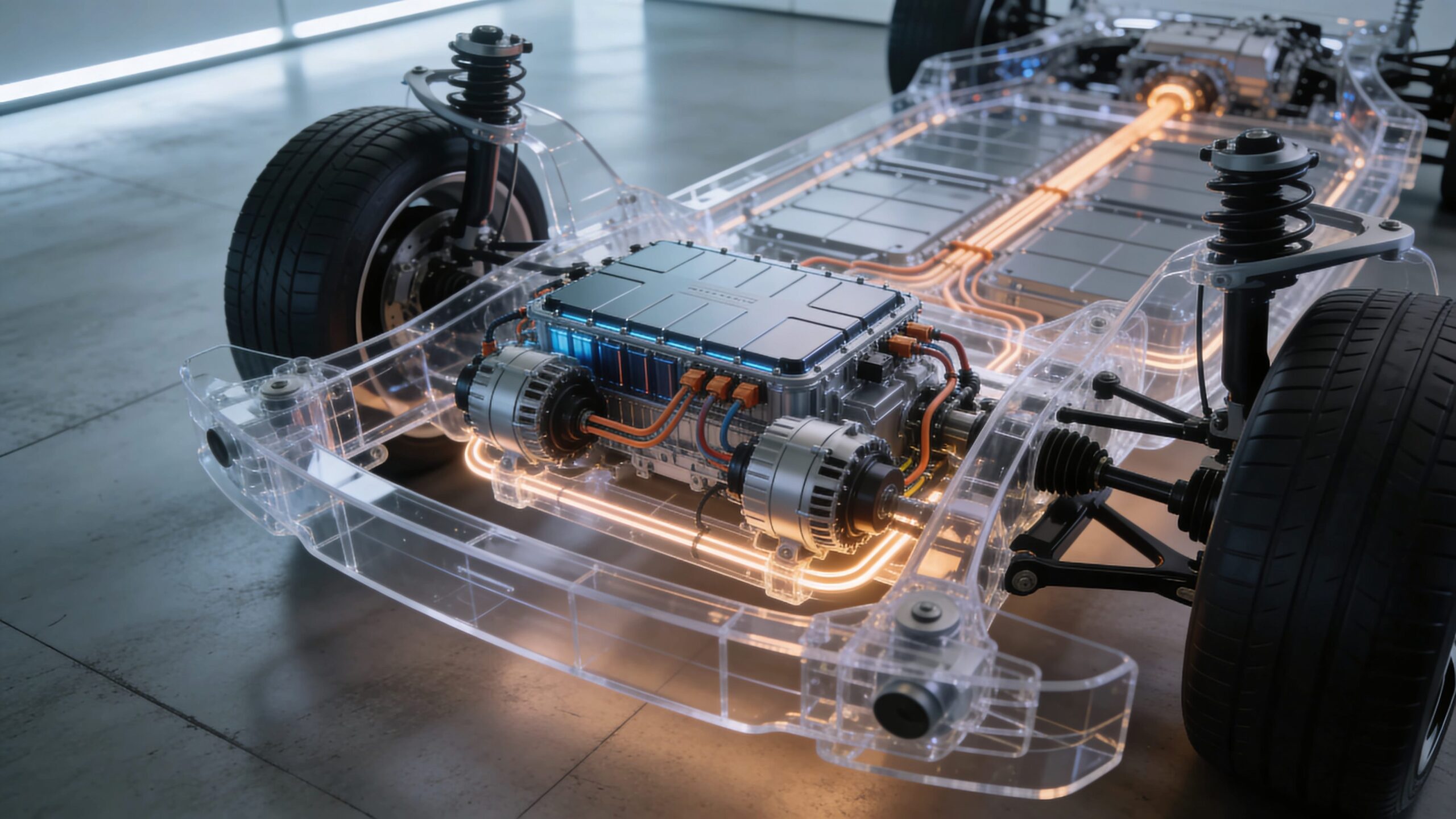
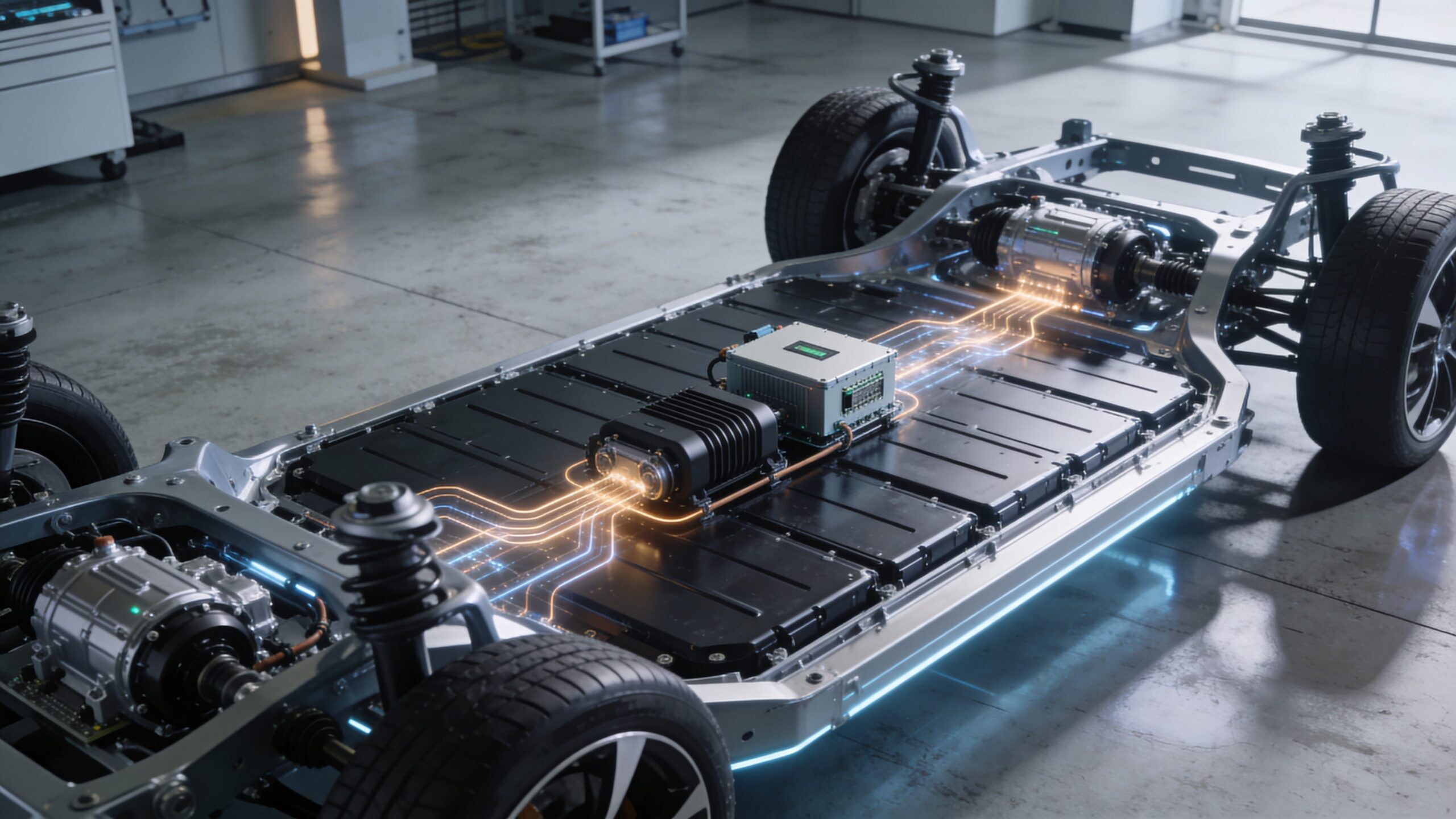
The flow of energy in an electric vehicle is elegant. It begins when the battery stores electricity from charging. When the driver presses the accelerator, the vehicle’s control system calculates how much power is needed. The inverter converts battery power into the correct form for the motor. The motor spins, the reduction gear transfers rotation, and the wheels move the car forward.
This process happens continuously and almost instantly. The vehicle constantly adjusts power delivery based on speed, traction, temperature, battery level, and driver input.
When the driver slows down, the energy flow can reverse. Instead of simply wasting motion as heat through the brakes, the motor can act as a generator and send energy back to the battery. This is called regenerative braking.
Regenerative Braking Explained
Regenerative braking is one of the smartest features of an EV powertrain. In a traditional vehicle, braking converts motion into heat through friction. That energy is lost. In an electric vehicle, the motor can help slow the car while capturing some of that energy. When regenerative braking is active, the wheels help spin the motor. The motor then works like a generator, converting motion back into electricity. That electricity is sent to the battery for later use.
Regenerative braking can improve efficiency, extend driving range, and reduce wear on brake pads. Many EV drivers also enjoy one-pedal driving, where lifting off the accelerator slows the vehicle significantly without needing to press the brake pedal as often.
Front-Wheel, Rear-Wheel, and All-Wheel Drive EVs
EV powertrain architecture can vary widely. Some electric vehicles use a single motor on the front axle, creating front-wheel drive. Others place a motor at the rear axle for rear-wheel drive. Many modern EVs use two motors, one at the front and one at the rear, to create electric all-wheel drive.
Dual-motor EVs can control front and rear torque independently. This improves traction, acceleration, and stability. In slippery conditions, the vehicle can adjust power delivery much faster than many traditional mechanical all-wheel-drive systems.
Some advanced EVs use more than two motors. These layouts allow even finer control of power at each wheel, improving handling and performance.
The Role of EV Software
Software is a major part of how electric cars work. The EV powertrain is not just mechanical; it is deeply digital. Software manages battery health, motor output, regenerative braking, traction control, charging behavior, thermal systems, and driving modes.
When you switch from normal mode to sport mode or eco mode, the software changes how the powertrain responds. It can make acceleration sharper, reduce energy use, increase regenerative braking, or prioritize comfort. Software also allows automakers to improve vehicles after they leave the factory. Some EVs receive updates that refine efficiency, charging performance, power delivery, or battery management.
Thermal Management: Keeping the System Safe
EV powertrains generate heat, especially during fast charging, hard acceleration, and high-speed driving. Thermal management systems keep the battery, inverter, and motor within safe operating temperatures.
If a battery gets too hot or too cold, performance and charging speed may be affected. That is why many EVs use liquid cooling systems to regulate temperature. These systems help protect battery life and maintain consistent performance.
Thermal management is especially important in extreme weather. In cold conditions, the battery may need warming. In hot conditions, it may need cooling. A well-designed EV powertrain keeps everything balanced.
Charging and the Powertrain
Charging is closely connected to the EV powertrain because the battery is the source of everything. When an EV plugs into a charger, electricity flows into the battery through onboard charging hardware or direct fast-charging systems.
Level 1 charging uses a standard household outlet and is slow. Level 2 charging is common for home and workplace charging. DC fast charging sends high-power electricity directly to the battery and can add range much faster. The powertrain’s battery chemistry, voltage architecture, cooling system, and charging software all affect how quickly the EV can charge. That is why two EVs plugged into the same charger may charge at different speeds.
Why EV Powertrains Are More Efficient
Electric vehicles are efficient because they waste less energy. Gasoline engines lose a large amount of energy as heat, friction, exhaust, and noise. EV powertrains convert a much higher share of stored energy into movement.
Electric motors are highly efficient, and regenerative braking helps recover energy that would otherwise be lost. The simpler mechanical design also reduces friction and maintenance needs.
This efficiency is one reason EVs can be cheaper to operate over time. They use energy more intelligently and require fewer routine services like oil changes, spark plug replacements, or exhaust repairs.
Maintenance Benefits of EV Powertrains
EV powertrains generally have fewer moving parts than internal combustion systems. There is no engine oil, no timing belt, no exhaust system, no fuel pump, and no traditional multi-speed transmission in most EVs.
This does not mean EVs require no maintenance. Tires, brakes, cabin filters, coolant systems, suspension parts, and battery health still matter. However, the core powertrain is often less mechanically complex than a gas vehicle’s engine system. Regenerative braking can also reduce brake wear, although driving habits and environment still play a role.
How EV Powertrains Affect Driving Feel
The EV powertrain changes the entire driving experience. Acceleration is quiet and immediate. Power delivery is smooth. The low-mounted battery gives many EVs a planted feel on the road. Regenerative braking can make city driving easier and more efficient.
Because there is no engine vibration, the cabin can feel calmer and more refined. Drivers often notice how peaceful an EV feels at low speeds. At the same time, the instant torque can make the vehicle feel energetic and responsive.
This combination of quietness and quickness is one of the defining features of electric driving.
Common EV Powertrain Myths
One common myth is that EVs are slow. In reality, many EVs accelerate faster than comparable gas vehicles because of instant torque. Another myth is that EVs are mechanically fragile. While battery care matters, electric powertrains often have fewer wear-prone mechanical parts.
Some people assume EVs are all the same because they use batteries and motors. In truth, EV powertrain architecture varies significantly. Motor type, battery size, voltage system, cooling design, software tuning, and drivetrain layout all affect performance and efficiency. Understanding these differences helps shoppers compare electric vehicles more intelligently.
The Future of EV Powertrains
EV powertrains are evolving quickly. Automakers are developing more efficient motors, lighter battery packs, faster-charging systems, improved thermal management, and more integrated drive units. Higher-voltage platforms are becoming more common, helping some EVs charge faster and operate more efficiently.
Future powertrains may use advanced battery chemistries, smarter software, wireless charging, and compact motor designs that free up even more vehicle space. As technology improves, EVs will likely become more affordable, longer-range, and easier to own.
The basic idea will remain the same: store electricity, manage it intelligently, convert it into motion, and deliver it to the road with precision.
Electric Cars Are Simpler Than They Seem
An EV powertrain may sound technical, but the concept is beautifully straightforward. The battery stores energy. The inverter controls and converts electricity. The motor turns that electricity into motion. Software manages the entire process. Regenerative braking recovers energy. Charging refills the system.
Compared with gasoline vehicles, electric cars use fewer moving parts, deliver smoother acceleration, and convert energy into motion more efficiently. Once you understand the powertrain, electric vehicles become much less mysterious and much more impressive. The EV powertrain is not just a replacement for the engine. It is a new foundation for how cars are designed, driven, and experienced.