EV Range Comes From a Chain of Factors
EV range is not controlled by one variable. It is the result of battery capacity, vehicle efficiency, speed, weather, terrain, tires, load, software, and the driver’s habits all working together. That is why two people can drive the same electric car and report different distances per charge. One may commute through mild city traffic with careful acceleration, while another drives fast highways in freezing weather with passengers and cargo. Both experiences are real. The useful question is not simply “what is the range?” but “what conditions are shaping the range today?” Once drivers understand the biggest factors, they can predict energy use more accurately, choose routes more confidently, and separate normal range changes from problems that deserve attention.
A: At highway speed, aerodynamics and speed are often the biggest day-to-day influence.
A: No, a big battery helps, but efficiency determines how far the stored energy goes.
A: Lower speeds reduce drag, and regenerative braking can recover some energy while slowing.
A: Yes, tire pressure, compound, size, and rolling resistance can all affect efficiency.
A: It uses energy, but modern systems manage the load better than many drivers expect.
A: Regeneration recovers only part of the energy used to climb.
A: No, some are conservative, some are optimistic, and many depend heavily on recent driving.
A: Software can improve estimation, thermal control, and efficiency behavior in some vehicles.
A: Remove unused roof gear and heavy extras when range margin is important.
A: Compare similar trips under similar conditions before assuming the battery has a problem.
Battery Capacity Sets the Starting Point
Every EV range discussion begins with stored energy. Battery capacity, usually measured in kilowatt-hours, tells you how much energy the vehicle can carry. A larger battery generally gives the vehicle more potential distance, just as a larger fuel tank can let a gasoline car travel farther between stops. But capacity is only the starting point, not the whole answer.
A bigger battery can add cost and weight. If the vehicle is inefficient, some of that extra energy is spent moving the larger pack and heavier vehicle. This is why shoppers should compare both range and efficiency. The best EVs do not merely carry a lot of energy; they use it well.
Efficiency Decides How Far the Energy Goes
Efficiency is the bridge between battery size and actual driving distance. It reflects how much energy the vehicle uses to travel a mile. A sleek sedan with efficient motors, low rolling resistance, and careful thermal management can stretch each kilowatt-hour. A boxier, heavier vehicle with aggressive tires may use more energy for the same trip.
Efficiency is not fixed. It changes with route and behavior. A car that performs well in mixed city driving may consume more energy on a fast highway run. A driver who accelerates smoothly and keeps tires properly inflated may see better results than someone who treats every on-ramp like a launch event. The vehicle design matters, but the way it is used also counts.
This is one reason EV dashboards often display consumption. Miles per kilowatt-hour or kilowatt-hours per hundred miles may look unfamiliar at first, but these numbers are powerful. They show how the vehicle is performing right now, not just what a rating predicted months earlier.
Speed and Aerodynamics Shape Highway Range
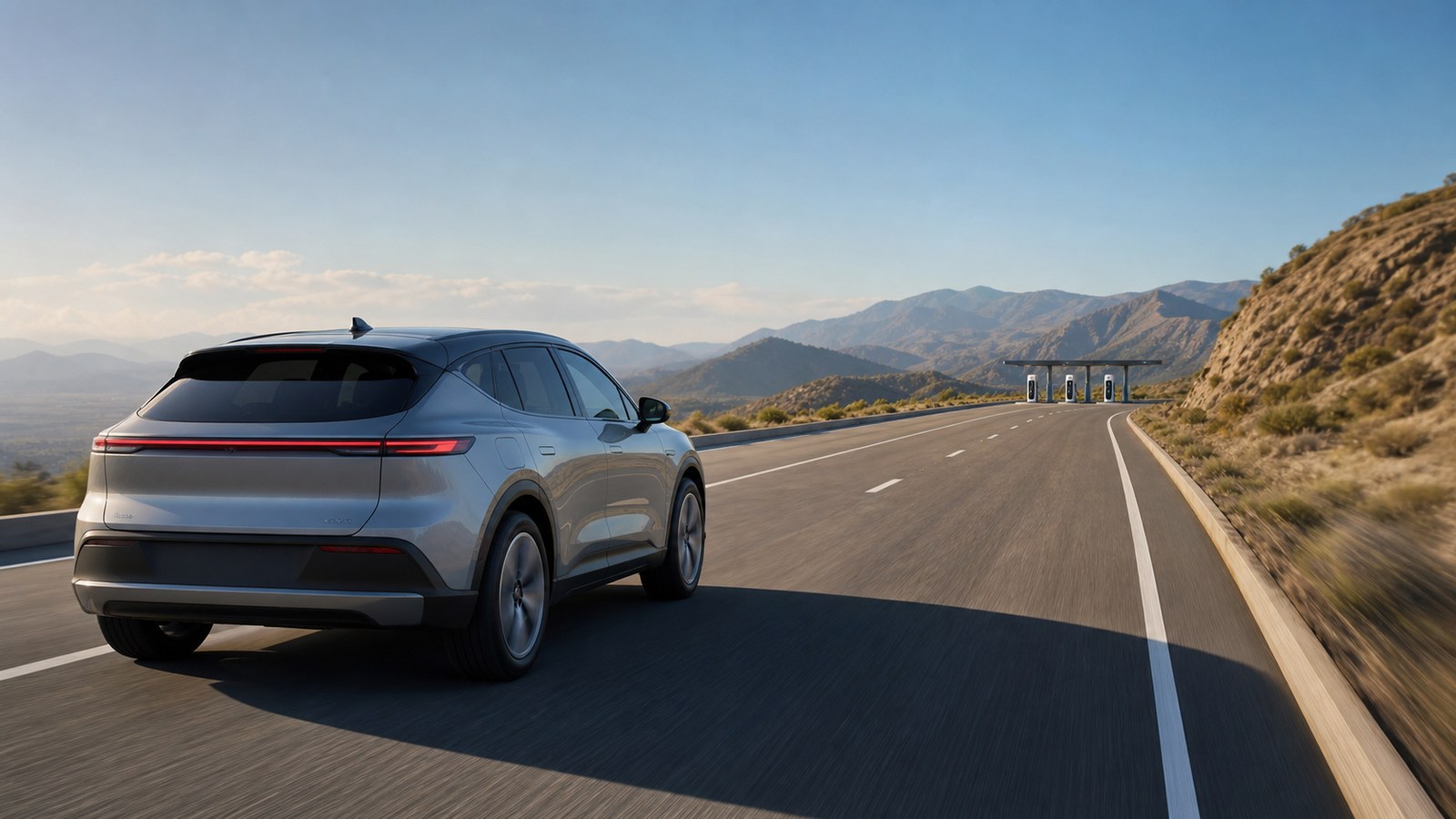
At higher speeds, the vehicle spends a large amount of energy pushing air aside. Aerodynamic drag increases rapidly as speed rises, so the difference between a moderate highway pace and a very fast one can be significant. EVs make this visible because the range estimate responds quickly to energy use.
Aerodynamics are also why vehicle shape matters. Smooth underbodies, carefully shaped wheels, active shutters, tapered rooflines, and flush details can all help reduce drag. A tall vehicle can still be efficient, but it has more air to manage. Add a roof box or bikes on top, and highway range can drop further.
Temperature Changes Both Comfort and Chemistry
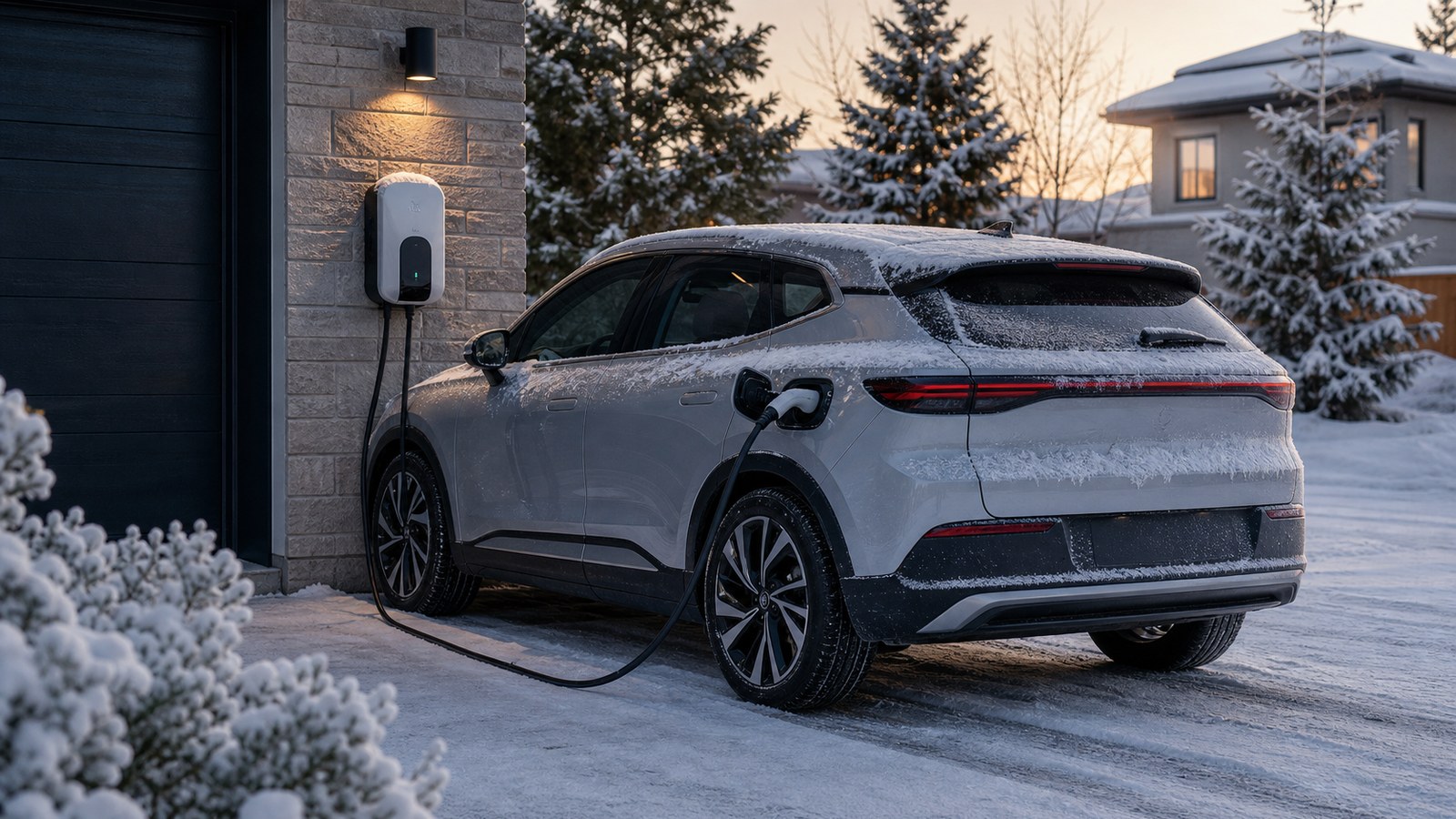
Cold weather affects EV range in several ways at once. The battery may operate less efficiently when cold, the cabin needs heat, tires and lubricants behave differently, and dense air increases drag. Snow, slush, and wet roads add more resistance. The result can be a noticeable winter reduction, especially on highway trips.
Heat brings its own demands. Air conditioning consumes energy, and the battery may need active cooling to stay in its ideal range. Many EVs handle summer conditions well, but extreme heat can still affect consumption and charging behavior. The lesson is simple: temperature is part of the route.
Preconditioning helps because it prepares the cabin, and sometimes the battery, before departure or before fast charging. When the car is plugged in, some of that preparation can use grid power instead of stored battery energy. That can preserve range and improve comfort at the same time.
Tires, Wheels, and Rolling Resistance
Tires are the only parts of the vehicle touching the road, so they have a direct effect on range. Underinflated tires create more rolling resistance. Aggressive performance tires may provide excellent grip but consume more energy. Larger wheels can add weight, change aerodynamics, and reduce sidewall height, which may affect comfort as well as efficiency.
Drivers do not need to obsess over tires, but they should not ignore them. Proper pressure, good alignment, and sensible tire choice support predictable range. When replacing tires, it is worth considering efficiency ratings and the automaker’s recommendations rather than choosing only by appearance or performance claims.
Seasonal tire swaps can change the picture as well. Winter tires may be necessary for safety, yet they can reduce efficiency compared with low-rolling-resistance all-season tires. That tradeoff is acceptable when grip matters; the driver simply needs to plan range with the seasonal setup in mind.
Tire decisions are especially visible on vehicles that already push the edge of efficiency. A heavy electric truck, a performance sedan, and a compact commuter will not respond identically to the same tire change. The common rule is to treat tires as part of the energy system, not merely as a wear item.
Terrain and Load Change the Work
Climbing requires energy. Descending can recover some through regenerative braking, but recovery is never perfect. A mountain trip therefore consumes energy differently from a flat highway route. Route planners that account for elevation can be more accurate than simple distance estimates.
Load has a similar effect. Passengers, luggage, tools, sports gear, and trailers all increase the work the vehicle must do. Towing is especially important because it adds weight and often a lot of aerodynamic drag. An EV that easily handles a commute may need much more frequent charging when towing at highway speed.
Driving Style Still Matters
EVs deliver instant torque, which makes quick acceleration feel smooth and tempting. That performance is part of the appeal, but repeated hard acceleration uses energy. Regenerative braking can recover some energy when slowing, yet it cannot fully undo aggressive driving. Smooth inputs, anticipation, and steady speeds remain efficient habits.
Drive modes can help by changing throttle response, climate behavior, and regenerative braking feel. An eco mode will not rewrite physics, but it can make efficient habits easier to maintain. A sport mode may make the car sharper and more entertaining, though the energy screen will usually show the cost when that style is used often.
The good news is that efficient driving does not have to feel joyless. It often means being calmer and more deliberate: leaving space, avoiding unnecessary surges, using appropriate drive modes, and letting the vehicle coast or regenerate naturally. Small habits add up over a full battery.
How Route Choice Changes the Result
The shortest route is not always the most efficient route. A slightly longer road with lower speeds, steadier traffic, or less elevation change can sometimes use less energy than a faster highway. Navigation systems that understand charging and elevation can make better suggestions than distance alone, especially on unfamiliar trips.
Drivers should also look at charger placement along the route. A trip with several reliable stations allows smaller buffers and more flexible stops. A route with one isolated charger deserves more caution. Range planning is not only about the vehicle; it is about the road network around it.
This is why the same EV can feel different in two regions. Dense charging corridors make range feel relaxed because options are frequent. Sparse routes make the driver think more carefully about speed, weather, and arrival percentage.
A good route choice therefore blends distance, road speed, elevation, and charger access. The best map is not always the one with the shortest line; it is the one that gives the battery and the driver enough room to work comfortably.
When Range Changes Signal a Problem
Most range changes are normal responses to conditions. A cold morning, new tires, heavy rain, or faster highway driving can explain a lower estimate. Concern is more reasonable when range drops sharply under similar conditions, tire pressure is correct, software is current, and the pattern repeats over time.
Owners should compare like with like before assuming battery degradation. The same route, similar temperature, similar speed, and similar load provide a better baseline than two unrelated trips. If the difference remains large, a service visit can check for brake drag, alignment issues, battery faults, or other causes.
Charging Strategy Affects Practical Distance
Range is not only about how far the car can go from full to empty. Practical range is about how much usable energy the driver chooses to carry for a given route. Many owners set a daily charge limit below full because they do not need maximum range every day. On a long trip, they may charge higher before departure or plan fast-charging stops that keep the battery in a faster-charging window.
Good charging strategy includes buffer. A driver may be comfortable arriving home with a low battery because overnight charging is dependable. The same driver may want a larger reserve when arriving at an unfamiliar rural charger. Range confidence comes from matching charge level to risk, not from keeping the battery full at all times.
Once drivers see range as a chain of factors, the numbers make more sense. Battery size, efficiency, speed, weather, terrain, tires, load, habits, and charging plans all matter. None of them needs to be mysterious. Together, they explain why EV range changes and how drivers can manage it intelligently.
How Charging Speed Interacts With Range
A vehicle with slightly less range can still travel well if it charges quickly and has good station access along common routes. A vehicle with a large battery can feel slower on trips if it takes a long time to recover energy or if compatible chargers are scarce. Range and charging speed should be considered together because road-trip convenience depends on both.
The charging curve matters more than the peak number alone. Some EVs hold strong power through a useful portion of the battery, while others briefly touch a high peak and then taper quickly. A driver cares about miles added during the whole stop, not the best instant the charger reported. This is why real-world charging tests can be useful when comparing vehicles.
For daily ownership, charging speed may matter less if home charging covers normal use. For frequent road trippers, it can matter a great deal. The right balance depends on how often the driver needs to turn a charging stop into forward progress.
This balance also changes with battery size. A very efficient EV may need fewer kilowatt-hours to add meaningful miles, while a large vehicle may require more energy for the same distance. Charging performance should be judged by useful travel recovery, not by station power alone.
Putting the Factors Together
No single range factor acts alone. A cold day, low tire pressure, high speed, passengers, and a roof box can stack together. A mild day, efficient tires, moderate speed, and smooth driving can stack in the other direction. Understanding that layering helps drivers make sense of range changes without overreacting to one number.
The practical approach is to control what is easy, plan for what is predictable, and leave margin for what is uncertain. Keep tires healthy, remove unused accessories, use preconditioning when helpful, choose sensible speeds, and plan chargers around the route. Those habits will not make every EV travel the same distance, but they will make any EV easier to understand.