Cold Weather Changes the EV Energy Equation
EV range drops in cold weather because the vehicle must manage battery temperature, cabin comfort, denser air, winter tires, wet or snowy roads, and sometimes slower charging all at once. The battery is not necessarily damaged, and the range loss is usually temporary. Cold temperatures simply make the car use more energy and can make the battery less eager to deliver or accept power until it warms. Gasoline vehicles also lose efficiency in winter, but EVs make energy use more visible because the dashboard range estimate responds quickly. With the right habits, drivers can reduce winter range loss, plan trips more calmly, and keep an EV practical even when temperatures fall.
A: Usually no; much of it is temporary and improves in warmer conditions.
A: Chemical processes slow down and the pack may need warming for best performance.
A: It can, especially during short trips and very cold weather.
A: Yes, when possible, because it uses grid energy before departure.
A: They help, but they do not remove every cold-weather load.
A: Dense air, speed, heat demand, and wind can stack together.
A: Sometimes, but a cold pack may charge slowly without preconditioning.
A: Yes, especially on unfamiliar routes or in remote areas.
A: They can, but safety and grip may be worth the tradeoff.
A: Preheat while plugged in, moderate speed, maintain tires, and plan with extra margin.
Battery Chemistry Slows Down
Cold temperatures affect the movement of ions inside the battery. When the pack is cold, it may not deliver or accept energy as easily as it does in mild weather. The vehicle may protect the battery by limiting power or charging speed until the pack warms.
This behavior is normal. It does not mean the battery has suddenly lost permanent capacity. It means the chemistry is operating outside its favorite temperature range. Once the pack warms or the weather improves, much of the lost performance can return.
Drivers notice this as a lower range estimate, slower fast charging, or reduced regenerative braking. Those limits are the car’s way of managing the battery rather than abusing it.
Cabin Heat Competes With Driving Range
In winter, the vehicle has to keep people warm. That energy comes from the battery. A gasoline car uses waste engine heat for cabin warmth, but an EV is so efficient that it has less waste heat to reuse. Heat must be produced or moved intentionally.
Heat pumps can help by moving heat efficiently, but they still use energy and may lose advantage in extreme cold. Resistive heaters can be powerful but energy-intensive. Either way, cabin comfort becomes part of the range calculation.
Short trips can be especially inefficient because the car warms the cabin again and again. A five-mile errand with a cold-soaked interior may use proportionally more energy than a longer steady drive after everything is warm.
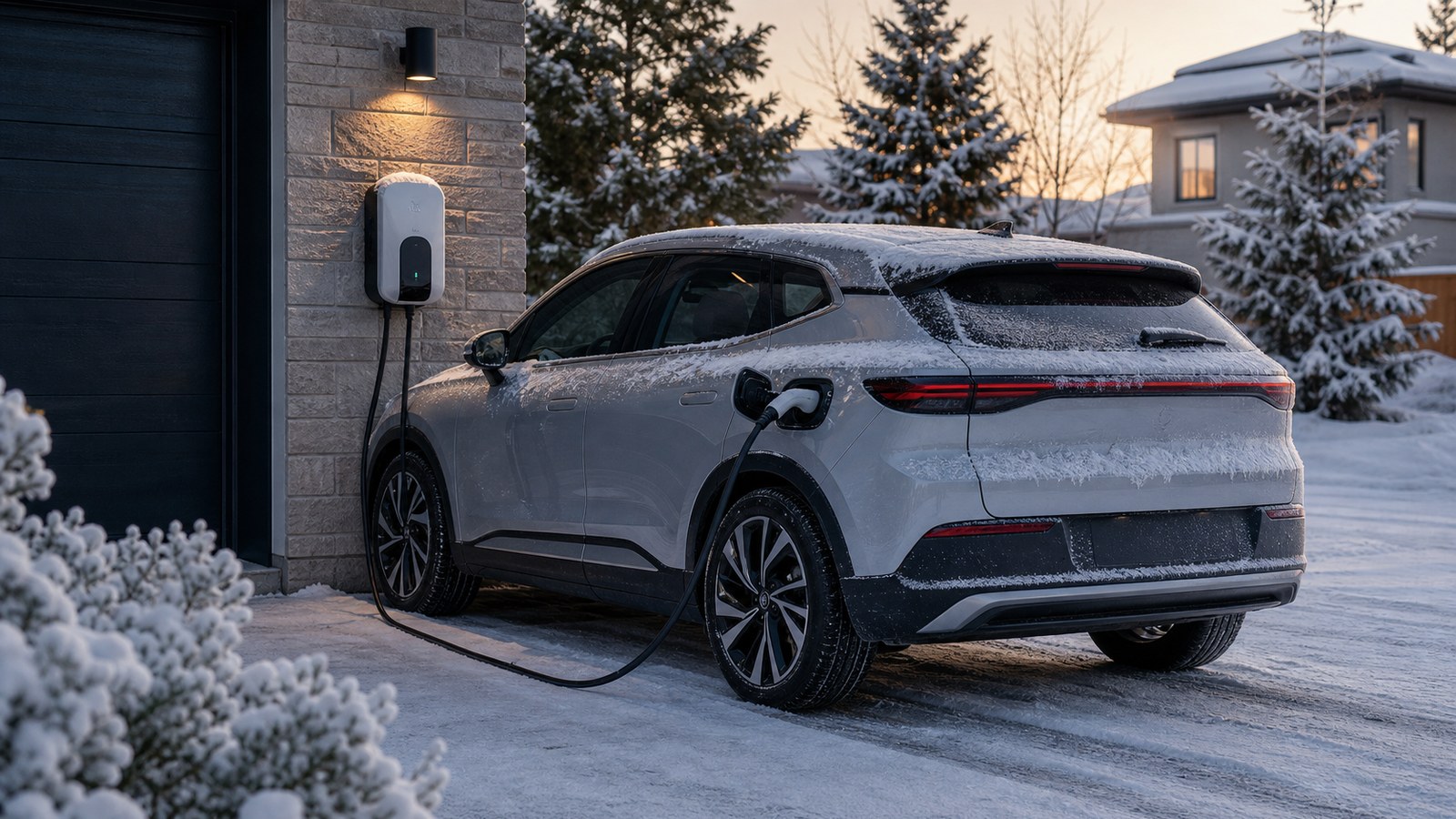
Preheating while plugged in helps because some of that energy comes from the grid instead of the battery.
Road Conditions Add More Load
Winter range loss is not only about the battery and heater. Snow, slush, water, and cold air all make driving harder. Tires push through messier surfaces, and dense air increases drag at speed. A headwind can make the effect stronger. The car is spending energy on traction, surface resistance, and airflow at the same time, so the range estimate is reflecting several winter penalties at once.
Winter tires may also reduce efficiency compared with low-rolling-resistance tires. They are often necessary for safety, but the grip comes with a range tradeoff. Tire pressure can drop with temperature too, and underinflated tires waste energy.
The useful habit is to treat winter as a stack of small energy penalties rather than one mysterious battery problem. Each factor may be manageable on its own, but together they can change the range estimate enough that planning, pressure checks, and preheating become worthwhile.
Drivers should also remember that winter storms change roads unevenly. A cleared highway, a slushy side street, and an icy parking lot can all produce different energy use in the same trip.
Drivers should also remember that winter storms change roads unevenly. A cleared highway, a slushy side street, and an icy parking lot can all produce different energy use in the same trip.
Speed Matters Even More in Cold Weather
Highway speed is already a major range factor in any season. In winter, the penalty grows because cold dense air creates more aerodynamic resistance and the cabin heater keeps working. A small speed reduction can preserve a surprising amount of range on a long cold drive.
This does not mean drivers should move unsafely slowly. It means that reasonable speed discipline is one of the most effective winter range tools. Driving a little more steadily can reduce charging needs and improve arrival margin.
Route choice can matter too. A slightly slower road with less wind exposure or better charger access may be easier than a faster route that leaves no buffer. Winter rewards planning more than bravado.
Preconditioning Is Your Friend
Preconditioning prepares the cabin, and in some cases the battery, before the drive or charging stop. When the car is plugged in, this can preserve battery energy for the trip. It also makes the first miles more comfortable and less energy-intensive. Using it consistently can make winter range feel less erratic because the first miles begin from a more controlled temperature.
Some EVs automatically warm the battery when a fast charger is selected in navigation. That can improve charging speed on arrival. Skipping navigation preconditioning and arriving with a cold pack can make an expensive fast charger feel frustratingly slow.
Scheduled departure features are worth learning before winter. They turn preparation into a routine instead of a last-minute scramble.
The feature is easy to ignore in mild weather, but it becomes valuable when the car sits outside overnight. A prepared battery and cabin can make the morning drive feel calmer and more predictable.
The useful habit is to treat winter as a stack of small energy penalties rather than one mysterious battery problem. Each factor may be manageable on its own, but together they can change the range estimate enough that planning, pressure checks, and preheating become worthwhile.
Charging Strategy Changes in Winter
Winter driving often justifies a larger buffer. A route that feels easy in autumn may need an earlier charge stop in January. Chargers can be busy, snow-covered, or slower than expected, so arriving with extra margin is practical.
Home charging becomes especially valuable because the car can start the day warm, charged, and ready. If the vehicle allows battery or cabin preparation while plugged in, overnight charging can do more than refill energy. It can set the car up for a better morning.
For long trips, drivers should check charger reliability, weather, wind, elevation, and arrival percentage. A winter plan does not need to be complicated, but it should avoid assuming perfect summer conditions.
What Drivers Can Actually Do
Drivers can reduce winter range loss by preheating while plugged in, keeping tires inflated, clearing snow from the vehicle, using seat heaters intelligently, moderating speed, and planning charging stops with more margin. None of those habits changes the laws of chemistry, but together they make winter EV use much easier.
The goal is not to eliminate every lost mile. It is to make the car predictable. Once a driver learns the winter pattern, range estimates become less alarming. The EV is simply reporting the extra work required by cold weather.
Cold-weather range loss is manageable when drivers understand what is happening. The battery is colder, the cabin needs heat, the road may be harder, and charging may take more planning. Those are solvable conditions, not reasons to panic.
The best winter EV drivers do not try to defeat the season. They build habits that account for it, leaving a little earlier, charging with more margin, and using the car’s preparation tools before range becomes stressful.
Why Short Trips Look Especially Inefficient
Short winter trips can make range loss look worse than it feels on longer drives. The cabin and battery may need warming, but the trip ends before that initial energy use is spread across many miles. The dashboard can show high consumption even for a simple errand.
Several short errands with long cold parking gaps repeat that warmup cycle again and again. Combining errands, preheating while plugged in, or accepting that short winter trips are energy-heavy can make the numbers less surprising.
This pattern is not unique to EVs, but EVs show it clearly. The driver sees energy use in real time rather than discovering lower efficiency at the end of a fuel tank.
How Tires and Pressure Matter
Tire pressure drops as temperature falls, and low pressure increases rolling resistance. That means the car spends more energy moving the tires along the road. Checking pressure in winter is a simple range habit that also supports safety and tire life. Pressure checks are especially useful after sudden temperature swings, when a tire that was fine last week may now be several pounds low.
Winter tires can add another tradeoff. They may reduce range compared with efficiency-focused tires, but they can greatly improve grip in snow and cold. Range should not come before control, braking, and safety.
The useful habit is to treat winter as a stack of small energy penalties rather than one mysterious battery problem. Each factor may be manageable on its own, but together they can change the range estimate enough that planning, pressure checks, and preheating become worthwhile.
The best tire choice is therefore a safety decision first and an efficiency decision second. Range planning should adapt to the tire that conditions require.
Planning Cold-Weather Road Trips
Cold-weather road trips deserve more margin than summer routes. Start with a comfortable charge, select chargers with recent reliability, and avoid arriving at a remote station with only a tiny buffer. Weather can change too quickly for overly tight plans. A winter route should be planned around reliable stops and comfortable waiting places, not only around the shortest map distance.
It helps to choose chargers near useful stops. If the car needs more time because the battery is cold, a station near food, restrooms, or shelter is easier to tolerate. Comfort planning matters in winter.
After a few winter trips, patterns become familiar. The driver learns how the car behaves at certain temperatures, which chargers work well, and how much buffer feels right.
The useful habit is to treat winter as a stack of small energy penalties rather than one mysterious battery problem. Each factor may be manageable on its own, but together they can change the range estimate enough that planning, pressure checks, and preheating become worthwhile.
The best tire choice is therefore a safety decision first and an efficiency decision second. Range planning should adapt to the equipment and weather the trip actually requires.
What Not to Worry About
Drivers should not assume every winter range drop means permanent battery damage. In most cases, the car is responding to temperature, heater use, road conditions, and recent driving. When conditions improve, the estimate often improves as well.
It is also normal for regenerative braking to feel different when the battery is cold or full. The car may limit how much energy it can accept during deceleration. That can change pedal feel, but it is usually a protective behavior rather than a failure.
Concern is more reasonable when range changes dramatically under similar conditions, warning lights appear, charging behaves abnormally, or the vehicle reports a battery fault. Those cases deserve service attention.
The Winter Routine That Works
A strong winter routine is simple: plug in when practical, preheat before departure, keep tires properly inflated, use efficient comfort features, drive at reasonable speeds, and plan longer trips with extra margin. None of these habits is extreme. The routine works because it removes surprises before they become urgent: the cabin is warm, the battery is prepared, and the route has margin.
Together, they make winter EV driving predictable. The goal is not to force summer range out of a cold vehicle. The goal is to understand the seasonal difference and use the car’s tools to make that difference manageable.