The Quiet Revolution Under the Hood
Electric vehicles are changing how we think about driving, but for many beginners, the technology behind them can feel like a mystery. Without a traditional engine, fuel tank, or exhaust system, EVs seem to operate in a completely different way. Yet beneath their quiet operation lies a system that is not only simpler than gasoline engines, but also more efficient and increasingly more accessible. Understanding how electric vehicles work does not require an engineering degree. In fact, once you break the system into its core components, the logic becomes surprisingly straightforward. Electricity is stored, managed, and delivered to create motion. That is the foundation. Everything else builds on that idea.
A: An EV uses a battery and electric motor instead of burning gasoline in an internal combustion engine.
A: Electricity flows from the battery to the motor, and the motor turns the wheels.
A: It stores the energy the vehicle uses for driving and for supporting onboard systems.
A: Electric motors deliver torque immediately, so power feels direct and linear.
A: It is a system that captures some energy during slowing and sends it back to the battery.
A: No, because they do not use internal combustion engines with engine oil in the traditional sense.
A: They charge by plugging into a household outlet, a home charger, or a public charging station.
A: Usually not; most owners find the routine simple after learning the basics of charging and range.
A: Not usually; many drivers rely mostly on home charging and use fast charging for longer trips.
A: Store electricity, send it to a motor, turn the wheels, and recharge when needed.
The Core Concept: Energy In, Motion Out
At the most basic level, an electric vehicle converts stored electrical energy into movement. Instead of burning fuel to generate power, it draws energy from a battery and sends it to an electric motor. That motor then turns the wheels.
This process eliminates the need for combustion entirely. There are no explosions, no fuel injection, and no exhaust gases. Instead, the system relies on a clean flow of energy from the battery to the motor, controlled by electronics that ensure efficiency and safety.
The simplicity of this concept is one of the reasons EVs are gaining popularity. Fewer steps mean fewer points of failure, and that translates into a more streamlined driving experience.
The Battery: The Heart of an EV
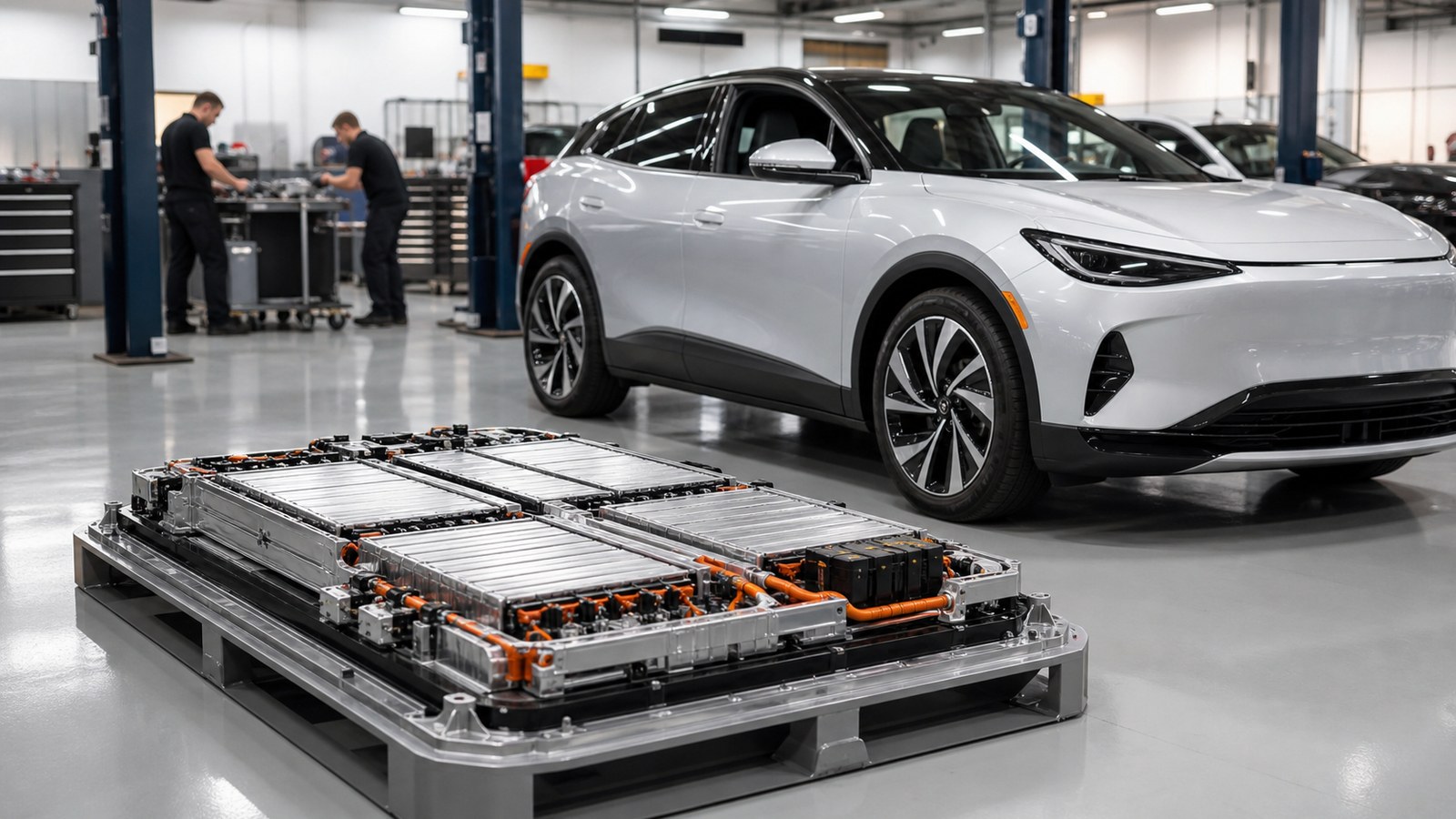
The battery is the most important component of an electric vehicle. It stores the energy that powers everything from the motor to the lights and climate system. Modern EV batteries are made up of thousands of individual cells working together to provide the necessary capacity. Battery size is often measured in kilowatt-hours, which indicates how much energy the battery can hold. A larger battery generally means a longer driving range, but it also adds weight and cost.
Battery management systems play a crucial role in maintaining performance. They monitor temperature, charge levels, and overall health, ensuring that the battery operates within safe limits. This helps extend the life of the battery and maintain consistent performance over time.
The Electric Motor: Instant Power
The electric motor is what transforms stored energy into motion. Unlike a gasoline engine, which builds power gradually, an electric motor delivers torque instantly. This means that when you press the accelerator, the vehicle responds immediately.
This instant response creates a driving experience that feels smooth and effortless. There are no gear shifts in most EVs, and acceleration is linear rather than stepped.
Electric motors are also highly efficient. They convert a larger percentage of stored energy into usable motion compared to combustion engines, which lose a significant amount of energy as heat.
Power Electronics: The Brain Behind the System
Between the battery and the motor lies a set of components known as power electronics. These systems manage the flow of electricity, converting it into the right form and ensuring it reaches the motor safely.
One of the key components is the inverter, which converts direct current from the battery into alternating current for the motor. This conversion is essential because most electric motors operate on alternating current. The electronics also regulate how much power is delivered based on driver input. This allows for precise control over acceleration and efficiency.
Regenerative Braking: Recycling Energy
One of the most unique features of electric vehicles is regenerative braking. When a driver slows down or brakes, the motor can operate in reverse, acting as a generator. This process captures some of the energy that would otherwise be lost and sends it back to the battery.
This not only improves efficiency but also reduces wear on the braking system. Over time, this can lead to lower maintenance needs and longer-lasting components.
Regenerative braking is a perfect example of how EVs are designed to maximize energy use at every stage of operation.
Charging: Refueling with Electricity
Charging an electric vehicle replaces the traditional act of refueling. Instead of filling a tank, drivers connect their vehicle to a power source and allow the battery to recharge. Charging can happen at home, at work, or at public stations. Home charging is often the most convenient, allowing drivers to plug in overnight and start each day with a full battery.
Public charging stations provide additional flexibility, especially for longer trips. These stations vary in speed, with some offering rapid charging that can significantly reduce wait times. The process itself is simple: plug in, allow the system to communicate, and let the battery charge. Over time, this becomes a routine part of EV ownership.
Range: How Far Can You Go?
Range is one of the most important considerations for EV drivers. It represents how far the vehicle can travel on a single charge. Advances in battery technology have significantly increased range, making EVs more practical for everyday use.
For most drivers, daily travel falls well within the range of modern electric vehicles. This means that with regular charging, range becomes less of a concern.
Longer trips require planning, but the growing network of charging stations is making this easier. As infrastructure continues to expand, range limitations are becoming less significant.
Efficiency and Energy Use
Electric vehicles are designed to use energy efficiently. Because they avoid the losses associated with combustion, they can convert a higher percentage of energy into motion. Factors such as driving speed, terrain, and weather can affect efficiency, but overall, EVs tend to use energy more effectively than traditional vehicles. This efficiency is one of the reasons EVs are seen as a key part of the future of transportation.
Maintenance: Simplicity in Design
One of the advantages of electric vehicles is their reduced maintenance requirements. Without an engine, there are fewer components that require regular servicing.
There are no oil changes, no spark plugs, and no exhaust systems to maintain. While EVs still require care, such as tire maintenance and occasional system checks, the overall maintenance burden is lower. This simplicity contributes to both cost savings and convenience for owners.
Safety and Reliability
Modern electric vehicles are designed with safety in mind. Battery systems are protected by multiple layers of safeguards, and the absence of flammable fuel can reduce certain risks. EVs also benefit from advanced driver-assistance systems and structural designs that enhance safety. Reliability is improving as technology matures, making EVs a dependable choice for many drivers.
The Driving Experience
Driving an electric vehicle is often described as smooth, quiet, and responsive. The lack of engine noise creates a more relaxed environment, while instant torque makes acceleration feel effortless.
For many drivers, this represents a new level of comfort and control. The experience is different from traditional vehicles, but it quickly becomes familiar.
The Bigger Picture
Electric vehicles are more than just a new type of car. They represent a shift in how energy is used and how transportation systems are designed. As technology continues to evolve, EVs are becoming more capable, more accessible, and more integrated into everyday life. Understanding how they work is the first step toward embracing this change.
Why It All Matters
For beginners, learning how electric vehicles work can transform uncertainty into confidence. It reveals that the technology is not mysterious, but logical and practical.
EVs simplify many aspects of driving while introducing new possibilities for efficiency and sustainability. By understanding the basics, drivers can make informed decisions and take part in the future of mobility.
In the end, electric vehicles are not just about replacing gasoline. They are about rethinking how we move, how we use energy, and how we design the systems that support our daily lives.