EV Batteries Store Energy by Moving Ions
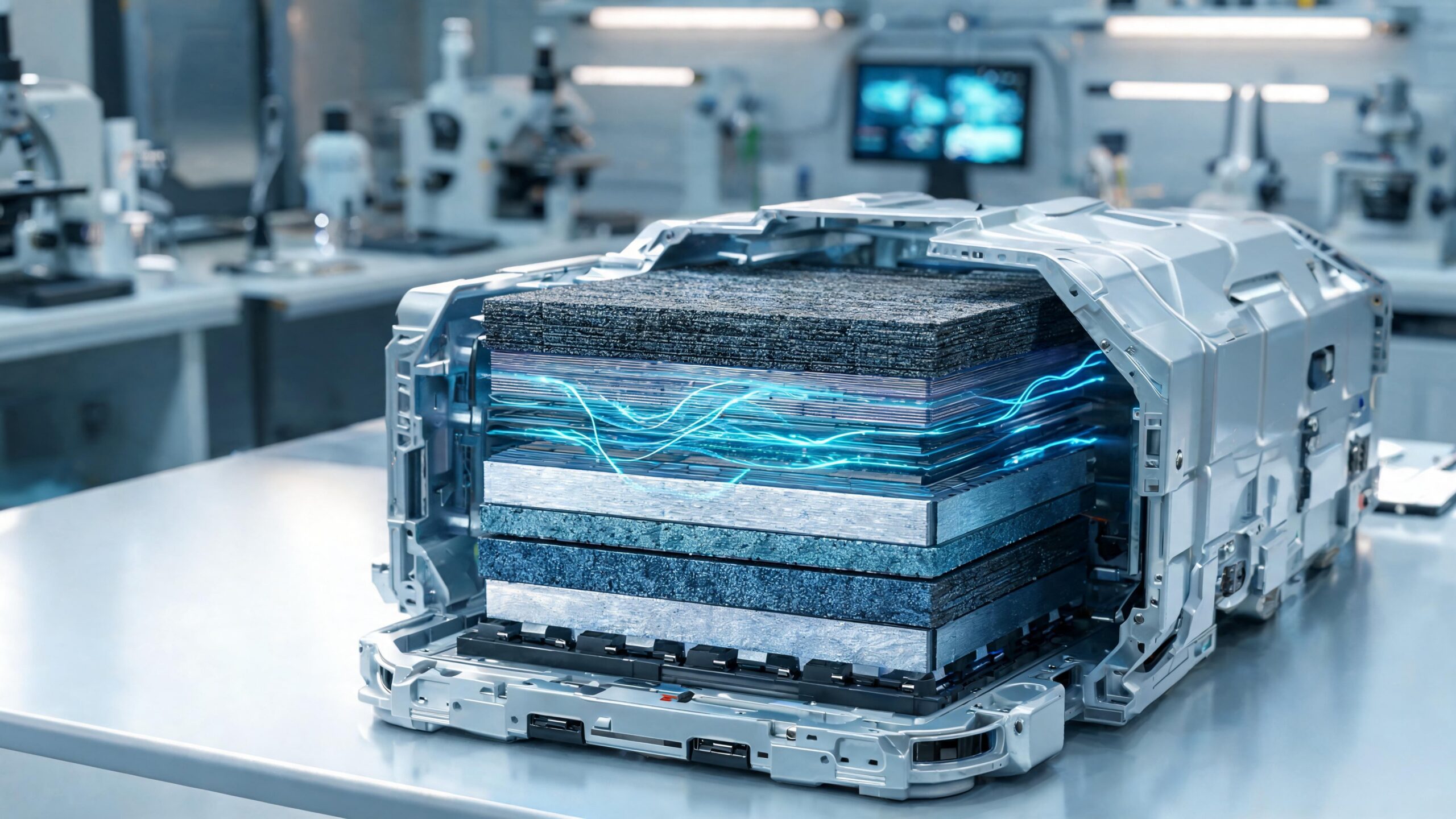
An EV battery stores energy through controlled chemical movement inside many lithium-ion cells. When the car charges, lithium ions move toward one side of the cell and settle into storage. When the car drives, those ions move back the other way, and electrons flow through the vehicle’s electrical circuit to power the motor. The process is reversible, which is why the battery can be charged and discharged thousands of times. A beginner does not need to master electrochemistry to understand the core idea. The battery is not making energy from nothing. It stores electrical energy from the grid in chemical form, then releases that energy as electricity when the vehicle needs motion, heat, cooling, lights, or electronics.
A: It is stored chemically inside lithium-ion cells as ions settle into electrode materials.
A: Lithium ions move inside the cell, while electrons move through the external circuit.
A: It allows lithium ions to travel between the anode and cathode.
A: It prevents the electrodes from touching while still letting ions pass.
A: It releases stored energy; it does not create energy from nothing.
A: The battery management system becomes more cautious to protect cells.
A: Yes, regenerative braking can recover some energy during deceleration.
A: Temperature affects charging speed, power delivery, safety, and long-term health.
A: No, chemistry, design, temperature, use, and management affect aging.
A: Charging stores ions in one direction, driving moves them back and releases energy.
The Basic Chemistry Loop
A lithium-ion battery works because lithium ions can move between two electrodes. During charging, energy from the grid pushes ions into a storage position. During driving, the ions move back, and electrons flowing through the external circuit provide power to the vehicle. This repeated movement is the chemistry loop behind EV driving.
The process is reversible, but it is not perfectly lossless. Some energy becomes heat, and tiny side reactions occur over time. Battery engineering is the art of making the useful reaction happen efficiently while limiting the unwanted effects that reduce lifespan or safety.
This is why the battery is managed so carefully. It is not simply plugged into the wall without supervision. The vehicle watches voltage, temperature, current, and state of charge, then adjusts charging and power delivery to keep the chemistry in a healthy operating window.
The Anode and Cathode
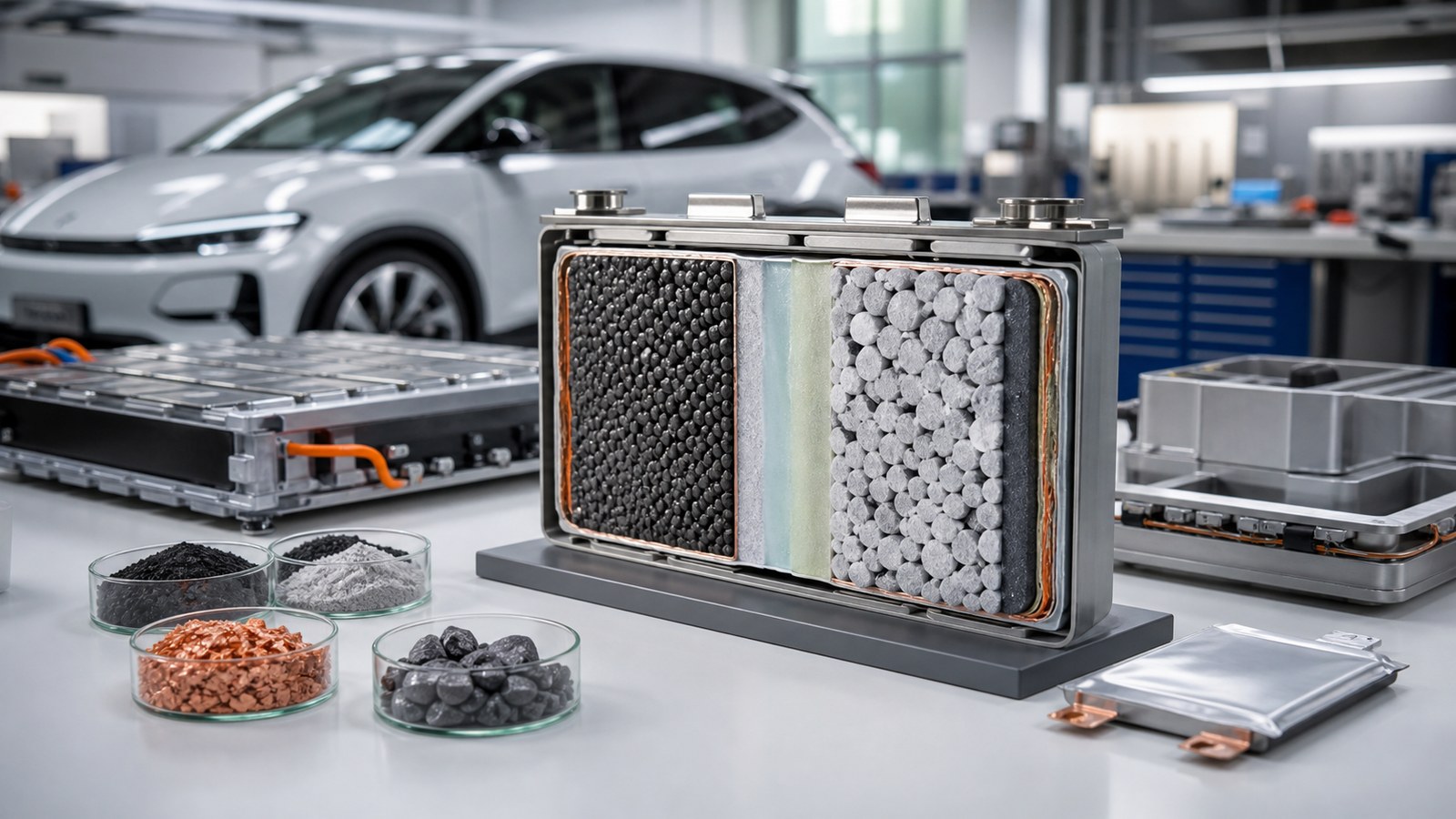
The anode and cathode are the two main electrodes inside the cell. Their roles switch depending on whether the battery is charging or discharging, but beginners can think of them as the two places lithium ions travel between. In many EV cells, the anode stores lithium ions during charging, while the cathode plays a major role in determining energy density, cost, and performance.
Anodes are often graphite-based because graphite can host lithium ions between its layers. Some newer designs add silicon to increase storage potential, though silicon brings expansion and durability challenges. Cathodes vary more widely, which is why chemistry names such as LFP, NMC, and NCA matter.
The Electrolyte and Separator
The electrolyte is the medium that lets lithium ions move inside the cell. It is usually a carefully formulated liquid in today’s mainstream lithium-ion batteries. It must allow ion movement while supporting stability, temperature performance, and safety.
The separator is a thin barrier between the anode and cathode. Its job is critical: keep the electrodes from touching directly while still allowing ions to pass. If the electrodes touch, the cell can short circuit. A tiny separator therefore plays a large safety role.
Future battery designs may use different electrolytes, including solid-state approaches. The goal is often better energy density, safety, or charging behavior. For current EV owners, the important point is that the electrolyte and separator make controlled ion movement possible.
What Happens While Charging
When an EV charges, power from the charging equipment is managed by the vehicle and sent toward the battery. Inside each cell, lithium ions move toward the anode. Electrons do not travel through the electrolyte; they move through the external circuit. The chemical and electrical sides of the process are linked, but they happen in different places.
Charging speed depends on how quickly the cells can accept this movement safely. If the battery is cold, nearly full, or too warm, the vehicle may reduce power. If the battery is preconditioned, at a moderate state of charge, and connected to a strong charger, it may accept energy more quickly.
Near the top of the battery, charging often slows. This is not a charger failure. It is the battery management system protecting the cells as they approach a high state of charge. The last portion requires more caution, so it usually takes longer per mile added.
This is why road-trip charging plans often stop before full. The chemistry can accept energy more quickly in the middle of the pack than at the top. Leaving with enough range, rather than waiting for every last percentage point, often saves time and reduces stress on the battery.
The charging curve is therefore a chemistry story and a travel story at the same time. It reflects what the cells can accept safely, but it also shapes how long a driver waits at a station and how often the next stop makes sense.
What Happens While Driving
When the driver accelerates, the battery releases stored energy. Lithium ions move back toward the cathode side, while electrons flow through the vehicle’s electrical circuit. The inverter shapes that electrical power for the motor, and the motor turns it into rotation.
A gentle cruise draws energy steadily. Hard acceleration draws it quickly. Climbing hills, towing, using cabin heat, and driving fast all increase demand. The battery can deliver strong power, but the vehicle will protect itself if temperature, voltage, or current move outside acceptable limits.
The same battery can therefore feel different in different driving situations. Around town, the flow of energy may be moderate and frequently assisted by regenerative braking. On a steep highway climb, the pack may deliver sustained power while thermal systems work harder in the background.
This protective behavior is one reason EVs sometimes reduce power in extreme situations. The car may still drive normally, but it can limit peak output to keep the pack comfortable. That choice is not weakness; it is the battery system preserving itself.
Regenerative Braking Reverses the Flow
Regenerative braking is one of the clearest examples of reversible energy flow. When the EV slows, the motor can act as a generator. Instead of turning electricity into motion, it uses motion to create electricity and sends some energy back to the battery.
Regeneration does not recover everything. Some energy is lost to heat, friction, tires, and conversion losses. Still, it improves efficiency, especially in city driving where stopping and slowing happen often. It also changes the driving feel because lifting off the accelerator can slow the vehicle more than in many gasoline cars.
The battery must be ready to accept regenerated energy. If it is very full or very cold, regenerative braking may be limited. That is another sign that chemistry, temperature, and software all work together.
Why Heat Is Always Part of the Story
Moving energy creates heat. Electrical resistance, chemical reactions, fast charging, hard acceleration, and environmental temperature all affect the battery’s thermal state. Too much heat can speed up degradation or force the vehicle to limit power. Too much cold can reduce charging speed and available range.
Thermal management keeps the chemistry comfortable. Liquid cooling, heaters, heat pumps, sensors, and control valves may all play a role. Drivers usually notice the result only indirectly: better fast charging, steadier performance, or less range loss in difficult weather.
The Battery Management System
The battery management system is the guardian of the pack. It estimates state of charge, watches cell groups, balances differences, controls limits, and communicates with charging equipment. Without it, the chemistry would be far harder to use safely in a vehicle.
This system explains why an EV sometimes refuses to charge as fast as the station can provide or limits power when the pack is cold. Those choices are protective. The goal is not maximum power every second; it is reliable energy storage over many years.
For beginners, the key idea is simple. The battery stores energy chemically, but software makes that chemistry practical. The driver sees a percentage and a range estimate. Behind that display, ions, electrons, sensors, cooling hardware, and control logic are all working together.
Why Capacity Slowly Changes
Every charge and discharge cycle leaves tiny traces inside the cell. Over years, side reactions, heat exposure, high states of charge, and normal use can reduce how much energy the battery stores. This is called degradation, and it is expected in lithium-ion batteries.
The rate is not the same for every driver. Climate, charging routine, average state of charge, mileage, and vehicle design all influence how slowly or quickly capacity changes. That is why real-world battery reports can vary even among owners of the same model.
Good battery design slows that process. Buffers keep the cell away from the most stressful extremes, thermal systems manage temperature, and software controls charging power. Owners can help by following the manual, avoiding unnecessary long storage at very high or very low charge, and using daily limits when appropriate.
The important point is that degradation is usually gradual. An EV does not typically wake up one morning with a useless battery because it charged overnight. Capacity changes over time, and warranties are designed around that reality.
How Pack-Level Storage Differs From Cell Theory
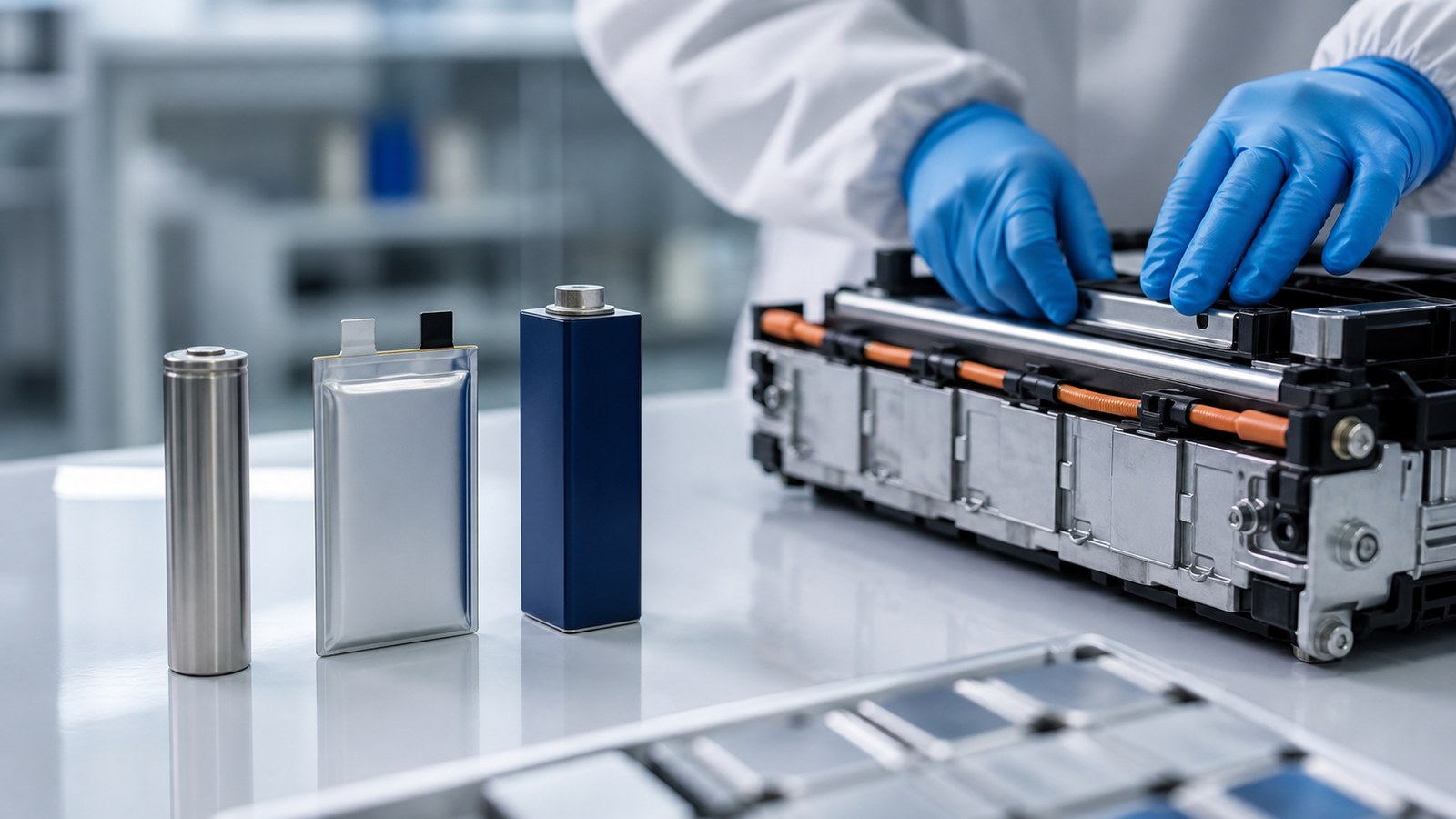
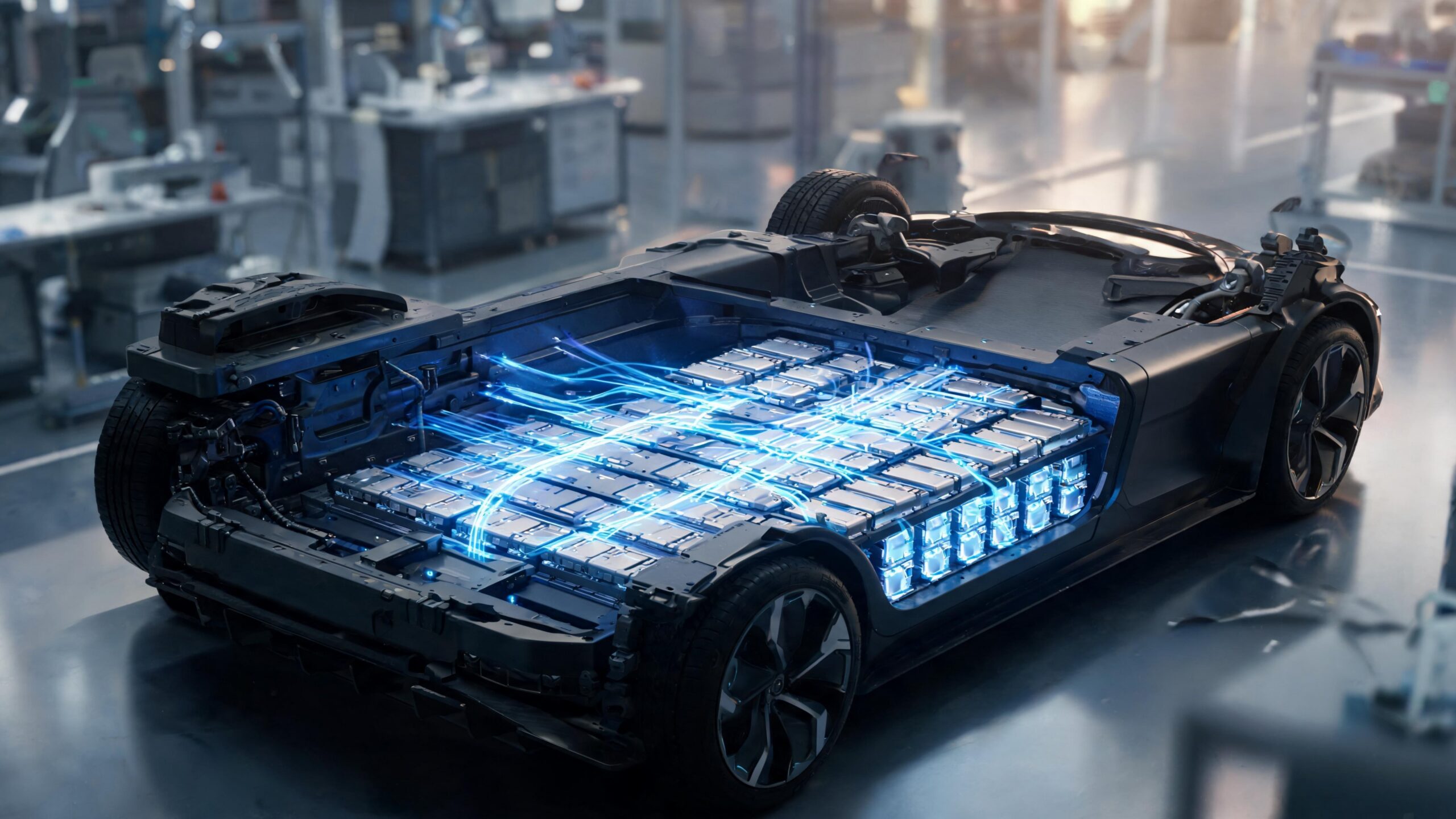
A single cell is useful for explaining chemistry, but a vehicle pack is much more complicated. Thousands of cells or many large-format cells must behave as one coordinated system. If some cell groups drift higher or lower than others, the battery management system may balance them so the pack remains usable and protected.
Pack design also adds safety layers that a simple chemistry diagram does not show. There are fuses, contactors, sensors, cooling channels, vents, structural barriers, and high-voltage cables. The chemistry stores energy, but the pack architecture makes that storage suitable for a car.
The Everyday Meaning of Battery Chemistry
For drivers, all of this chemistry appears as ordinary behaviors. The range estimate changes with weather. Charging slows near full. Regeneration may be limited when the battery is cold or full. The car may precondition before a fast charger. These are not random quirks; they are the visible edge of the storage system protecting itself.
Once that idea is clear, EV batteries become easier to understand. Ions move inside cells, electrons move through circuits, heat must be managed, and software keeps the process within safe limits. The driver does not need to see any of it happening to benefit from it.
The chemistry behind the charge is complex, but the mental model is simple enough: charging stores energy by moving ions into place, driving releases that energy by letting them move back, and the vehicle manages the whole process so it can happen again and again.
Why the Driver Sees a Simple Percentage
The dashboard hides most of this complexity behind a simple percentage because that is what drivers can use. The vehicle estimates how much usable energy remains, applies buffers and protections, and translates chemistry into a state-of-charge display. The number looks simple, but it is supported by constant measurement and calculation.
That display is useful as long as drivers remember it is an estimate, not a direct view into every cell. Temperature, recent driving, calibration, and pack balancing can affect what the car predicts. The chemistry is real, but the interface is intentionally simplified for daily use.
That simplification is part of good EV design. The chemistry can stay hidden while the driver gets clear information and predictable behavior.
That is enough for everyday confidence. The science is deep, but the useful driver lesson is clear: the battery is constantly balancing stored energy, usable power, temperature, and long-term health.