Charging Levels Are Easier Than They Sound
EV charging levels can sound technical at first, but the beginner version is straightforward: the level tells you what kind of power source is feeding the car and how quickly the battery can recover useful range. Level 1 is the slow outlet method, Level 2 is the faster AC charging used at homes, workplaces, hotels, and many public locations, and DC fast charging is the high-power option built for longer trips and quick stops. The confusing part is that chargers, plugs, vehicles, and networks all add their own vocabulary. Once you understand the three levels, the rest becomes easier to sort. You can decide whether home charging is enough, when a public station is worth using, why some sessions slow down, and how to avoid paying for speed you do not actually need.
A: It means charging from a standard household outlet with relatively slow AC power.
A: It means faster AC charging from a higher-voltage circuit, commonly used at homes and workplaces.
A: It means high-power public charging that supplies DC electricity to the vehicle for quicker stops.
A: No, connector standards vary by vehicle, region, and charging network.
A: A qualified electrician should handle or review dedicated charging installations.
A: The vehicle, battery temperature, charge level, and station condition can all limit power.
A: Most drivers do not need a full battery daily unless the automaker recommends it for that vehicle.
A: Yes, especially when the car will sit for several hours anyway.
A: Compare your daily miles with the range your setup can recover while parked.
A: Plug in during normal parking time and let the car handle the session within your chosen limit.
The Simple Difference Between Charging Levels
The simplest way to understand EV charging levels is to think about the source and speed of the power. Level 1 is the basic household outlet approach. Level 2 is stronger AC charging from a dedicated circuit or public pedestal. DC fast charging is the high-power public option that converts power outside the car and sends it to the battery more directly. All three can charge an EV, but they are not designed for the same kind of day.
Level 1 is about access. It is useful because a standard outlet is familiar and often available. Level 2 is about daily convenience. It can recover enough range during common parking windows to make ownership feel almost automatic. DC fast charging is about travel and time-sensitive charging. It is the option drivers use when they need to add meaningful range while away from home.
Why AC and DC Matter
Electric grids and household outlets provide alternating current, or AC. EV batteries store energy as direct current, or DC. When you use Level 1 or Level 2 charging, the car’s onboard charger converts AC power into DC power the battery can store. That onboard hardware has a limit, so even a powerful AC station cannot exceed what the vehicle can convert.
DC fast charging works differently. The station performs the conversion and delivers DC power to the vehicle at a much higher level. That is why fast chargers are larger and more expensive. It is also why they can add range much faster than ordinary home equipment. The tradeoff is cost, complexity, and the fact that not every fast charger or vehicle supports the same peak speed.
For beginners, the AC/DC distinction matters mostly because it explains expectations. Home charging is usually AC and steady. Fast charging is DC and more variable. If you understand that, it is easier to accept why a car may refill slowly overnight at home but charge rapidly during a highway stop.
Level 1: The Slow Safety Net
Level 1 charging is often underestimated because it is slow, but it has a real place. It can help a new owner get started before a Level 2 installation is complete. It can serve a plug-in hybrid very well. It can keep a low-mileage EV topped up when the car sits for long periods. It can also act as an emergency backup when visiting family, staying at a cabin, or parking somewhere without better equipment.
The downside is recovery speed. If a driver uses a large amount of range each day, Level 1 may not replace it before the next morning. This is where beginners should avoid thinking in terms of a full battery. The real question is whether the outlet can replace the miles used between drives. If it can, Level 1 may be enough. If it cannot, the driver will eventually need another charging source.
Level 2: The Everyday Answer for Many Homes
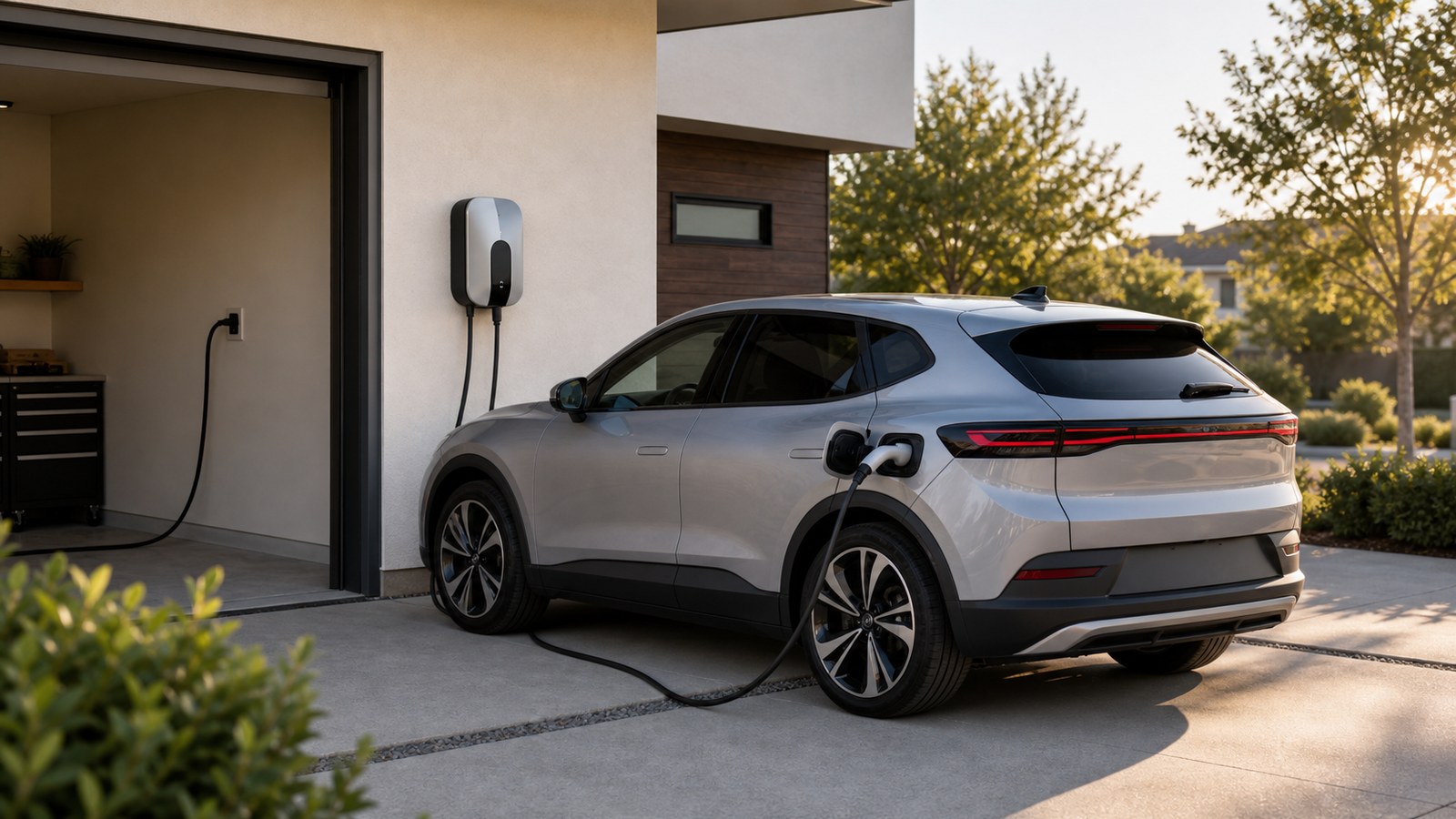
Level 2 charging is the reason EV ownership can feel simpler than gasoline ownership. When the car can charge at home while the driver sleeps, the vehicle starts many days with the desired range already available. There is no special trip to a fuel station, no standing outside in bad weather, and no need to wait for an empty public fast charger during normal commuting weeks.
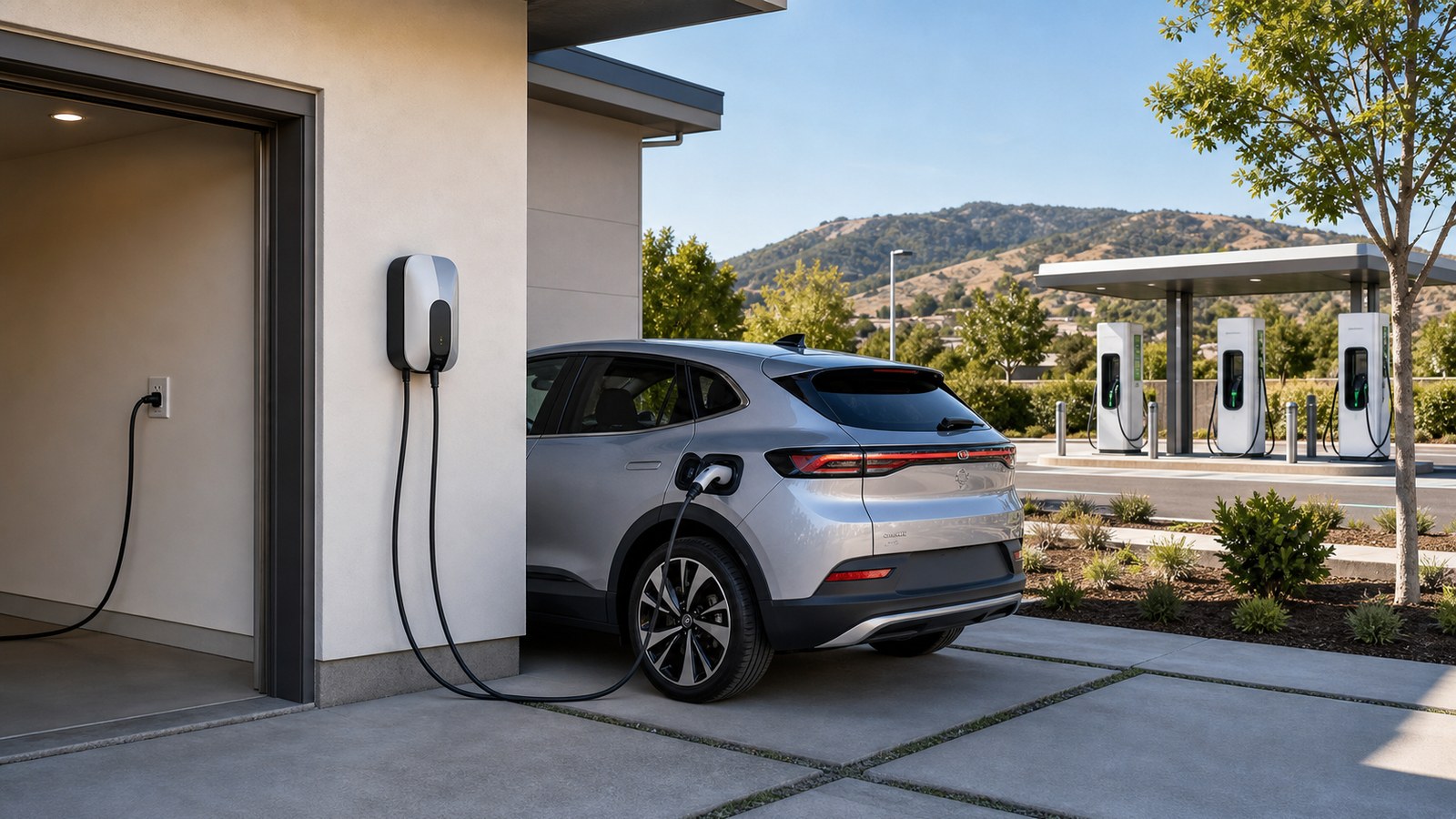
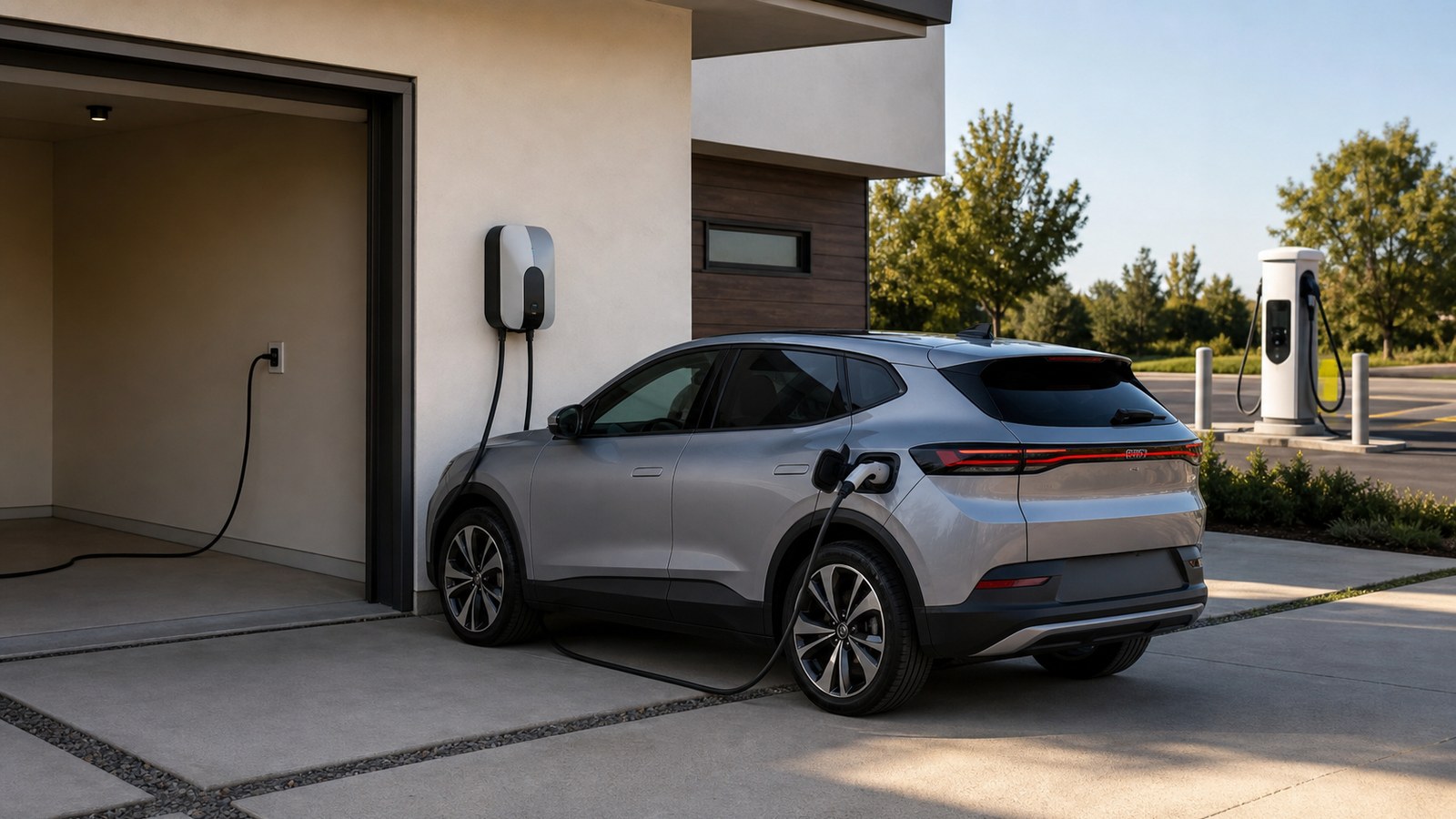
A Level 2 charger still needs planning. The home electrical panel must support the added load, and the installation should follow local codes. Some drivers choose a hardwired unit for a clean permanent setup. Others use a plug-in unit connected to an approved outlet. The best choice depends on the property, climate, parking location, and whether the driver may move the charger later.
Level 2 also appears in public spaces. Hotels, offices, parking garages, municipal lots, and shopping centers may offer it. Public Level 2 is not ideal for a ten-minute stop, but it can be excellent when the car will sit for a few hours. The slower pace is not a problem when charging happens during something else the driver planned to do anyway.
DC Fast Charging: The Road-Trip Tool
DC fast charging gets the most attention because the numbers are bigger, but beginners should see it as a specific tool. It is built for situations where the vehicle needs a lot of energy and the driver cannot wait overnight. That usually means road trips, busy days far from home, or recovery after unexpected extra driving.
Fast charging sessions are shaped by the battery’s charging curve. An EV may accept high power at a lower state of charge, then reduce power as the battery fills. This taper is normal. It protects the battery and controls heat. Because of that taper, charging from a low percentage to a moderate percentage can be quick, while pushing toward full can be slow. Experienced EV travelers often leave once they have enough range for the next leg plus a sensible buffer.
How to Think About Range Added
New EV drivers often ask how long charging takes, but the better question is how much useful range the car needs. A full charge is not always necessary. If tomorrow’s driving requires forty miles and the vehicle already has one hundred miles available, plugging in may be optional. If a road trip leg requires one hundred eighty miles and the next charger is far away, a longer stop may be wise.
Range estimates are affected by speed, hills, temperature, tire condition, cabin heating, air conditioning, cargo, and driving style. The same charge level can cover different distances on different days. That does not make EVs unpredictable; it means energy use responds to conditions. Gas vehicles do the same thing, but EV dashboards often make the changes more visible.
Beginners should also remember that range added is not always the same as range displayed. The car may estimate conservatively after a cold highway drive, then look more optimistic after gentle local driving. That display is trying to translate energy into miles using recent evidence, so it can change even when the battery itself is healthy.
After a few weeks, most drivers learn their own pattern. They discover how much range a commute uses, how quickly the home setup recovers it, and how much buffer feels comfortable. That personal rhythm is more useful than any universal charging rule.
How Connector Choices Fit In
Charging levels explain speed, but connector standards explain whether the plug physically works with the vehicle. A driver may see names such as NACS, CCS, J1772, or CHAdeMO depending on the car, charger, and region. The practical step is to confirm compatibility before relying on a station, especially on a trip where the next option may be many miles away.
Adapters can help in some situations, but they should be approved for the vehicle and charging equipment involved. A random adapter is not a shortcut around electrical limits or safety rules. The connector is part of a larger communication system between car and charger, and the session depends on that handshake working correctly.
Connector confidence is especially important for road trips that cross regions or charging networks. A station that looks perfect on a map can be useless if the plug standard does not match the car. Checking that detail early is a small habit that prevents large detours.
What New Owners Usually Learn First
New owners often learn charging by repeating the same small decisions. The first few weeks with an EV teach lessons that spec sheets cannot. A driver learns how much range the morning commute uses, whether grocery-store charging is helpful, and how often the home setup actually needs to run. They may discover that plugging in twice a week is enough, or that a daily overnight habit feels simpler even when the battery is not low.
That learning period should be calm rather than stressful. Start with a comfortable buffer, watch the car’s energy screen, and adjust after real experience. EV charging confidence usually grows from repetition: same driveway, same commute, same charger, same routine. Once the basics settle, public charging becomes a planned tool instead of a mystery.
A Beginner-Friendly Charging Routine
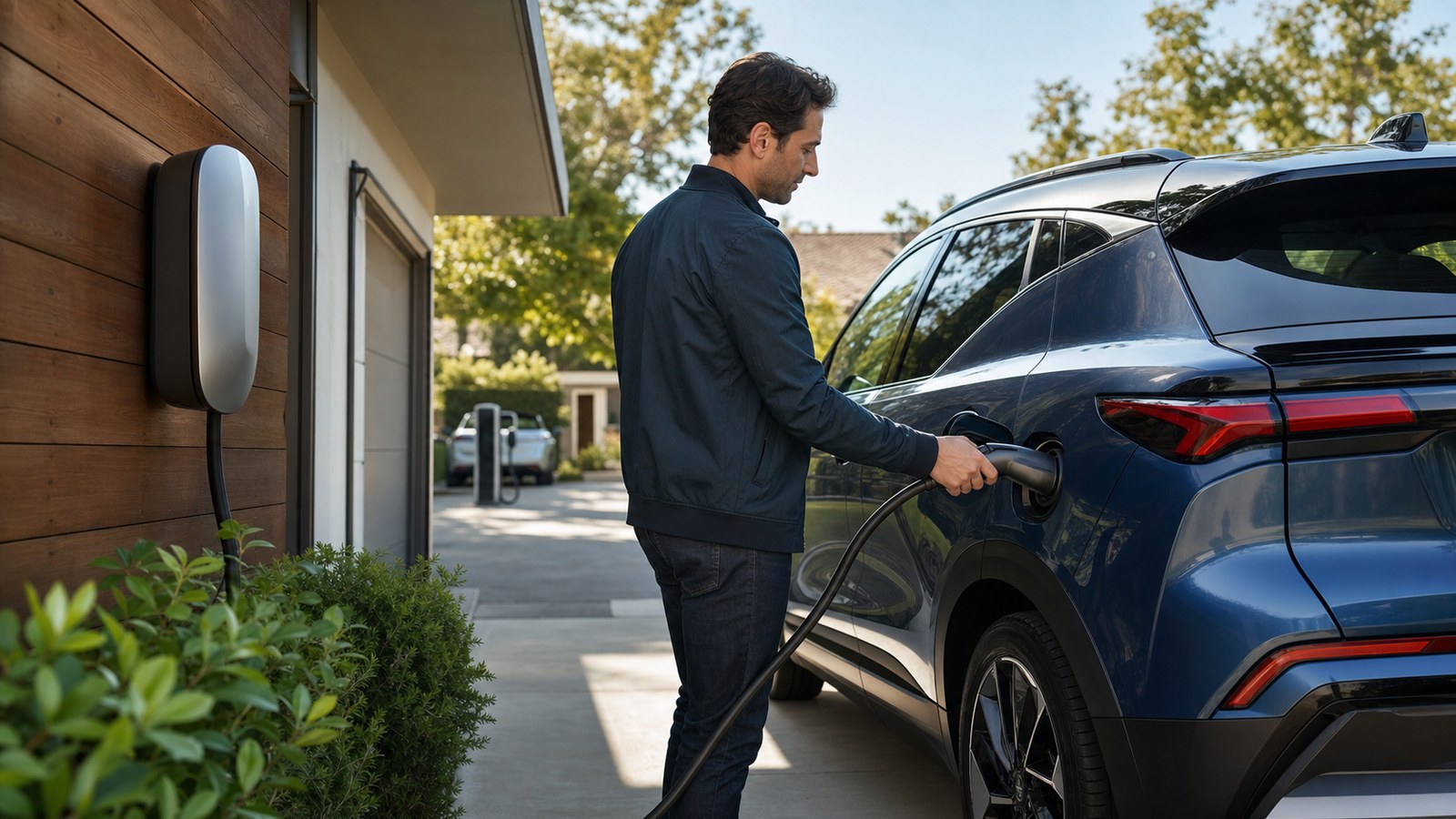
A practical routine starts with parked time. If the car sits at home overnight and a Level 2 charger is available, set a daily charge limit that fits normal use and plug in when convenient. If the car relies on Level 1, compare nightly recovery with daily driving and plan a backup public charge when needed. If the driver does not have home access, build charging around workplace, grocery, gym, or public fast-charging stops that already fit the week.
For longer trips, use route planning rather than guessing. Pick chargers with enough spacing, check connector compatibility, and avoid assuming every station will be empty and perfect. Many EVs and charging apps make this easier by estimating arrival battery percentage and suggesting stops. The driver still benefits from understanding the basics, because plans make more sense when the charging levels are clear.
Once the vocabulary settles, EV charging is not a maze. Level 1 is slow access, Level 2 is daily convenience, and DC fast charging is quick travel support. Those three ideas carry most of what a beginner needs to make confident decisions.
Reading the Charger Before You Plug In
Before plugging in, a beginner should quickly confirm three things: the connector fits, the charger appears active, and the parking space matches the cable reach. This small check prevents many frustrating sessions. A charger can look available from the road yet be reserved, offline, blocked, or limited to a different connector than the vehicle needs.
It also helps to know whether a station bills by energy, time, session, subscription, or some combination. The price display may live in an app rather than on the unit itself. Idle fees are especially important because they can start after the car finishes charging. Moving promptly keeps costs down and keeps the charger available for the next driver.
When using a new network, setting up the account before the trip is less stressful than doing it in a parking lot with a low battery. Save the payment method, check whether the network supports plug-and-charge for your vehicle, and keep a backup payment option. These details are small, but they make public charging feel much smoother.
A quick physical check matters too. Look for damaged handles, strained cables, blocked parking spaces, or a screen that never wakes up. If something feels wrong, choosing another stall early is better than fighting a failed session while the battery keeps dropping.
Why Charging Gets Easier Over Time
The first month can feel like learning a new appliance, a new fuel station, and a new driving style at once. That feeling fades. The driver learns which chargers are reliable, how quickly the car recovers range at home, and how much battery a normal day uses. The charging levels become background knowledge rather than a puzzle.
Eventually the question changes from “how do I charge this?” to “where will the car already be parked?” That is the quiet advantage of EV ownership. Energy can arrive during the hours the vehicle is not being used. Once beginners understand the levels, they can build a routine that uses that advantage every week.